

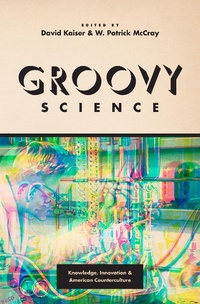
Groovy Science
Knowledge, Innovation, and American Counterculture
1st Edition
Published on 4. March 2020
432 pages
978-0-226-37307-2 (ISBN)
Description

Did the Woodstock generation reject science-or re-create it? An "enthralling" study of a unique period in scientific history (
New Scientist).
Our general image of the youth of the late 1960s and early 1970s is one of hostility to things like missiles and mainframes and plastics-and an enthusiasm for alternative spirituality and getting "back to nature." But this enlightening collection reveals that the stereotype is overly simplistic. In fact, there were diverse ways in which the era's countercultures expressed enthusiasm for and involved themselves in science-of a certain type. Boomers and hippies sought a science that was both small-scale and big-picture, as exemplified by the annual workshops on quantum physics at the Esalen Institute in Big Sur, or Timothy Leary's championing of space exploration as the ultimate "high." Groovy Scienceexplores the experimentation and eclecticism that marked countercultural science and technology during one of the most colorful periods of American history.
"Demonstrate[s] that people and groups strongly ensconced in the counterculture also embraced science, albeit in untraditional and creative ways."- Science
"Each essay is a case history on how the hippies repurposed science and made it cool. For the academic historian, Groovy Scienceestablishes the 'deep mark on American culture' made by the countercultural innovators. For the non-historian, the book reads as if it were infected by the hippies' democratic intent: no jargon, few convoluted sentences, clear arguments and a sense of delight."- Nature
"In the late 1960s and 1970s, the mind-expanding modus operandi of the counterculture spread into the realm of science, and sh-t got wonderfully weird. Neurophysiologist John Lilly tried to talk with dolphins. Physicist Peter Phillips launched a parapsychology lab at Washington University. Princeton physicist Gerard O'Neill became an evangelist for space colonies. Groovy Scienceis a new book of essays about this heady time."- Boing Boing
Our general image of the youth of the late 1960s and early 1970s is one of hostility to things like missiles and mainframes and plastics-and an enthusiasm for alternative spirituality and getting "back to nature." But this enlightening collection reveals that the stereotype is overly simplistic. In fact, there were diverse ways in which the era's countercultures expressed enthusiasm for and involved themselves in science-of a certain type. Boomers and hippies sought a science that was both small-scale and big-picture, as exemplified by the annual workshops on quantum physics at the Esalen Institute in Big Sur, or Timothy Leary's championing of space exploration as the ultimate "high." Groovy Scienceexplores the experimentation and eclecticism that marked countercultural science and technology during one of the most colorful periods of American history.
"Demonstrate[s] that people and groups strongly ensconced in the counterculture also embraced science, albeit in untraditional and creative ways."- Science
"Each essay is a case history on how the hippies repurposed science and made it cool. For the academic historian, Groovy Scienceestablishes the 'deep mark on American culture' made by the countercultural innovators. For the non-historian, the book reads as if it were infected by the hippies' democratic intent: no jargon, few convoluted sentences, clear arguments and a sense of delight."- Nature
"In the late 1960s and 1970s, the mind-expanding modus operandi of the counterculture spread into the realm of science, and sh-t got wonderfully weird. Neurophysiologist John Lilly tried to talk with dolphins. Physicist Peter Phillips launched a parapsychology lab at Washington University. Princeton physicist Gerard O'Neill became an evangelist for space colonies. Groovy Scienceis a new book of essays about this heady time."- Boing Boing
More details
Other editions
Additional editions
Book
05/2016
University of Chicago Press
€29.71
Shipment within 10-20 days
Book
05/2016
University of Chicago Press
€99.04
Shipment within 10-20 days
Persons
David Kaiser is the Germeshausen Professor of the History of Science and professor of physics at the Massachusetts Institute of Technology. He is the author of severalbooks, including How the Hippies Saved Physics: Science, Counterculture, and the Quantum Revival, and is coeditor of Groovy Science: Knowledge, Innovation, and American Counterculture, also published by the University of Chicago Press.
Content
- Intro
- Contents
- Introduction - David Kaiser and W. Patrick McCray
- Part One: Conversion
- 1. Adult Swim: How John C. Lilly Got Groovy (and Took the Dolphin with Him), 1958-1968 - D. Graham Burnett
- 2. Blowing Foam and Blowing Minds: Better Surfing through Chemistry - Peter Neushul and Peter Westwick
- 3. Santa Barbara Physicists in the Vietnam Era - Cyrus C. M. Mody
- Part Two: Seeking
- 4. Between the Counterculture and the Corporation: Abraham Maslow and Humanistic Psychology in the 1960s - Nadine Weidman
- 5. A Quest for Permanence: The Ecological Visioneering of John Todd and the New Alchemy Institute - Henry Trim
- 6. The Little Manual That Started a Revolution: How Hippie Midwifery Became Mainstream - Wendy Kline
- Part Three: Personae
- 7. The Unseasonable Grooviness of Immanuel Velikovsky - Michael D. Gordin
- 8. Timothy Leary's Transhumanist SMI2LE - W. Patrick McCray
- 9. Science of the Sexy Beast: Biological Masculinities and the Playboy Lifestyle - Erika Lorraine Milam
- Part Four: Legacies
- 10. Alloyed: Countercultural Bricoleurs and the Design Science Revival - Andrew Kirk
- 11. How the Industrial Scientist Got His Groove: Entrepreneurial Journalism and the Fashioning of Technoscientific Innovators - Matthew Wisnioski
- 12. When Chèvre Was Weird: Hippie Taste, Technoscience, and the Revival of American Artisanal Food Making - Heather Paxson
- Afterword: The Counterculture's Looking Glass - David Farber and Beth Bailey
- Contributors
- Index
