

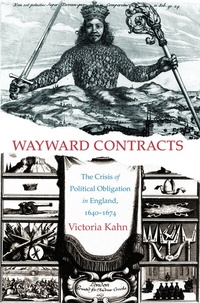
Wayward Contracts
The Crisis of Political Obligation in England, 1640-1674
1st Edition
Published on 10. January 2009
392 pages
978-1-4008-2642-1 (ISBN)
Description

Why did the language of contract become the dominant metaphor for the relationship between subject and sovereign in mid-seventeenth-century England? In Wayward Contracts, Victoria Kahn takes issue with the usual explanation for the emergence of contract theory in terms of the origins of liberalism, with its notions of autonomy, liberty, and equality before the law.
Drawing on literature as well as political theory, state trials as well as religious debates, Kahn argues that the sudden prominence of contract theory was part of the linguistic turn of early modern culture, when government was imagined in terms of the poetic power to bring new artifacts into existence. But this new power also brought in its wake a tremendous anxiety about the contingency of obligation and the instability of the passions that induce individuals to consent to a sovereign power. In this wide-ranging analysis of the cultural significance of contract theory, the lover and the slave, the tyrant and the regicide, the fool and the liar emerge as some of the central, if wayward, protagonists of the new theory of political obligation. The result is must reading for students and scholars of early modern literature and early modern political theory, as well as historians of political thought and of liberalism.
Drawing on literature as well as political theory, state trials as well as religious debates, Kahn argues that the sudden prominence of contract theory was part of the linguistic turn of early modern culture, when government was imagined in terms of the poetic power to bring new artifacts into existence. But this new power also brought in its wake a tremendous anxiety about the contingency of obligation and the instability of the passions that induce individuals to consent to a sovereign power. In this wide-ranging analysis of the cultural significance of contract theory, the lover and the slave, the tyrant and the regicide, the fool and the liar emerge as some of the central, if wayward, protagonists of the new theory of political obligation. The result is must reading for students and scholars of early modern literature and early modern political theory, as well as historians of political thought and of liberalism.
More details
Other editions
Additional editions
Book
07/2016
Princeton University Press
€36.30
Shipment within 10-20 days
Book
09/2004
Princeton University Press
€109.12
Article not available at the moment
Person
Victoria Kahn is Professor of English and Bernie H. Williams Professor of Comparative Literature at the University of California, Berkeley. She is the author of Machiavellian Rhetoric (Princeton).
Content
Acknowledgments xi
Abbreviations xiii
CHAPTER 1. Introduction 1
From Virtue to Contract 8
The Psychology of Contract 13
Poetics and the Contract of Genre 15
The Usual Story 20
The Road Ahead 25
PART I: An Anatomy of Contract,1590-1640 29
CHAPTER 2. Language and the Bond of Conscience 31
Natural Rights Theory: The Social Contract and the Linguistic Contract 33
The Common Law: Magna Carta and Economic Contract 41
Covenant Theology: Divine Speech Acts and the Covenant of Metaphor 48
CHAPTER 3. The Passions and Voluntary Servitude 57
The Slave Contract 60
The Law of the Heart 64
Free Consent 73
PART II: A Poetics of Contract, 1640-1674 81
CHAPTER 4. Imagination 83
Five Knights: From Promise to Contract 85
Shipmoney and the Imagination of Disaster 90
Henry Parker and the Metaphor of Contract 95
Falkland, Chillingworth, Digges, and the Fiction of Representation 104
CHAPTER 5. Violence 112
Prophesying Revolution 113
The Metaphorical Plot 120
CHAPTER 6. Metalanguage 134
The Problem of Essex 138
Hobbe's Critique of Romance 141
The Contract of Mimesis 147
Hobbesian Fictions 151
Method and Metalanguage 154
Hobbes's Readers or Inescapable Romance 166
CHAPTER 7. Gender 171
Political Contract and the Marriage Contract 174
The Politics of Romance 177
Passion and Interest 180
Contract on Trial 185
The Sexual Contract 189
The Paralogism of Romance 192
CHAPTER 8. Embodiment 196
Resistless Love and Hate 198
Paradise Lost and the Bond of Nature 207
Pity or Fear of Violent Death 214
CHAPTER 9. Sympathy 223
Wise Compliance 227
The Politics of Pity 234
Sympathy between Men 241
CHAPTER 10. Critique 252
Reason of State 254
Samson as Exception 262
Reasoning about the Exception: Dialectic and Equivocation 264
Taking Exception to Pity and Fear 270
Political Theology and Tragedy 276
CHAPTER 11. Conclusion 279
Notes 285
Index 365
Abbreviations xiii
CHAPTER 1. Introduction 1
From Virtue to Contract 8
The Psychology of Contract 13
Poetics and the Contract of Genre 15
The Usual Story 20
The Road Ahead 25
PART I: An Anatomy of Contract,1590-1640 29
CHAPTER 2. Language and the Bond of Conscience 31
Natural Rights Theory: The Social Contract and the Linguistic Contract 33
The Common Law: Magna Carta and Economic Contract 41
Covenant Theology: Divine Speech Acts and the Covenant of Metaphor 48
CHAPTER 3. The Passions and Voluntary Servitude 57
The Slave Contract 60
The Law of the Heart 64
Free Consent 73
PART II: A Poetics of Contract, 1640-1674 81
CHAPTER 4. Imagination 83
Five Knights: From Promise to Contract 85
Shipmoney and the Imagination of Disaster 90
Henry Parker and the Metaphor of Contract 95
Falkland, Chillingworth, Digges, and the Fiction of Representation 104
CHAPTER 5. Violence 112
Prophesying Revolution 113
The Metaphorical Plot 120
CHAPTER 6. Metalanguage 134
The Problem of Essex 138
Hobbe's Critique of Romance 141
The Contract of Mimesis 147
Hobbesian Fictions 151
Method and Metalanguage 154
Hobbes's Readers or Inescapable Romance 166
CHAPTER 7. Gender 171
Political Contract and the Marriage Contract 174
The Politics of Romance 177
Passion and Interest 180
Contract on Trial 185
The Sexual Contract 189
The Paralogism of Romance 192
CHAPTER 8. Embodiment 196
Resistless Love and Hate 198
Paradise Lost and the Bond of Nature 207
Pity or Fear of Violent Death 214
CHAPTER 9. Sympathy 223
Wise Compliance 227
The Politics of Pity 234
Sympathy between Men 241
CHAPTER 10. Critique 252
Reason of State 254
Samson as Exception 262
Reasoning about the Exception: Dialectic and Equivocation 264
Taking Exception to Pity and Fear 270
Political Theology and Tragedy 276
CHAPTER 11. Conclusion 279
Notes 285
Index 365
