

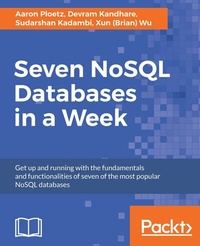
Seven NoSQL Databases in a Week
Get up and running with the fundamentals and functionalities of seven of the most popular NoSQL databases
1st Edition
Published on 23. September 2024
308 pages
978-1-78712-714-2 (ISBN)
Description

A beginner\'s guide to get you up and running with Cassandra, DynamoDB, HBase, InfluxDB, MongoDB, Neo4j, and RedisKey Features - [*]Covers the basics of 7 NoSQL databases and how they are used in the enterprises
- [*]Quick introduction to MongoDB, DynamoDB, Redis, Cassandra, Neo4j, InfluxDB, and HBase
- [*]Includes effective techniques for database querying and management
Book DescriptionThis is the golden age of open source NoSQL databases. With enterprises having to work with large amounts of unstructured data and moving away from expensive monolithic architecture, the adoption of NoSQL databases is rapidly increasing. Being familiar with the popular NoSQL databases and knowing how to use them is a must for budding DBAs and developers. This book introduces you to the different types of NoSQL databases and gets you started with seven of the most popular NoSQL databases used by enterprises today. We start off with a brief overview of what NoSQL databases are, followed by an explanation of why and when to use them. The book then covers the seven most popular databases in each of these categories: MongoDB, Amazon DynamoDB, Redis, HBase, Cassandra, In?uxDB, and Neo4j. The book doesn't go into too much detail about each database but teaches you enough to get started with them. By the end of this book, you will have a thorough understanding of the different NoSQL databases and their functionalities, empowering you to select and use the right database according to your needs.What you will learn - [*]Understand how MongoDB provides high-performance, high-availability, and automatic scaling
- [*]Interact with your Neo4j instances via database queries, Python scripts, and Java application code
- [*]Get familiar with common querying and programming methods to interact with Redis
- [*]Study the different types of problems Cassandra can solve
- [*]Work with HBase components to support common operations such as creating tables and reading/writing data
- [*]Discover data models and work with CRUD operations using DynamoDB
- [*]Discover what makes In?uxDB a great choice for working with
- time-series data
Who this book is forIf you are a budding DBA or a developer who wants to get started with the fundamentals of NoSQL databases, this book is for you. Relational DBAs who want to get insights into the various offerings of popular NoSQL databases will also find this book to be very useful.
- [*]Quick introduction to MongoDB, DynamoDB, Redis, Cassandra, Neo4j, InfluxDB, and HBase
- [*]Includes effective techniques for database querying and management
Book DescriptionThis is the golden age of open source NoSQL databases. With enterprises having to work with large amounts of unstructured data and moving away from expensive monolithic architecture, the adoption of NoSQL databases is rapidly increasing. Being familiar with the popular NoSQL databases and knowing how to use them is a must for budding DBAs and developers. This book introduces you to the different types of NoSQL databases and gets you started with seven of the most popular NoSQL databases used by enterprises today. We start off with a brief overview of what NoSQL databases are, followed by an explanation of why and when to use them. The book then covers the seven most popular databases in each of these categories: MongoDB, Amazon DynamoDB, Redis, HBase, Cassandra, In?uxDB, and Neo4j. The book doesn't go into too much detail about each database but teaches you enough to get started with them. By the end of this book, you will have a thorough understanding of the different NoSQL databases and their functionalities, empowering you to select and use the right database according to your needs.What you will learn - [*]Understand how MongoDB provides high-performance, high-availability, and automatic scaling
- [*]Interact with your Neo4j instances via database queries, Python scripts, and Java application code
- [*]Get familiar with common querying and programming methods to interact with Redis
- [*]Study the different types of problems Cassandra can solve
- [*]Work with HBase components to support common operations such as creating tables and reading/writing data
- [*]Discover data models and work with CRUD operations using DynamoDB
- [*]Discover what makes In?uxDB a great choice for working with
- time-series data
Who this book is forIf you are a budding DBA or a developer who wants to get started with the fundamentals of NoSQL databases, this book is for you. Relational DBAs who want to get insights into the various offerings of popular NoSQL databases will also find this book to be very useful.
More details
Other editions
Additional editions
Aaron Ploetz | Devram Kandhare | Sudarshan Kadambi
Seven NoSQL Databases in a Week
Book
03/2018
Packt Publishing
€46.10
Shipment within 3-4 weeks
Persons
Kadambi Sudarshan :
Sudarshan has a background in Distributed systems and Database design. He has been a user and contributor to various NoSQL databases and is passionate about solving large-scale data management challenges.Wu Xun (Brian) :
Xun (Brian) Wu is a senior blockchain architect and consultant. With over 20 years of hands-on experience across various technologies, including Blockchain, big data, cloud, AI, systems, and infrastructure, Brian has worked on more than 50 projects in his career. He has authored nine books, which have been published by O'Reilly, Packt, and Apress, focusing on popular fields within the Blockchain industry. The titles of his books include: Learn Ethereum (First Edition), Learn Ethereum (Second Edition), Blockchain for Teens, Hands-On Smart Contract Development with Hyperledger Fabric V2, Hyperledger Cookbook, Blockchain Quick Start Guide, Security Tokens and Stablecoins Quick Start Guide, Blockchain by Example, and Seven NoSQL Databases in a Week.
Sudarshan has a background in Distributed systems and Database design. He has been a user and contributor to various NoSQL databases and is passionate about solving large-scale data management challenges.Wu Xun (Brian) :
Xun (Brian) Wu is a senior blockchain architect and consultant. With over 20 years of hands-on experience across various technologies, including Blockchain, big data, cloud, AI, systems, and infrastructure, Brian has worked on more than 50 projects in his career. He has authored nine books, which have been published by O'Reilly, Packt, and Apress, focusing on popular fields within the Blockchain industry. The titles of his books include: Learn Ethereum (First Edition), Learn Ethereum (Second Edition), Blockchain for Teens, Hands-On Smart Contract Development with Hyperledger Fabric V2, Hyperledger Cookbook, Blockchain Quick Start Guide, Security Tokens and Stablecoins Quick Start Guide, Blockchain by Example, and Seven NoSQL Databases in a Week.
Content
Table of Contents - Introduction to NoSQL Databases
- MongoDB
- Neo4j
- Redis
- Cassandra
- HBase
- Dynamo DB
- InfluxDB
- MongoDB
- Neo4j
- Redis
- Cassandra
- HBase
- Dynamo DB
- InfluxDB
