

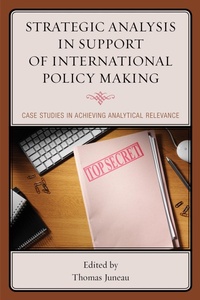
Strategic Analysis in Support of International Policy Making
Case Studies in Achieving Analytical Relevance
1st Edition
Published on 2. February 2017
1 pages
979-8-216-23079-3 (ISBN)
Description

The book aims to improve our understanding of what it means to create high-quality analytical products by focusing on the concept of relevance for policy-makers. Despite variations in context, strategic analysts in different sectors (in both intelligence and non-intelligence government organizations, private consultancies, think tanks, and academia) face similar problems in identifying the needs of their clients and setting up organizations with the mandates, structures, and personnel necessary to address those needs. The objective is therefore to identify these common challenges, compare solutions, and share lessons learned. To do so, broader thematic reflections on strategic analysis are combined with innovative case studies of how organizations have worked to successfully produce relevant analysis. The first section explores challenges to achieving relevance at the level of the analyst, while the remainder of the book analyses cases at the level of organizations.
More details
Edition
1. Auflage
Language
English
Place of publication
United States
Publishing group
Bloomsbury Publishing Plc
Illustrations
1 b/w illustration
ISBN-13
979-8-216-23079-3 (9798216230793)
Copyright in bibliographic data and cover images is held by Nielsen Book Services Limited or by the publishers or by their respective licensors: all rights reserved.
Schweitzer Classification
Other editions
Additional editions
Thomas Juneau
Strategic Analysis in Support of International Policy Making
Case Studies in Achieving Analytical Relevance
Book
02/2017
Rowman & Littlefield Publishers
€176.30
Shipment within 10-20 days
Person
Editor
Thomas Juneau is an assistant professor at the University of Ottawa's Graduate School of Public and International Affairs. From 2003 to 2014, he worked with Canada's Department of National Defence.
CONTRIBUTORS
Donald E. Abelson, University of Western Ontario, Canada.
Robert Ayson, Victoria University of Wellington, New Zealand.
Kamran Bokhari, George Washington University's Center for Cyber and Homeland Security. Formetly Stratfor's lead analyst on Middle Eastern and South Asian Affairs.
Rex Brynen, McGill University, Canada.
Mathew Burrows, director of the Atlantic Council's Strategic Foresight Initiative. Former Counselor at the National Intelligence Council (NIC).
Frédéric Charillon, professor, Université d'Auvergne, Sciences Po Paris, and the National School of Administration (ENA), France.
Paul Dickson, Strategic Analyst with the Department of National Defence, Canada.
Jeremy Ghez, Professor of Economics and International Affairs at HEC, Paris.
Thomas King, former head of the Persian Gulf Division in the Near East and South Asia Analysis Office of the Bureau of Intelligence and Research (INR) at the US Department of State.
Michael Roi, Strategic Analyst with the Canadian Department of National Defence.
Brooke Smith-Windsor, Deputy Head and a founding member of the NATO Defence College (NDC) Research Division.
Jean-Louis Tiernan, Canadian Security Intelligence Service.
Gregory Treverton, Chairman of the US National Intelligence Council.
Trine Villumsen Berling, Centre for Advanced Security Theory (CAST), University of Copenhagen, Denmark.
Tim Walton, James Madison University, USA. He served in the US Navy, and the Central Intelligence Agency.
Thomas Juneau is an assistant professor at the University of Ottawa's Graduate School of Public and International Affairs. From 2003 to 2014, he worked with Canada's Department of National Defence.
CONTRIBUTORS
Donald E. Abelson, University of Western Ontario, Canada.
Robert Ayson, Victoria University of Wellington, New Zealand.
Kamran Bokhari, George Washington University's Center for Cyber and Homeland Security. Formetly Stratfor's lead analyst on Middle Eastern and South Asian Affairs.
Rex Brynen, McGill University, Canada.
Mathew Burrows, director of the Atlantic Council's Strategic Foresight Initiative. Former Counselor at the National Intelligence Council (NIC).
Frédéric Charillon, professor, Université d'Auvergne, Sciences Po Paris, and the National School of Administration (ENA), France.
Paul Dickson, Strategic Analyst with the Department of National Defence, Canada.
Jeremy Ghez, Professor of Economics and International Affairs at HEC, Paris.
Thomas King, former head of the Persian Gulf Division in the Near East and South Asia Analysis Office of the Bureau of Intelligence and Research (INR) at the US Department of State.
Michael Roi, Strategic Analyst with the Canadian Department of National Defence.
Brooke Smith-Windsor, Deputy Head and a founding member of the NATO Defence College (NDC) Research Division.
Jean-Louis Tiernan, Canadian Security Intelligence Service.
Gregory Treverton, Chairman of the US National Intelligence Council.
Trine Villumsen Berling, Centre for Advanced Security Theory (CAST), University of Copenhagen, Denmark.
Tim Walton, James Madison University, USA. He served in the US Navy, and the Central Intelligence Agency.
Content
Introduction (Thomas Juneau)
1. Making Strategic Analysis Matter (Jeremy Ghez and Gregory F. Treverton)
2. When the Dominant Discourse Encounters Small State Realities: Strategic Analysis in New Zealand and the Theory-Policy Gap (Robert Ayson)
3. How Intelligence Analysis Education Tries to Improve Strategic Analysis (Tim Walton)
4. Here (Very Likely) Be Dragons: The Challenges of Strategic Forecasting (Rex Brynen)
5. The US National Intelligence Council's Global Trends: Both More and Less than Meets the Eye (Mat Burrows)
6. The Bureau of Intelligence and Research in the State Department (Tom King)
7. The Role of Strategic Analysis in Operations: A Case Study from Afghanistan (Paul Dickson)
8. How to Create an "Institutional Think Tank" Within A Ministry of Defence (and Make It Last): France's Institut d'Etudes Stratégiques de l'Ecole Militaire (IRSEM) (Frédéric Charillon)
9. The Practice of Open Intelligence: The Experience of the Canadian Security Intelligence Service (Jean-Louis Tiernan)
10. NATO Defense College: Navigating between Critical Analysis, Strategic Education and Partnerships (Trine Villumsen Berling and Brooke A. Smith-Windsor)
11. Stratfor: Merging Intelligence and Geopolitics (Kamran Bokhari)
12. Strategic Thinking or Thinking Strategically? The Ambiguous Role of American Think Tanks (Donald Abelson)
13. Balancing Responsiveness, Relevance and Expertise: Lessons from the History of Strategic Analysis in the Canadian Department of National Defence (Michael Roi and Paul Dickson)
Conclusion (Thomas Juneau)
About the contributors
Index
1. Making Strategic Analysis Matter (Jeremy Ghez and Gregory F. Treverton)
2. When the Dominant Discourse Encounters Small State Realities: Strategic Analysis in New Zealand and the Theory-Policy Gap (Robert Ayson)
3. How Intelligence Analysis Education Tries to Improve Strategic Analysis (Tim Walton)
4. Here (Very Likely) Be Dragons: The Challenges of Strategic Forecasting (Rex Brynen)
5. The US National Intelligence Council's Global Trends: Both More and Less than Meets the Eye (Mat Burrows)
6. The Bureau of Intelligence and Research in the State Department (Tom King)
7. The Role of Strategic Analysis in Operations: A Case Study from Afghanistan (Paul Dickson)
8. How to Create an "Institutional Think Tank" Within A Ministry of Defence (and Make It Last): France's Institut d'Etudes Stratégiques de l'Ecole Militaire (IRSEM) (Frédéric Charillon)
9. The Practice of Open Intelligence: The Experience of the Canadian Security Intelligence Service (Jean-Louis Tiernan)
10. NATO Defense College: Navigating between Critical Analysis, Strategic Education and Partnerships (Trine Villumsen Berling and Brooke A. Smith-Windsor)
11. Stratfor: Merging Intelligence and Geopolitics (Kamran Bokhari)
12. Strategic Thinking or Thinking Strategically? The Ambiguous Role of American Think Tanks (Donald Abelson)
13. Balancing Responsiveness, Relevance and Expertise: Lessons from the History of Strategic Analysis in the Canadian Department of National Defence (Michael Roi and Paul Dickson)
Conclusion (Thomas Juneau)
About the contributors
Index
