

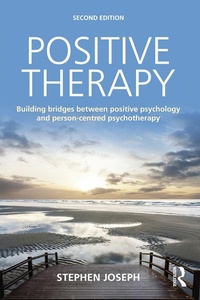
Positive Therapy
Building bridges between positive psychology and person-centred psychotherapy
2nd Edition
Published on 8. May 2015
158 pages
978-1-317-58752-1 (ISBN)
Description

The applications of positive psychology are different from traditional interventions in therapy in that they are focused on building strength, resilience and well-being rather than being restricted to simply treating disorder. Since the publication of the first edition of Positive Therapy, there is now a comprehensive body of applied positive psychology research to which practitioners may turn in order to inform their own practice, and that sees its purpose as the facilitation of human flourishing and optimal functioning.
However, much of this research and its implications are only now becoming more widely understood in counselling and psychotherapy. This new and expanded edition of Positive Therapy shows how the latest thinking in positive psychology can be applied to psychotherapeutic practice, and specifically to person-centred therapy. Making the links between positive psychology and psychotherapy explicit, Stephen Joseph describes the new tools that practitioners can draw upon to help and facilitate positive functioning in their clients. New material includes:
An update of the latest positive psychology research
A new preface, explaining how positive psychology principles can now be applied to therapeutic practice
Focus on positive psychology measurement tools
Positive Therapy will be essential reading for all psychotherapists, counsellors, social workers, coaches, psychologists and trainees interested in exploring how they engage with clients, and the implications of this engagement in practice.
However, much of this research and its implications are only now becoming more widely understood in counselling and psychotherapy. This new and expanded edition of Positive Therapy shows how the latest thinking in positive psychology can be applied to psychotherapeutic practice, and specifically to person-centred therapy. Making the links between positive psychology and psychotherapy explicit, Stephen Joseph describes the new tools that practitioners can draw upon to help and facilitate positive functioning in their clients. New material includes:
An update of the latest positive psychology research
A new preface, explaining how positive psychology principles can now be applied to therapeutic practice
Focus on positive psychology measurement tools
Positive Therapy will be essential reading for all psychotherapists, counsellors, social workers, coaches, psychologists and trainees interested in exploring how they engage with clients, and the implications of this engagement in practice.
Reviews / Votes
"This book is a great contribution for positive psychologists and clinicians . It contains an insightful perspective on similarities between the traditional person-centered approach and the new positive psychology interventions. Every clinician aimed at improving their patients' wellbeing should read this book." - Chiara Ruini, Assistant Professor of Clinical Psychology Coordinator for International Exchange Programs, University of Bologna, Italy"This book is a milestone. It takes the humanistic approach to the 21st century and stresses its potential to become a metatheory.Sharp, and yet deeply insightful, this book integrates academic kudos with the authentic heart and soul of a person centred therapist. Stephen has managed to revisit the language and convey the core of the approach in a fresh and approachable to all manner."- Zoe Chouliara, Reader in Person Centred Care, Edinburgh Napier University, Practitioner Counselling Psychologist & Person Centred Psychotherapist/Counsellor
"Stephen Joseph takes us on a captivating journey through the latest developments in Positive Psychology and Person-Centred Theory and Practice, eloquently making the case for an integration of these two traditions based upon a meta-theoretical understanding that is underpinned by empirical findings from positive psychology and grounded in the person-centred theoretical account of the actualising tendency. The actualising tendency, the bedrock of the person-centred approach, represents the view that all humans have an inherent tendency to be self-determining agents of their own directions in life and that, consequently, clients in therapy should always be regarded as their own best experts. With potentially profound implications for psychotherapeutic practice, this book is a must read for therapists and psychologists alike and indeed for anyone curious to learn more about an empirically supported and refreshingly alternative paradigm to the dominant medical model of psychological distress."- Tom Patterson, Clinical Psychologist and Senior Lecturer in Clinical Psychology, Coventry University, UK
"The second edition of Positive Therapy is a wonderful up-to-date integration of modern positive psychology and traditional client centred therapy. It should be read by everyone in clinical practice." - Alan Carr, Professor of Clinical Psychology, University College Dublin
"This book is an extremely valuable contribution to the fields of positive psychology and person-centered psychotherapy, exploring the synergy between the two approaches, and the way of combining them in clinical practice. The book is filled with practical suggestions, scientific studies and the rich experiences of the author as a skilfull practitioner. Specifically, this new edition presents what person-centred therapists have to gain from positive psychology and on the other hand how positive psychologists can benefit from it in order to reach a deeper appreciation of the richness of person-centered approach and integrate these ideas into their practice. A wonderful book, engaging, relevant and comprehensive, completed with new material and new sections on person-activity fit and theoretically consistent measurement. " - Antonia Csillik, Ph.D., Senior Lecturer in clinical psychology, University of Paris Ouest Nanterre, France, Vice-President of the French speaking Positive Psychology Association, member of the Motivational Interviewing Network of Trainers, MINT "This book is a great contribution for positive psychologists and clinicians . It contains an insightful perspective on similarities between the traditional person-centered approach and the new positive psychology interventions. Every clinician aimed at improving their patients' wellbeing should read this book." - Chiara Ruini, Assistant Professor of Clinical Psychology Coordinator for International Exchange Programs, University of Bologna, Italy
"This book is a milestone. It takes the humanistic approach to the 21st century and stresses its potential to become a metatheory.Sharp, and yet deeply insightful, this book integrates academic kudos with the authentic heart and soul of a person centred therapist. Stephen has managed to revisit the language and convey the core of the approach in a fresh and approachable to all manner."- Zoe Chouliara, Reader in Person Centred Care, Edinburgh Napier University, Practitioner Counselling Psychologist & Person Centred Psychotherapist/Counsellor
"Stephen Joseph takes us on a captivating journey through the latest developments in Positive Psychology and Person-Centred Theory and Practice, eloquently making the case for an integration of these two traditions based upon a meta-theoretical understanding that is underpinned by empirical findings from positive psychology and grounded in the person-centred theoretical account of the actualising tendency. The actualising tendency, the bedrock of the person-centred approach, represents the view that all humans have an inherent tendency to be self-determining agents of their own directions in life and that, consequently, clients in therapy should always be regarded as their own best experts. With potentially profound implications for psychotherapeutic practice, this book is a must read for therapists and psychologists alike and indeed for anyone curious to learn more about an empirically supported and refreshingly alternative paradigm to the dominant medical model of psychological distress."- Tom Patterson, Clinical Psychologist and Senior Lecturer in Clinical Psychology, Coventry University, UK
"The second edition of Positive Therapy is a wonderful up-to-date integration of modern positive psychology and traditional client centred therapy. It should be read by everyone in clinical practice." - Alan Carr, Professor of Clinical Psychology, University College Dublin
"This book is an extremely valuable contribution to the fields of positive psychology and person-centered psychotherapy, exploring the synergy between the two approaches, and the way of combining them in clinical practice. The book is filled with practical suggestions, scientific studies and the rich experiences of the author as a skilfull practitioner. Specifically, this new edition presents what person-centred therapists have to gain from positive psychology and on the other hand how positive psychologists can benefit from it in order to reach a deeper appreciation of the richness of person-centered approach and integrate these ideas into their practice. A wonderful book, engaging, relevant and comprehensive, completed with new material and new sections on person-activity fit and theoretically consistent measurement. " - Antonia Csillik, Ph.D., Senior Lecturer in clinical psychology, University of Paris Ouest Nanterre, France, Vice-President of the French speaking Positive Psychology Association, member of the Motivational Interviewing Network of Trainers, MINT
More details
Edition
2nd edition
Language
English
Place of publication
London
United Kingdom
Publishing group
Taylor & Francis Ltd
Target group
College/higher education
Professional and scholarly
Edition type
Revised edition
Illustrations
1 s/w Zeichnung, 15 s/w Tabellen
15 Tables, black and white; 1 Line drawings, black and white
File size
1,09 MB
ISBN-13
978-1-317-58752-1 (9781317587521)
Copyright in bibliographic data and cover images is held by Nielsen Book Services Limited or by the publishers or by their respective licensors: all rights reserved.
Schweitzer Classification
Other editions
Additional editions
Stephen Joseph
Positive Therapy
Building bridges between positive psychology and person-centred psychotherapy
Book
05/2015
2nd Edition
Routledge
€57.60
Shipment within 15-20 days
Stephen Joseph
Positive Therapy
Building bridges between positive psychology and person-centred psychotherapy
Book
05/2015
2nd Edition
Routledge
€251.40
Shipment within 15-20 days
Person
Stephen Joseph is a professor in the School of Education at the University of Nottingham where he is convenor for the counselling and psychotherapy group. He is a registered counselling psychologist. Stephen has published widely on positive psychology, psychological trauma and therapy.
Content
Preface. Introduction. Positive Psychology. The Actualising Tendency. Developmental and Personality Theory. The Therapeutic Relationship. Process Direction and Person-Activity Fit. Person-Centred Psychopathology. Posttraumatic Growth. Theoretically Consistent Measurement. Conclusion: Reflections, Challenges, and Future.
