

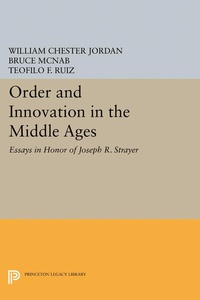
Order and Innovation in the Middle Ages
Essays in Honor of Joseph R. Strayer
1st Edition
Published on 16. June 2015
596 pages
978-1-4008-6967-1 (ISBN)
Description

The Middle Ages were for many years generally viewed as a period when faith and order supported a rigid society. By painstaking archival research, historians such as Joseph R. Strayer and the contributors to this volume have gradually replaced this view with a regard for the period as a time of great intellectual diversity.
These essays, divided into five groups, probe the themes of order and innovation as they appear in medieval government; finance; trade and urban life; social arrangements; and aspects of the personality and goals of the individual. The contributors focus on England, France, and the Mediterranean from about the eleventh to about the sixteenth century.
Contributors: Frederic Kreisler, Charles Radding, Giles Constable, William Bowsky, John Freed, Phillippe Wolff, Thomas Bisson, Richard Kaeuper, John Benton, Archibald Lewis, William Jordan, Rhiman Rotz, Robert Baker, Robert Lopez, Teofilo Ruiz, Raphael DeSoignie, Bennett Hill, Frederic Cheyette, Jan Rogozinski, Bruce McNab, Lester Little, Robert Lerner, Elizabeth Brown, Charles Wood, and Gaines Post.
Originally published in 1976.
The Princeton Legacy Library uses the latest print-on-demand technology to again make available previously out-of-print books from the distinguished backlist of Princeton University Press. These editions preserve the original texts of these important books while presenting them in durable paperback and hardcover editions. The goal of the Princeton Legacy Library is to vastly increase access to the rich scholarly heritage found in the thousands of books published by Princeton University Press since its founding in 1905.
These essays, divided into five groups, probe the themes of order and innovation as they appear in medieval government; finance; trade and urban life; social arrangements; and aspects of the personality and goals of the individual. The contributors focus on England, France, and the Mediterranean from about the eleventh to about the sixteenth century.
Contributors: Frederic Kreisler, Charles Radding, Giles Constable, William Bowsky, John Freed, Phillippe Wolff, Thomas Bisson, Richard Kaeuper, John Benton, Archibald Lewis, William Jordan, Rhiman Rotz, Robert Baker, Robert Lopez, Teofilo Ruiz, Raphael DeSoignie, Bennett Hill, Frederic Cheyette, Jan Rogozinski, Bruce McNab, Lester Little, Robert Lerner, Elizabeth Brown, Charles Wood, and Gaines Post.
Originally published in 1976.
The Princeton Legacy Library uses the latest print-on-demand technology to again make available previously out-of-print books from the distinguished backlist of Princeton University Press. These editions preserve the original texts of these important books while presenting them in durable paperback and hardcover editions. The goal of the Princeton Legacy Library is to vastly increase access to the rich scholarly heritage found in the thousands of books published by Princeton University Press since its founding in 1905.
More details
Other editions
Additional editions
William Chester Jordan | Bruce McNab | Teofilo F. Ruiz
Order and Innovation in the Middle Ages
Essays in Honor of Joseph R. Strayer
Book
04/2016
Princeton University Press
€187.50
Article not available at the moment
William Chester Jordan | Bruce McNab | Teofilo F. Ruiz
Order and Innovation in the Middle Ages
Essays in Honor of Joseph R. Strayer
Book
03/2015
Princeton University Press
€72.40
Article not available at the moment

William Chester Jordan | Bruce McNab | Teofilo F. Ruiz
Order and Innovation in the Middle Ages
Essays in Honor of Joseph R. Strayer
Book
08/1976
Princeton University Press
€76.88
Article exhausted; check different version
Persons
Edited by William Chester Jordan, Bruce McNab & Teofilo F. Ruiz
Content
Frontmatter, pg. i
Contents, pg. v
Foreword, pg. ix
Chapter 1. Domesday Book and the Anglo-Norman Synthesis, pg. 3
Chapter 2. Cluniac Administration and Administrators in the Twelfth Century, pg. 17
Chapter 3. The Friars and the Delineation of State Boundaries in the Thirteenth Century, pg. 31
Chapter 4. The Administrators of the Aids in Normandy, 1360-1380, pg. 41
Chapter 5. Italian Diplomatic History: A Case for the Smaller Commune, pg. 55
Chapter 6. The Significance of the "Feudal Period" in the Monetary History of Europe, pg. 77
Chapter 7. Credit, Prices and Agrarian Production in Catalonia: a Templar Account (1180-1188), pg. 87
Chapter 8. Royal Finance and the Crisis of 1297, pg. 103
Chapter 9. The Accounts of Cepperello da Prato for the Tax on Nouveaux Acquits in the Bailliage of Troyes, pg. 111
Chapter 10. Northern European Sea Power and the Straits of Gibraltar, 1031-1350 A.D., pg. 139
Chapter 11. Supplying Aigues-Mortes for the Crusade of 1248: The Problem of Restructuring Trade, pg. 165
Chapter 12. Castilian Merchants in England, 1248-1350, pg. 173
Chapter 13. Proxy in Medieval Trade, pg. 187
Chapter 14. The Fairs of Nimes: Evidence on Their Function, Importance, and Demise, pg. 195
Chapter 15. The Government of Calais in 1363, pg. 207
Chapter 16. Investigating Urban Uprisings with Examples from Hanseatic Towns, 1374-1416, pg. 215
Chapter 17. The Counts of Mortain and the Origins of theNorman Congregation of Savigny, pg. 237
Chapter 18. The Castles of the Trencavels: A Preliminary Aerial Survey, pg. 255
Chapter 19. Ennoblement by the Crown and Social Stratification in France 1285-1322: A Prosopographical Survey, pg. 273
Chapter 20. Obligations of the Church in English Society: Military Arrays of the Clergy, 1369-1418, pg. 293
Chapter 21. The Personal Development of Peter Damian, pg. 317
Chapter 22. An "Angel of Philadelphia" in the Reign of Philip the Fair: The Case of Guiard of Cressonessart, pg. 343
Chapter 23. Royal Salvation and Needs of State in Late Capetian France, pg. 365
Chapter 24. Queens, Queans, and Kingship: An Inquiry into Theories of Royal Legitimacy in Late Medieval England and France, pg. 385
Chapter 25. Philosophy and Citizenship in the Thirteenth Century--Laicisation, the Two Laws and Aristotle, pg. 401
Footnotes, pg. 409
Index, pg. 573
Contents, pg. v
Foreword, pg. ix
Chapter 1. Domesday Book and the Anglo-Norman Synthesis, pg. 3
Chapter 2. Cluniac Administration and Administrators in the Twelfth Century, pg. 17
Chapter 3. The Friars and the Delineation of State Boundaries in the Thirteenth Century, pg. 31
Chapter 4. The Administrators of the Aids in Normandy, 1360-1380, pg. 41
Chapter 5. Italian Diplomatic History: A Case for the Smaller Commune, pg. 55
Chapter 6. The Significance of the "Feudal Period" in the Monetary History of Europe, pg. 77
Chapter 7. Credit, Prices and Agrarian Production in Catalonia: a Templar Account (1180-1188), pg. 87
Chapter 8. Royal Finance and the Crisis of 1297, pg. 103
Chapter 9. The Accounts of Cepperello da Prato for the Tax on Nouveaux Acquits in the Bailliage of Troyes, pg. 111
Chapter 10. Northern European Sea Power and the Straits of Gibraltar, 1031-1350 A.D., pg. 139
Chapter 11. Supplying Aigues-Mortes for the Crusade of 1248: The Problem of Restructuring Trade, pg. 165
Chapter 12. Castilian Merchants in England, 1248-1350, pg. 173
Chapter 13. Proxy in Medieval Trade, pg. 187
Chapter 14. The Fairs of Nimes: Evidence on Their Function, Importance, and Demise, pg. 195
Chapter 15. The Government of Calais in 1363, pg. 207
Chapter 16. Investigating Urban Uprisings with Examples from Hanseatic Towns, 1374-1416, pg. 215
Chapter 17. The Counts of Mortain and the Origins of theNorman Congregation of Savigny, pg. 237
Chapter 18. The Castles of the Trencavels: A Preliminary Aerial Survey, pg. 255
Chapter 19. Ennoblement by the Crown and Social Stratification in France 1285-1322: A Prosopographical Survey, pg. 273
Chapter 20. Obligations of the Church in English Society: Military Arrays of the Clergy, 1369-1418, pg. 293
Chapter 21. The Personal Development of Peter Damian, pg. 317
Chapter 22. An "Angel of Philadelphia" in the Reign of Philip the Fair: The Case of Guiard of Cressonessart, pg. 343
Chapter 23. Royal Salvation and Needs of State in Late Capetian France, pg. 365
Chapter 24. Queens, Queans, and Kingship: An Inquiry into Theories of Royal Legitimacy in Late Medieval England and France, pg. 385
Chapter 25. Philosophy and Citizenship in the Thirteenth Century--Laicisation, the Two Laws and Aristotle, pg. 401
Footnotes, pg. 409
Index, pg. 573
