

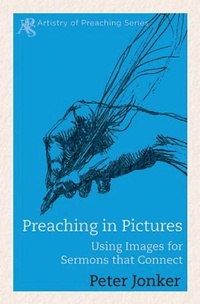
Preaching in Pictures
Description

The preachers' words are meant to connect, to resonate with and influence hearers. Too often, sermons fall short. Preaching in Pictures: Using Images for Sermons that Connect shows how to choose, use, and illustrate a controlling image in every sermon. Readers learn how one effective image can cause the proclaimed word to sink in and transform the listener. Peter Jonker helps readers to build skill and confidence, with practical instruction, examples, and straightforward teaching.
"Good preaching isn't just the dissemination of information; it is a conduit of Spirit-empowered formation. Such formative preaching doesn't convince the intellect; it captures the imagination. A controlling image has the power to do just this-to capture the imagination. Peter Jonker invites preachers to understand and to effectively use controlling images for formation of the hearer. This great book is erudite and accessible, theoretically grounded and yet intensely practical, complete with exercises. I'll be pointing preachers to it from now on." --James K.A. Smith, author of Desiring the Kingdom: Worship, Worldview, and Cultural Formation
"Preaching in Pictures opened eyes of my imagination. I can't wait to write my next sermon." --Heidi DeJonge Pastor, Westside Fellowship Christian Reformed Church, Kingston, Ontario
"Peter Jonker offers preachers practical ways to connect the gospel in the hearts of listeners, with a wealth of helpful examples. This is a fresh and welcome perspective, just the book for preachers whose sermons have reached their shelf life and are in need of new energy." --John Michael Rottman, Professor of Preaching Calvin Theological Seminary
"Sane, balanced, assured--but also strikingly insightful--Peter Jonker's writing is a sheer gift to anyone interested in eventful preaching. Every page is worth pondering. Jonker writes with great verve and authority." --Cornelius Plantinga, Jr., Author of Reading for Preaching: The Preacher in Conversation with Storytellers, Biographers, Poets, and Journalists
More details
Other editions
Additional editions
Person
After an idyllic Canadian childhood in Kingston, Ontario, Peter Jonker now resides in Grand Rapids Michigan where he is currently the Minister of Preaching and Worship at LaGrave Avenue Christian Reformed Church. Before that he was pastor at Woodlawn Christian Reformed Church, also in Grand Rapids. He is married with three teenage children.
Content
- Intro
- Cover
- Halftitle
- Other Books in the Artistry of Preaching Series
- Title
- Copyright
- Epigraph
- Contents
- Series Preface
- Acknowledgments
- Chapter One
- Taming the Beautiful Mess
- In Defense of Sermon Craft
- The Sermon Theme and Its (Limited) Uses
- Adding a Goal Statement
- Imagination: Where Change Happens
- Images as Agents of the Imagination
- Images and Stories at Work
- Preachers Reaching for the Imagination
- Beyond Theme and Purpose: The Four Pages
- The Importance of a Controlling Image
- A Tool for Imaginative Preaching: The Controlling Image Statement
- Chapter Two
- An Example of a Controlling Image
- Controlling Images: Both Static and Kinetic
- Sermons Propelled by Controlling Phrases9
- Sermons Propelled by Controlling Images from Outside the Biblical Text
- Sermons Propelled by Controlling Phrases from Outside the Biblical Text
- Sermons Propelled by Controlling Images from Within the Biblical Text
- Comparing Inside and Outside Images
- Controlling Images Should Center on Either Trouble or Grace
- Controlling Images and Sermon Tone
- Conclusion
- Chapter Three
- Luminous Detail: Poets Using Images
- A Poem's Trajectory: From Delight to Wisdom
- Step One: Delighted Sight
- Step Two: Luminous Specificity
- Step Three: Speak Wisdom
- Poets and Preachers: Parallels and Differences
- Chapter Four
- A Strong Image Puts People in a Story
- Image Should Usually Come Before Explanation
- A Good Image Must Be Properly Framed
- Chapter Five
- Looking for a Controlling Image: Lectio Divina
- The Steps of Lectio Divina
- Looking for a Controlling Image: Poetic Exercises
- Learning to See the Details
- The Three Levels of an Image: Senses, Feeling, and Thought
- Matching the Image to the Theme
- Imagining a Hearer
- Chapter Six
- Benefits of Presentational Technology
- Concerns about Presentational Technology
- Presentational Technology Is Here to Stay
- Keep It Simple: One Theme, One Metaphor
- The Controlling Image and Potential Screen Images
- A Good Screen Image Needs You
- Use Propulsive Images, Not Clichés
- Icons as Images That Propel
- Connotative and Denotative Images
- Finding a Propulsive Picture
- Pay Attention to Images and Context
- Local Imagery
- Develop Files of Images
- Differences between Static Images and Video Clips
- The Word Comes First
- Conclusion
- Notes
- Bibliography
