

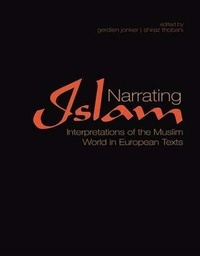
Narrating Islam
Interpretations of the Muslim World in European Texts
Published on 18. December 2009
304 pages
978-0-85771-503-6 (ISBN)
Description

Mapping the diverse images of Islam and Muslims in educational texts as reproduced in national contexts across Europe and neighbouring regions, Narrating Islam reveals a kaleidoscopic picture in which Central Europe (Germany) keeps alive historic images reaching back to the time of the Reformation; the South (Spain, Italy, Morocco) engages with shared memories and intimate encounters; the West (Great Britain, France) grapples with the reality of migration against the backdrop of medieval and colonial constructions; the South-east (Albania) reflects the ambivalence of being 'in-between' two worlds; the Orthodox East (Russia) resuscitates old stereotypes of the 'ferocious Tartar', whereas the Muslim East (Tartarstan) expresses postures of affinity with Europe.
The first part of the book deals with the textual layers in which the different historic images of Muslims and Islam have become embedded. Textbook narratives build on these, choosing from a repertoire of images, selectively adding or dropping cultural artefacts to 'fit' the present context. By analysing these layers, the authors unravel the longue duree of the European narrations that refer to Islam. Tracing their pathways through history leads to identifying historical and cultural scripts of the 'other', raising questions of how renderings of the past function as semantic reservoirs for perceptions of the present.
The second part explores the mix of contemporary textbook images of the 'other' in a global context impacted by the change of frames after the Second World War. The contributions address political decision-making at the start of the European Union as well as recent cross-cultural productions of pedagogic images. Considered in the studies here are political, cultural and educational strategies of inclusion and exclusion of Islam and Muslims as applied in modern history textbooks.
Narrating Islam offers a frame to critically discuss European identity through interrogating how pedagogical discourses negotiate the Muslim presence in and around Europe. It also opens a window into how Muslims, both migrants and historically-rooted communities, position themselves or are positioned by policymakers on the map of Europe.
The first part of the book deals with the textual layers in which the different historic images of Muslims and Islam have become embedded. Textbook narratives build on these, choosing from a repertoire of images, selectively adding or dropping cultural artefacts to 'fit' the present context. By analysing these layers, the authors unravel the longue duree of the European narrations that refer to Islam. Tracing their pathways through history leads to identifying historical and cultural scripts of the 'other', raising questions of how renderings of the past function as semantic reservoirs for perceptions of the present.
The second part explores the mix of contemporary textbook images of the 'other' in a global context impacted by the change of frames after the Second World War. The contributions address political decision-making at the start of the European Union as well as recent cross-cultural productions of pedagogic images. Considered in the studies here are political, cultural and educational strategies of inclusion and exclusion of Islam and Muslims as applied in modern history textbooks.
Narrating Islam offers a frame to critically discuss European identity through interrogating how pedagogical discourses negotiate the Muslim presence in and around Europe. It also opens a window into how Muslims, both migrants and historically-rooted communities, position themselves or are positioned by policymakers on the map of Europe.
More details
Language
English
Place of publication
United Kingdom
Publishing group
Bloomsbury Publishing PLC
Target group
Professional and scholarly
File size
6,20 MB
ISBN-13
978-0-85771-503-6 (9780857715036)
Copyright in bibliographic data and cover images is held by Nielsen Book Services Limited or by the publishers or by their respective licensors: all rights reserved.
Schweitzer Classification
Other editions
Additional editions
Gerdien Jonker | Shiraz Thobani
Narrating Islam
Interpretations of the Muslim World in European Texts
Book
12/2009
I.B. Tauris
€193.45
Shipment within 3-4 weeks
Persons
Content
Table of contents:
Part 1: Historical Perceptions
1. The Longue Dur?e of the Islam Narrative: Genesis and Change in Central European Textbooks
2. History and Caricature: An Approach to Medieval Iberian History Through Textbooks
3. Who Were the 'Others' at Poitiers? Medieval History and Intercultural Didactics
4. The Rise and Fall of the Ottoman Empire: European Perspectives at the Start of the EWG
5. The Image of Muslims and Tartars in Local (Tartarstan) and Federal (Russian) History Textbooks
Part 2: Contemporary Representations
6. Peripheral Vision in the National Narrative: Muslim History in British Textbooks
7. A Gender-Based Reading of the Iconography of Islam in French, Italian and German Textbooks
8. Representation of Islam and Muslim Albanians in the Albanian Secondary Education HIstory Textbooks
9. The Image of Europe in Moroccan History Textbooks
Part 1: Historical Perceptions
1. The Longue Dur?e of the Islam Narrative: Genesis and Change in Central European Textbooks
2. History and Caricature: An Approach to Medieval Iberian History Through Textbooks
3. Who Were the 'Others' at Poitiers? Medieval History and Intercultural Didactics
4. The Rise and Fall of the Ottoman Empire: European Perspectives at the Start of the EWG
5. The Image of Muslims and Tartars in Local (Tartarstan) and Federal (Russian) History Textbooks
Part 2: Contemporary Representations
6. Peripheral Vision in the National Narrative: Muslim History in British Textbooks
7. A Gender-Based Reading of the Iconography of Islam in French, Italian and German Textbooks
8. Representation of Islam and Muslim Albanians in the Albanian Secondary Education HIstory Textbooks
9. The Image of Europe in Moroccan History Textbooks
