

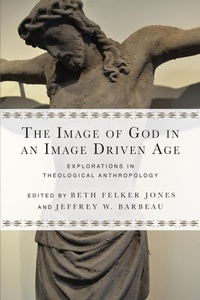
Image of God in an Image Driven Age
Description

Whether on the printed page, the television screen or the digital app, we live in a world saturated with images.Some images help shape our understanding of ourselves and the world around us in positive ways, while others lead us astray and distortour relationships. Christians confess that human beings have been created in the image of God, yet we chose to rebel against that God and so became unfaithful bearers of God's image. The good news of the gospel is that Jesus, who is the image of God, restores the divine image in us, partially now and fully in the day to come.The essays collected in The Image of God in an Image Driven Age explore the intersection of theology and culture. With topics ranging across biblical exegesis, theart gallery, Cormac McCarthy, racism, sexuality and theosis, the contributors to this volume offer a unified vision-ecumenical in nature and catholic in spirit-of what it means to be truly human and created in the divine image in the worldtoday.This collection from the 2015 Wheaton Theology Conference includes contributions by Daniela C. Augustine, Craig L. Blomberg, William A. Dyrness, Timothy R. Gaines and Shawna Songer Gaines, Phillip Jenkins, Beth Felker Jones, Christina Bieber Lake, Catherine McDowell, Ian A. McFarland, Matthew J. Milliner, Soong-Chan Rah and Janet Soskice, as well as original poems by Jill Peláez Baumgaertner and Brett Foster.
More details
Other editions
Additional editions
Person
Jeffrey W. Barbeau (PhD, Marquette University) is professor of theology at Wheaton College. A theologian, literary critic, and historian, he is the author of numerous monographs, anthologies, and edited books, including The Cambridge Companionto British Romanticism and Religion, The Spirit of Methodism: From the Wesleys to a Global Communion, and Religion in Romantic England: An Anthology of Primary Sources.
Content
Acknowledgments Introduction Beth Felker Jones and Jeffrey W. Barbeau Zola, Imago Dei, on Her First Birthday Jill Peláez Baumgaertner Whiteout Brett Foster Part I: Canon 1. 'In the Image of God He Created Them': How Genesis 1:26-27 Defines the Divine-Human Relationship and Why It Matters Catherine McDowell 2. Poised Between Life and Death: The Imago Dei After Eden William A.Dyrness 3. 'True Righteousness and Holiness': The Image of God in the New Testament Craig L. Blomberg Part II: Culture 4. Uncovering Christ: Sexuality in the Image of the Invisible God TimothyR. Gaines and Shawna Songer Gaines 5. Culture Breaking: In Praise of Iconoclasm Matthew J. Milliner 6. Carrying the Fire, Bearing the Image: Theological Reflections on Cormac McCarthy?s The Road Christina BieberLake Part III: Vision 7. What Does It Mean to See Someone? Icons and Identity Ian A. McFarland 8. Image, Spirit and Theosis: Imaging God in an Image-Distorting World Daniela C. Augustine 9. The God of Creative Address: Creation, Christology and Ethics Janet Soskice Part IV: Witness 10. The Sin of Racism: Racialization of the Image of God Soong-Chan Rah 11. Witnessing in Freedom: Resisting Commodification of the Image Beth Felker Jones 12. The Storm of Images: The Image of God in Global Faith Philip Jenkins Epilogue Jeffrey W. Barbeau and Beth Felker Jones List of Contributors Name and Subject Index Scripture Index
