


Screening American Film
Description

Bringing together fifty-one essays, each devoted to a single American film, Screening American Film offers a wide-ranging exploration of the histories, practices, politics, styles, and meanings that have shaped American film since the 1930s. While the volume proceeds decade by decade from the 1930s onward, contributors reach further back and forward to illuminate the breadth and complexity of the American screen.
Complemented by the volumes on Screening American Independent Cinema (2023) and Screening Classical Hollywood Cinema (forthcoming), in these fifty-one chapters readers will encounter American cinema not as a singular tradition but as a constellation of overlapping and often competing practices, modes, and priorities: classical and post-classical Hollywood, major blockbusters, independent and indie filmmaking, exploitation and arthouse. The essays draw upon a variety of critical frameworks including the industrial, aesthetic, historical, political, and thematic while remaining attentive to key questions of style, genre, authorship, performance, stardom, and context.
The central aim of Screening American Film is to complement the viewing and teaching of American cinema in film and screen studies classrooms, across related disciplines, and to reshape notions of canon. Each essay has been designed to stand on its own while contributing to a larger mosaic of what American film has been, and what it continues to become, from Mae West to Barbie. Written to support film screenings and teaching: every film discussed here is available for viewing, in one format or another, even if it lies outside the conventional structures of platform-era film consumption. Indeed, part of the book's ambition is to highlight American films whose significance becomes newly visible in the revisitation of established "classics" sitting aside the lesser known, and in some cases, entirely un-mapped cinematic terrain.
The fifty-one entries introduce students to different approaches within film studies from historical and contextual framing, film analysis, industrial and institutional analysis, politics and ideology, genre and authorship, film theory, representation, exhibition and reception, and technology. Screening American Film is the essential resource for anyone teaching or studying American film.
More details
Other editions
Additional editions
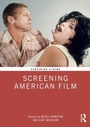
Persons
Nessa Johnston is Lecturer in Screen Studies and Digital Media at University of Liverpool, author of The Commitments: Youth, Music and Authenticity in 1990s Ireland (Routledge 2022), and co-editor with Jamie Sexton and Elodie Roy of Anonymous Sounds: Library Music and Screen Cultures in the 1960s and 1970s (2025). She has published widely on low-budget filmmaking, American independent cinema, film sound and music, and cult cinema, including in the journals Continuum; Music, Sound and the Moving Image; The Soundtrack; The Velvet Light Trap and Alphaville.
Gary Needham is senior lecturer in screen studies at the University of Liverpool. He is the author or co-editor of several books including Asian Cinemas (2006), Queer TV (2009), Brokeback Mountain (2010), Warhol in Ten Takes (2013), United Artists (2020). He is also series editor of both Routledge's Screening Cinema and with Yannis Tzioumakis The Routledge Hollywood Centenary. His forthcoming books are Sex, Guys, and Videotape: American independent cinema and the AIDS Cris, a co-authored Queer Film Classics on the first AIDS film Buddies, and a co-edited collection on filmmaker Andrew Haigh.
Content
Introduction 1. Night After Night (1932) 2. One Way Passage (1932) 3. Flying Down to Rio (1933) 4. Notorious (1946) 5. A Letter to Three Wives (1949) 6. The Gunfighter (1950) 7. Sunset Boulevard (1950) 8. Rebel Without a Cause (1955) 9. Tea and Sympathy (1956) 10. A Bucket of Blood (1959) 11. Valley of the Dolls (1967) 12. Night of the Living Dead (1968) 13. Angel, Angel, Down We Go (1969) 14. The Landlord (1970) 15. Love Story (1970) 16. Score (1972) 17. Devil in Miss Jones (1973) 18. Willie Dynamite (1973) 19. Nashville (1975) 20. A Star is Born (1976) 21. Star Wars (1977) 22. Invasion of the Body Snatchers (1978) 23. Halloween (1978) 24. Grease (1978) 25. Polyester (1981) 26. Rambo: First Blood Part II (1985) 27. Ferris Bueller's Day Off (1986) 28. Lucas (1986) 29. Dirty Dancing (1987) 30. Baby Boom (1987) 31. The Last Temptation of Christ (1988) 32. Die Hard (1988) 33. Thousand Pieces of Gold (1990) 34. Candyman (1992) 35. Sleepless in Seattle (1993) 36. Speed (1994) 37. Clerks (1994) 38. Erin Brockovich (2000) 39. Monsters Ball (2001) 40. Zodiac (2007) 41. Sleep Dealer (2008) 42. The Bling Ring (2013) 43. The Grand Budapest Hotel (2014) 44. It Follows (2015) 45. Carol (2015) 46. Tangerine (2016) 47. Certain Women (2016) 48. Moonlight (2016) 49. Lady Bird (2017) 50. Spiderman: No Way Home (2021) 51. Barbie (2023)
