

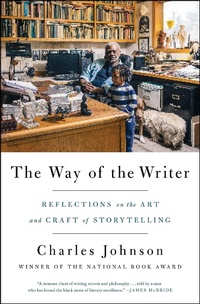
The Way of the Writer
Reflections on the Art and Craft of Storytelling
Published on 6. December 2016
256 pages
978-1-5011-4723-4 (ISBN)
Description

From Charles Johnson?a National Book Award winner, Professor Emeritus at University of Washington, and one of America's preeminent scholars on literature and race?comes an instructive, inspiring guide to the craft and art of writing.
An award-winning novelist, philosopher, essayist, screenwriter, professor, and cartoonist, Charles Johnson has devoted his life to creative pursuit. His 1990 National Book Award-winning novel Middle Passage is a modern classic, revered as much for its daring plot as its philosophical underpinnings. For thirty-three years, Johnson taught and mentored students in the art and craft of creative writing. The Way of the Writer is his record of those years, and the coda to a kaleidoscopic, boundary-shattering career.
Organized into six accessible, easy-to-navigate sections, The Way of the Writer is both a literary reflection on the creative impulse and a utilitarian guide to the writing process. Johnson shares his lessons and exercises from the classroom, starting with word choice, sentence structure, and narrative voice, and delving into the mechanics of scene, dialogue, plot and storytelling before exploring the larger questions at stake for the serious writer. What separates literature from industrial fiction? What lies at the heart of the creative impulse? How does one navigate the literary world? And how are philosophy and fiction concomitant?
Luminous, inspiring, and imminently accessible, The Way of the Writer is a revelatory glimpse into the mind of the writer and an essential guide for anyone with a story to tell.
An award-winning novelist, philosopher, essayist, screenwriter, professor, and cartoonist, Charles Johnson has devoted his life to creative pursuit. His 1990 National Book Award-winning novel Middle Passage is a modern classic, revered as much for its daring plot as its philosophical underpinnings. For thirty-three years, Johnson taught and mentored students in the art and craft of creative writing. The Way of the Writer is his record of those years, and the coda to a kaleidoscopic, boundary-shattering career.
Organized into six accessible, easy-to-navigate sections, The Way of the Writer is both a literary reflection on the creative impulse and a utilitarian guide to the writing process. Johnson shares his lessons and exercises from the classroom, starting with word choice, sentence structure, and narrative voice, and delving into the mechanics of scene, dialogue, plot and storytelling before exploring the larger questions at stake for the serious writer. What separates literature from industrial fiction? What lies at the heart of the creative impulse? How does one navigate the literary world? And how are philosophy and fiction concomitant?
Luminous, inspiring, and imminently accessible, The Way of the Writer is a revelatory glimpse into the mind of the writer and an essential guide for anyone with a story to tell.
More details
Other editions
Additional editions
Book
12/2016
Simon & Schuster
€15.50
Shipment within 10-20 days
Book
12/2016
Scribner Book Company
€23.00
Shipment within 10-20 days
Person
Charles Johnson is a novelist, essayist, literary scholar, philosopher, cartoonist, screenwriter, and professor emeritus at the University of Washington in Seattle. A MacArthur fellow, his fiction includes Night Hawks, Dr. King's Refrigerator, Dreamer, Faith and the Good Thing, and Middle Passage, for which he won the National Book Award. In 2002 he received the Arts and Letters Award in Literature from the American Academy of Arts and Letters. He lives in Seattle.
Content
- Intro
- Dedication
- Introduction
- I. Who Is the Writer?
- 1. In the Beginning . . .
- 2. The Apprentice Novels
- 3. A Day in the Life
- 4. The Writing Space
- 5. The Artist as Shape-Shifter
- 6. The Question of Vision
- II. The Process of Writing
- 7. A Boot Camp for Creative Writing
- 8. Words
- 9. In Defense of Our Language
- 10. Telling It Long and Telling It Short
- 11. Opening Sentences: A Hundred Rays of Light
- 12. On Craft and Revision
- 13. The Challenge of Voice
- 14. How We Sound
- 15. Nature Gives Us No Metaphors
- 16. Scene and Dialogue
- 17. The Importance of Plot
- 18. Storytelling and the Alpha Narrative
- 19. On the Novel and Short Story
- 20. The Essay
- 21. The Risks We Take
- III. What Helps the Writer?
- 22. On Teachers and Mentors
- 23. The Wounds That Create Our Work
- 24. The First Readers
- 25. Writers and Editors
- 26. On Reading
- 27. The Virtues of Journalism
- 28. Practical Literary Advice
- IV. The Writer as Teacher
- 29. The Literary Duet: Creative Writing and Critical Theory
- 30. The Creative-Writing Teacher as Soul Catcher
- 31. Writing and Teaching, or From Mr. Hyde to Dr. Jekyll
- V. The Writing Life and the Duties of the Writer
- 32. The Art of Book Reviewing
- 33. In Translation
- 34. On Screenwriting
- 35. Editing and Small Presses
- VI. Philosophy and the Writer
- 36. Writing Well Is Thinking Well
- 37. The Writer and Philosophy
- 38. Fiction and the Liberation of Perception
- 39. New Fiction Novelists
- 40. Science Fiction and the Philosophical Novel
- 41. Sartre and the Nothingness of Being
- 42. The Truth-Telling Power of Fiction
- Afterword: Notes from a Former Student by Marc C. Conner
- Acknowledgments
- About Charles Johnson
- Copyright
