

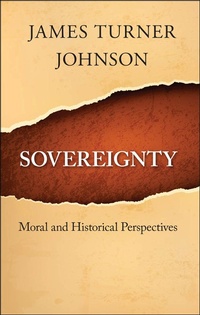
Sovereignty
Description

Sovereignty generally refers to a particular national territory, the inviolability of the nation's borders, and the right of that nation to protect its borders and ensure internal stability. From the Middle Ages until well into the Modern Period, however, another concept of sovereignty held sway: responsibility for the common good. James Turner Johnson argues that these two conceptions-sovereignty as self-defense and sovereignty as acting on behalf of the common good-are in conflict and suggests that international bodies must acknowledge this tension.
Johnson explores this earlier concept of sovereignty as moral responsibility in its historical development and expands the concept to the current idea of the Responsibility to Protect. He explores the use of military force in contemporary conflicts, includes a review of radical Islam, and provides a corrective to the idea of sovereignty as territorial integrity in the context of questions regarding humanitarian intervention. Johnson's new synthesis of sovereignty deepens the possibilities for cross-cultural dialogue on the goods of politics and the use of military force.
More details
Other editions
Additional editions
Person
James Turner Johnson is Distinguished Professor of Religion and a professor in the graduate program in political science at Rutgers University. He has received Rockefeller, Guggenheim, and National Endowment for the Humanities fellowships and various other research grants and has directed two NEH summer seminars. He is the author of eleven books and editor or coeditor of five others, including Can Modern War be Just?, Ethics and the Use of Force, The Quest for Peace, and Morality and Contemporary Warfare.
Content
Introduction
I. Sovereign Authority and the Right to Use Armed Force in Classic Just War Tradition
1.Sovereignty as Responsibility: The Coming Together and Development of a Tradition
2.Sovereign Authority and the Justified Use of Force in Thomas Aquinas and His Early Modern Successors
3.Sovereign Authority and the Justified Use of Force in Luther and the Reformation
4.Grotius and His Impact: The Westphalian Settlement, the Idea of the ?Law of Nations,? and the Move to the Territorial Idea of Sovereignty
5. Transitions in the Concept of Sovereignty
II. Engaging the Westphalian Idea of Sovereignty
6. Finding Common Ground in the Diversity of Civilizations
7. The Two Conceptions of Sovereignty and the ?Responsibility to Protect? Doctrine
Conclusion
Bibliography
Index
