

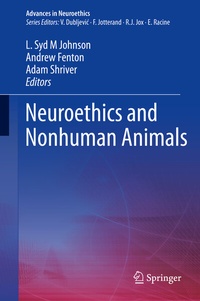
Neuroethics and Nonhuman Animals
Description

This edited volume represents a unique addition to the available literature on animal ethics, animal studies, and neuroethics. Its goal is to expand discussions on animal ethics and neuroethics by weaving together different threads: philosophy of mind and animal minds, neuroscientific study of animal minds, and animal ethics.
Neuroethical questions concerning animals' moral status, animal minds and consciousness, animal pain, and the adequacy of animal models for neuropsychiatric disease have long been topics of debate in philosophy and ethics, and more recently also in neuroscientific research. The book presents a transdisciplinary blend of voices, underscoring different perspectives on the broad questions of how neuroscience can contribute to our understanding of nonhuman minds, and on debates over the moral status of nonhuman animals. All chapters were written by outstanding scholars in philosophy, neuroscience, animal behavior, biology, neuroethics, and bioethics, and cover a range of issues and species/taxa.
Given its scope, the book will appeal to scientists and students interested in the debate on animal ethics, while also offering an important resource for future researchers.
Chapter 13 is available open access under a CC BY 4.0 license at link.springer.com.Reviews / Votes
More details
Other editions
Additional editions
Persons
Andrew Fenton , PhD, is Associate Professor of Philosophy at Dalhousie University. He has numerous journal articles on animal neuroethics and animal research ethics, as well as chapters in books such as The Routledge Handbook of Neuroethics and The Routledge Handbook of Philosophy of Animal Minds . He coordinates the interdisciplinary and transinstitutional Halifax Animal Studies Group in Halifax, Nova Scotia.
Adam Shriver is a Research Fellow at the Oxford Uehiro Centre for Practical Ethics and the Wellcome Centre for Ethics and Humanities at the University of Oxford. He has published articles at the intersection of animal ethics and the neurosciences in journals such as Philosophical Psychology , Neuroethics , The Cambridge Quarterly of Healthcare Ethics , and The Journal of Agricultural and Environmental Ethics . Adam co-organized a pre-conference workshop on Animals and Neuroethics for the 2009 Society for Philosophy and Psychology annual meeting, organized a 2016 workshop on Animal Research Neuroethics at the University of Pennsylvania with funding from the Alternatives Research Development Foundation, and is editing a special issue on bioethics of the International Laboratory Animal Research journal.
