

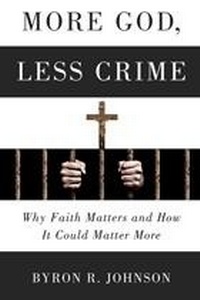
More God, Less Crime
Why Faith Matters and How It Could Matter More
Published on 15. May 2011
288 pages
978-1-59947-383-3 (ISBN)
Description

In More God, Less Crime renowned criminologist Byron R. Johnson proves that religion can be a powerful antidote to crime. The book describes how faith communities, congregations, and faith-based organizations are essential in forming partnerships necessary to provide the human and spiritual capital to effectively address crime, offender rehabilitation, and the substantial aftercare problems facing former prisoners. There is scattered research literature on religion and crime but until now, there has never been one publication that systematically and rigorously analyzes what we know from this largely overlooked body of research in a lay-friendly format. The data shows that when compared to current strategies, faith-based approaches to crime prevention bring added value in targeting those factors known to cause crime: poverty, lack of education, and unemployment. In an age of limited fiscal resources, Americans can't afford a criminal justice system that turns its nose up at volunteer efforts that could not only work better than the abysmal status quo, but also save billions of dollars at the same time. This book provides readers with practical insights and recommendations for a faith-based response that could do just that.
More details
Language
English
Place of publication
Radnor
United States
File size
3,76 MB
ISBN-13
978-1-59947-383-3 (9781599473833)
Copyright in bibliographic data and cover images is held by Nielsen Book Services Limited or by the publishers or by their respective licensors: all rights reserved.
Schweitzer Classification
Other editions
Additional editions
Book
05/2011
Templeton Foundation Press,U.S.
€29.00
Article not available at the moment
Person
"Johnson fully, carefully, and persuasively reveals the bestkept secret about crime reduction: religion works!" -Rodney Stark, The Rise of Christianity
There is mounting evidence that increasing religiosity not only reduces crime and delinquency, but it also promotes prosocial behavior. In spite of these findings, experts rarely include the "faith factor" in discussions of possible solutions to crime, drug use, offender treatment, or exprisoners returning to society. This failing can be attributed in equal measure to the secular criminal justice professionals who allow their own anti-religious prejudices to shape their judgments, as well as to the religious volunteers who rely so heavily on their own beliefs that they see no need to validate their work with
actual research. These shortcomings have cost the American public untold damages in both wealth and safety.
In More God, Less Crime renowned criminologist Byron R. Johnson proves that religion can be a powerful antidote to crime. The book describes how faith communities, congregations, and faith-based organizations are essential in forming partnerships necessary to provide the human and spiritual capital to effectively address crime, offender rehabilitation, and the substantial aftercare problems facing former prisoners. There is scattered research literature on religion and crime but until now there has never been one publication that systematically and rigorously analyzes what we know from this largely overlooked body of research in a lay-friendly format. The data shows that when compared to current strategies, faith-based approaches to crime prevention bring added value in targeting those factors known to cause crime: poverty, lack of education, and unemployment. In an age of limited fiscal resources, Americans can't afford a criminal justice system that turns its nose up at volunteer efforts that could not only work better than the abysmal status quo, but also save billions of dollars at the same time. This book provides readers with practical insights and recommendations for a faith-based response that could do just that.
More God, Less Crime will serve as a roadmap for how the "faith factor" can become a powerful catalyst to mobilize faith-based efforts to more effectively confront the many chronic problems facing the American criminal justice system. It should be required reading not only for those working within this system, but for the everyday people who fill the pews of the more than 380,000 religious congregations across the country as well.
Visit www.moregodlesscrime to find videos, inspiring stories, and a community of concerned citizens, scholars, and professionals.
There is mounting evidence that increasing religiosity not only reduces crime and delinquency, but it also promotes prosocial behavior. In spite of these findings, experts rarely include the "faith factor" in discussions of possible solutions to crime, drug use, offender treatment, or exprisoners returning to society. This failing can be attributed in equal measure to the secular criminal justice professionals who allow their own anti-religious prejudices to shape their judgments, as well as to the religious volunteers who rely so heavily on their own beliefs that they see no need to validate their work with
actual research. These shortcomings have cost the American public untold damages in both wealth and safety.
In More God, Less Crime renowned criminologist Byron R. Johnson proves that religion can be a powerful antidote to crime. The book describes how faith communities, congregations, and faith-based organizations are essential in forming partnerships necessary to provide the human and spiritual capital to effectively address crime, offender rehabilitation, and the substantial aftercare problems facing former prisoners. There is scattered research literature on religion and crime but until now there has never been one publication that systematically and rigorously analyzes what we know from this largely overlooked body of research in a lay-friendly format. The data shows that when compared to current strategies, faith-based approaches to crime prevention bring added value in targeting those factors known to cause crime: poverty, lack of education, and unemployment. In an age of limited fiscal resources, Americans can't afford a criminal justice system that turns its nose up at volunteer efforts that could not only work better than the abysmal status quo, but also save billions of dollars at the same time. This book provides readers with practical insights and recommendations for a faith-based response that could do just that.
More God, Less Crime will serve as a roadmap for how the "faith factor" can become a powerful catalyst to mobilize faith-based efforts to more effectively confront the many chronic problems facing the American criminal justice system. It should be required reading not only for those working within this system, but for the everyday people who fill the pews of the more than 380,000 religious congregations across the country as well.
Visit www.moregodlesscrime to find videos, inspiring stories, and a community of concerned citizens, scholars, and professionals.
Content
Foreword / vii
Introduction / xi
Chapter 1: The Last Acceptable Prejudice / 3
Chapter 2: Preachers Partner with Police to Reduce Gang Violence: The Boston Miracle / 13
Chapter 3: Children of Prisoners: People of Faith Mentoring Children of Promise / 27
Chapter 4: The Center for Neighborhood Enterprise and the Violence-Free Zone / 43
Chapter 5: A Systematic Review of the Literature: 1944 to 2010 / 73
Chapter 6: Can a Faith-Based Prison Reduce Recidivism? / 99
Chapter 7: Can a Faith-Based Prison Rehabilitate Inmates? / 117
Chapter 8: Jailhouse Religion, Spiritual Transformation, and Long-Term Change / 155
Chapter 9: Why Religion Matters / 171
Chapter 10: Prisoner Reentry and Aftercare / 185
Chapter 11: Not by Faith Alone: The Need for Intermediaries / 203
Acknowledgments / 219
Appendixes / 221
Notes / 259
Index / 283
Introduction / xi
Chapter 1: The Last Acceptable Prejudice / 3
Chapter 2: Preachers Partner with Police to Reduce Gang Violence: The Boston Miracle / 13
Chapter 3: Children of Prisoners: People of Faith Mentoring Children of Promise / 27
Chapter 4: The Center for Neighborhood Enterprise and the Violence-Free Zone / 43
Chapter 5: A Systematic Review of the Literature: 1944 to 2010 / 73
Chapter 6: Can a Faith-Based Prison Reduce Recidivism? / 99
Chapter 7: Can a Faith-Based Prison Rehabilitate Inmates? / 117
Chapter 8: Jailhouse Religion, Spiritual Transformation, and Long-Term Change / 155
Chapter 9: Why Religion Matters / 171
Chapter 10: Prisoner Reentry and Aftercare / 185
Chapter 11: Not by Faith Alone: The Need for Intermediaries / 203
Acknowledgments / 219
Appendixes / 221
Notes / 259
Index / 283
