

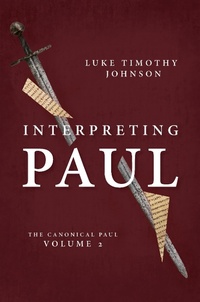
Interpreting Paul
The Canonical Paul, Volume 2
Published on 20. May 2021
424 pages
978-1-4674-6157-3 (ISBN)
Description

"For me, Paul has always been the most difficult and therefore also most delightful advocate and interpreter of the Lord Jesus Christ and of the human experience of God's transforming power through Christ. In Paul's letters above all I have found the quality of mind and the depth of conviction that could arouse in me both excitement and passion. And it is Paul's letters, above all, that show how important and difficult is life together in the church."- from the preface With the contextual framework in place from volume one of The Canonical Paul, Luke Timothy Johnson now probes each of the thirteen biblical letters traditionally attributed to the apostle Paul in a way that balances respect for historical integrity with attention to present-day realities. In doing so, Johnson reforges the connection between biblical studies and the life of the church, seeking to establish once again the foundational and generative role that the thirteen letters of Paul have had among Christians for centuries.Far from being a "definitive theology" of Paul, or an oversimplified synthesis, Interpreting Paul provides glimpses into various moments of Paul's thinking and teaching that we find in Scripture, modeling how one might read his letters closely for fresh, creative interpretations now and into the future. Approached in this way, both in minute detail and as a whole canon, Paul's letters yield rich insights, and his voice becomes accessible to all readers of the Bible.
More details
Other editions
Additional editions
Book
05/2021
William B Eerdmans Publishing Co
€63.50
Shipment within 15-20 days
Content
- Intro
- Title Page
- Copyright
- Contents
- Preface
- Abbreviations
- Introduction
- No "Theology of Paul"
- The Benefits of Deconstruction
- 1. Romans 3:21-26 and the Faith of Jesus
- Faith as the Confession of Christ
- Faith as Response to God
- Faith as Obedience
- The Obedience of Jesus as the Faith of Jesus
- Conclusion
- 2. The Social Dimensions of Soteria in Luke-Acts and Paul
- The Question
- Comparative Method
- Criteria for Comparison
- The Social Character of Salvation in Luke-Acts
- The Gospel
- Acts
- The Social Dimension of Salvation in Paul's Letters
- Romans
- Corinthian Correspondence
- Thessalonian Correspondence
- Captivity Correspondence
- Conclusion
- 3. Transformation of the Mind and Moral Discernment in Romans
- A First Look at Romans
- A Second Look at Romans
- A Glance at Aristotle
- The Measure of Faith and the Mind of Christ
- The Role of the Holy Spirit
- Evidence from Other Letters
- Conclusion
- 4. Life-Giving Spirit
- Paul's Argument in 1 Corinthians 15
- The Functions of the Holy Spirit
- Conclusion
- 5. The Body in Question
- Thinking Body
- The Assembly as the Soma Christou
- Sexual Involvement
- The Implications of Meals
- Conclusion
- 6. Glossolalia and the Embarrassments of Experience
- The Nature of the Phenomenon
- The Pervasiveness of the Phenomenon
- Evaluations of Glossolalia by New Testament Writers
- The Ambiguous Character of Glossolalia
- Glossolalia and Deviance
- 7. God Was in Christ
- The Mythic Character of 2 Corinthians 5:19
- Paul's Language in 2 Corinthians 5:1-21
- The Logic of Mythic Language
- Conclusion
- 8. Truth and Reconciliation in 2 Corinthians
- The Reality of Alienation
- The Emotional Truth of Hurt and Anger
- The Roots of Reconciliation
- The Body Language of Reconciliation
- Conclusion
- 9. Ritual Imprinting and the Politics of Perfection
- Reconstructing the Ritual
- How Many Initiations?
- Initiation into the Mysteries
- Mysterious Initiation in Judaism
- Ritual Initiation and Status Elevation
- Jewish and Christian Practice
- The Character of Paul's Response
- Conclusion
- 10. The Truth of Christian Experience
- The Rhetorical Situation
- The Story of the Galatians
- Paul's Story
- The Story of Jesus
- The Story of Israel
- Conclusion
- 11. The Expression of Christian Experience
- The Attractions and Perils of Heteronomy
- The Paradoxical Character of Christian Freedom
- Deciphering Galatians 6
- Closing Assertions
- Mutual Care, Individual Responsibility (Gal 6:1-5)
- Sharing All Good Things
- Conclusion
- 12. Paul's Vision of the Church
- Paul's Ecclesial Focus
- Israel and the Church
- Mission of the Church
- The Church in Metaphor
- Organization in the Local Church
- The Church in Colossians and Ephesians
- The Church in the Pastorals
- Conclusion
- 13. The Rise of Church Order
- The Church as Historical Phenomenon
- Eschatology and Church Structure
- The Rise and Development of Church Order
- History
- Theology
- Conclusion
- 14. Fellowship of Suffering
- The Present Gift: The Power of God and the Power of the Resurrection
- The Ambiguities of Weakness
- Suffering With and For
- Return to Philippians
- The Mind of Christ
- The Mind of the Philippians
- Living Examples of the Mind of Christ
- Conclusion
- 15. Mystery and Metaphor in Colossians
- The Mystery of Christ among the Gentiles
- Paul's Usage
- Mysterion in Colossians
- What the Colossians Have Been Given in Christ
- The Metaphors of Christian Maturity
- Stability
- True and False
- Life and Growth
- Mystery and Metaphor in Baptism
- Conclusion
- 16. Doing the Truth in Love
- The Evidence in Paul on Sex and Gender
- Sex and Gender Today
- A Necessary Excursus
- Doing the Truth in Love
- Conclusion
- 17. Sacrament of the World
- The Church as Place of God's Reconciliation
- The Church and Christ, Wife and Husband
- A Nonrealized Eschatology
- Coda: The Circumstances of Composition
- 18. Discernment, Edification, and Holiness
- Building the Ekklesia in 1 Thessalonians
- Holiness
- Edification
- Discernment
- Community Construction in Other Pauline Letters
- 1 Corinthians
- Romans
- Ephesians
- Conclusion
- 19. The Apostle as Crisis Manager
- The Crisis in Thessaloniki
- Paul's Response to the Crisis
- Cognitive Correction
- Social Pressure
- Social Coercion in Other Canonical Letters
- First Corinthians
- Second Corinthians
- Galatians
- The Letters to Paul's Delegates
- Conclusion
- 20. Oikonomia Theou
- Clarifications and Caveats
- Composition and Setting
- The Theological Perspective of 1 Timothy
- Conclusion
- Response to an Incisive Critique
- The Search for a "Theological Voice"
- The Translation and Function of 1 Timothy 1:4
- 21. The Shape of the Struggle
- Preliminary Observations
- The Exegetical Challenge
- Further Connections
- Conclusion
- 22. Second Timothy and the Polemic against False Teachers
- Second Timothy: A Personal Paraenetic Letter
- 2 Timothy 1:3-2:13
- 2 Timothy 2:14-4:8
- Hellenistic Materials Pertinent to Understanding 2 Timothy
- Epictetus
- Lucian of Samosata
- Dio Chrysostom
- Paraenesis and Polemic in 1 Timothy and Titus
- First Timothy
- Titus
- Conclusions
- 23. The Pedagogy of Grace
- The Rhetorical Situation
- The Rhetorical Response
- The Gift That Teaches
- The Experience of God's Goodness
- Conclusion
- Conclusion
- Acknowledgments
- Bibliography
