

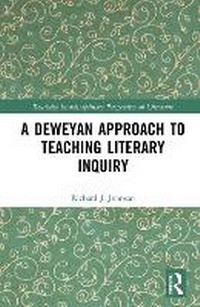
A Deweyan Approach to Teaching Literary Inquiry
Will be published approx. on 2. October 2026
216 pages
E-Book
978-1-042-51346-8 (ISBN)
Description

Drawing upon the work of philosopher John Dewey, A Deweyan Approach to Teaching Literary Inquiry describes an inquiry-based, process-oriented approach to making meaning from literary texts.
Beginning with a Deweyan examination of why we teach literature, the book then presents its central argument: that textual inquiry should be at the heart of literary education. The chapters systematically address each step in the meaning-making process, offering practical, classroom-tested strategies drawn from the author's forty-year teaching career. This flexible framework transcends specific texts and grade levels, providing educators with a replicable approach that teaches students not what to think about literature, but how to think through it, equipping them with intellectual tools for independent, rigorous reading.
This volume is an essential resource for anyone seeking to move beyond traditional lecture-based approaches to literary study. It will appeal to educators committed to student-centered pedagogy, critical thinking, and the development of transferable reading skills that serve students across disciplines.
Beginning with a Deweyan examination of why we teach literature, the book then presents its central argument: that textual inquiry should be at the heart of literary education. The chapters systematically address each step in the meaning-making process, offering practical, classroom-tested strategies drawn from the author's forty-year teaching career. This flexible framework transcends specific texts and grade levels, providing educators with a replicable approach that teaches students not what to think about literature, but how to think through it, equipping them with intellectual tools for independent, rigorous reading.
This volume is an essential resource for anyone seeking to move beyond traditional lecture-based approaches to literary study. It will appeal to educators committed to student-centered pedagogy, critical thinking, and the development of transferable reading skills that serve students across disciplines.
More details
Series
Language
English
Place of publication
London
United Kingdom
Publishing group
Taylor & Francis Ltd
Target group
College/higher education
Professional and scholarly
ISBN-13
978-1-042-51346-8 (9781042513468)
Copyright in bibliographic data and cover images is held by Nielsen Book Services Limited or by the publishers or by their respective licensors: all rights reserved.
Schweitzer Classification
Other editions
Additional editions
Richard J. Johnson
A Deweyan Approach to Teaching Literary Inquiry
Book
approx. 10/2026
1st Edition
Routledge
€191.50
Not yet published
Person
Richard J. Johnson is emeritus professor of English and education at Kirkwood Community College in Iowa City.
Content
Introduction: The False Conceit; The Role of Literature in the Cultivation of Ethical Sensitivity; The Role of Literature in the Development of Aesthetic Appreciation; The Role of Literature in Fostering a Culture of Inquiry; First-draft Reading: Grasping an Initial Sense of a Literary Text; An Invitation to Reflection: Discovering Interpretive Problems in a Text; The Interrogative Mode: Posing Questions to Guide Literary Inquiry; The Suppositive Mode: Speculating to Generate Literary Interpretations; The Demonstrative Mode: Reasoning about Literary Texts; The Unsolitary Reader: Engaging in Literary Inquiry with Classmates; The Tenth Muse: Writing as a Tool of Literary Inquiry; Power of Judgment: Evaluating Student Writing about Literature; Conclusion: What Is Literature Class For?; Bibliography
