

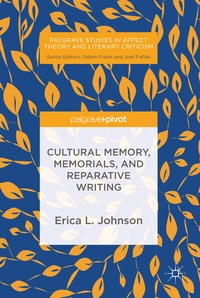
Cultural Memory, Memorials, and Reparative Writing
Description

Cultural Memory, Memorials, and Reparative Writing examines the ways in which memory furnishes important source material in the three distinct areas of critical theory, memoir, and memorial art. The book first shows how affect theorists have increasingly complemented more traditional archival research through the use of "academic memoir." This theoretical piece is then applied to memoir works by Caribbean writers Dionne Brand and Patrick Chamoiseau, and the final case study in the book interprets as memorial art Kara Walker's ephemeral 80,000 pound sugar sculpture of 2014. Memory as method; memory as archive; memorial as affect: this book looks at the interplay between archival sources on the one hand, and the affective memories, both personal and collective, that flow from, around, and into the constantly shifting record of the past.
Reviews / Votes
"In Cultural Memory, Memorials, and Reparative Writing , Erica Johnson invigorates both memory studies and affect theory through thoughtful attention to how affect shapes archives and constructions of memory. Urgent and eloquently argued, this book highlights Caribbean and U.S. memories of slavery, violence, and injustice in theoretical writings, memoirs, and memorials to trace the emergence of counter-archives that practice repair." (Marianne Hirsch, Columbia University, USA, and author of The Generation of Postmemory: Writing and Visual Culture After the Holocaust (2012))"Interdisciplinary and international in scope; enviably concise in surveying, and astute in selecting and deploying, a wide range of scholarship; nuanced in demonstrating a reparative reading practice across different modalities; and elegantly persuasive in arguing 'the affective archive' as method , Professor Johnson's book makes productive reading for anyone interested incoming to terms, through cultural and memorial practices, with the afterlives of slavery." (Donna Palmateer Pennee, Western University, Canada)
More details
Other editions
Additional editions
Person
Erica L. Johnson is Professor of English at Pace University in New York. She is the author of books including Caribbean Ghostwriting (2009), and co-editor of Memory as Colonial Capital (2017) and The Female Face of Shame (2013).
