

Content-First Design
Published on 17. March 2025
214 pages
978-1-937434-87-8 (ISBN)
Description

How often have you seen a proposed web design that looks nice, but is filled with dummy Lorem Ipsum text? You know it looks nice, but even if you know the purpose of the site, it can be difficult, if not impossible, to see how the site will work for its intended users.
Too many projects are designed like this, and too many fail to serve their purpose. People don't come to a website to look at a pretty web design; they come to solve a problem, buy a product, or complete a transaction.
Content-first design is a process by which research, exploration, and evaluation of content requirements and user needs inform the structure, layout, flow, and visuals for a digital product. It centers design on what end users need and how the site can fulfill that need.
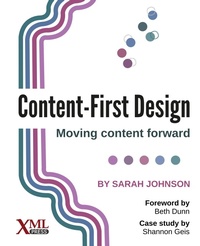
Content-First Design: Moving Content Forward, by Sarah Johnson, gives you a practical approach to building a customer experience that aligns with the needs of both customers and internal stakeholders. It shows you how to set realistic, yet ambitious, goals and how to plan, prototype, test, and iterate in a content-first way.
The book also contains a detailed case study, co-authored by Shannon Geis, that follows the development of a banking application using content-first design.
Whether you're a solo content designer supporting multiple products, a product manager trying to embed content thinking into your process, or part of a mature content team looking to scale your impact, this book offers clear, actionable guidance that will get you there.
Too many projects are designed like this, and too many fail to serve their purpose. People don't come to a website to look at a pretty web design; they come to solve a problem, buy a product, or complete a transaction.
Content-first design is a process by which research, exploration, and evaluation of content requirements and user needs inform the structure, layout, flow, and visuals for a digital product. It centers design on what end users need and how the site can fulfill that need.
Content-First Design: Moving Content Forward, by Sarah Johnson, gives you a practical approach to building a customer experience that aligns with the needs of both customers and internal stakeholders. It shows you how to set realistic, yet ambitious, goals and how to plan, prototype, test, and iterate in a content-first way.
The book also contains a detailed case study, co-authored by Shannon Geis, that follows the development of a banking application using content-first design.
Whether you're a solo content designer supporting multiple products, a product manager trying to embed content thinking into your process, or part of a mature content team looking to scale your impact, this book offers clear, actionable guidance that will get you there.
More details
Other editions
Additional editions
Book
03/2025
XML Press
€56.70
Shipment within 3-4 weeks
Person
Sarah Johnson, a content design leader and teacher with over 20 years of experience, has worked for industry leaders such as Fidelity Investments, Banks of America, TIAA, CVS, and Bentley University User Experience Design Center. She is the author of six books, including Content First Design, and the founder and director of ContentFirstDesign.com. Content-first Design, the company, offers content services built on actionable, data-driven insights, and workshops designed to enhance practical skills in areas such as content design, AI integration, and more.
Content
- Front cover
- Content-first Design
- Contents
- Foreword
- Preface
- Why content-first design?
- Who should read this book
- What this book is not
- How this book can teach you to learn
- How this book is organized
- Stay connected
- Acknowledgments
- Chapter 1. Content-first design-?because content is design
- Another reason for content-first design
- What makes for good content-first design?
- What happens when there is no content-first design?
- What could happen instead
- Case Study: Introduction
- Chapter 2. Your team's content-first design process
- What is a content-first design process?
- What happens when there is no defined content-design process?
- Benefits of a defined content-design process
- Concepts behind content-first design
- Design thinking
- Benefits of design thinking
- Human-centered design (HCD)
- Principles of HCD
- Similarities and differences between design thinking and human-centered design
- Combining design thinking with human-centered design
- Double-diamond content design process
- Selecting tools for each project phase
- Double-diamond content-design process
- Chapter 3. The discover phase
- The project kickoff
- Challenges to getting everyone on board
- Convincing stakeholders of the value of content-first design
- Getting stakeholders on board
- How to run a project kickoff meeting
- Case Study: Project kickoff
- Why choose each of these discover-phase tasks?
- Chapter 4. The problem statement
- Problem statement workshop
- Invite the right participants
- Establish rules of engagement
- Provide a workshop structure
- Case Study: Problem statement workshop
- Identify assumptions
- Plan project tasks
- Case Study: Create a project plan
- Chapter 5. Interviewing stakeholders
- Get to the heart of the matter
- Benefits of the stakeholder interviews
- Be prepared
- Chapter 6. Taking inventory
- Why conduct a content inventory?
- Creating the inventory
- Manually creating the inventory
- Creating an inventory with a crawling tool
- Case Study: Content inventory
- Chapter 7. The define phase
- What is a content audit?
- So why do a content audit?
- What type of audit should you do?
- Work with stakeholders before the audit
- Define the attributes to analyze
- Establish a rating scale
- Get to work
- Analyze the results
- Make a plan
- Present to stakeholders
- Case Study: Content audit
- Chapter 8. Learn who your users are
- User journeys
- User interviews
- How to conduct a user interview
- Writing the questions
- Conducting the interview
- Analyzing the results
- Case Study: User interviews
- Competitive analysis
- Case Study: Competitive analysis
- Competitive evaluation results
- West Credit Union
- Seamen's Bank
- Web Bank
- Big Corp Financial
- Empathy mapping
- Case Study: Empathy mapping
- Chapter 9. The design phase
- Priority guide
- Case Study: Priority guide
- Rapid prototyping
- Case Study: Prototyping
- A/B testing
- Prototype
- Iterate
- Case Study: Share the prototype
- Chapter 10. The delivery phase
- Case Study: Compliance and legal
- Quality testing the content
- Usability testing
- Metrics
- A/B testing
- Iterate based on research and testing
- Chapter 11. Test and measure content at every phase
- Evaluating content
- Highlighter test
- Cloze test
- Recall test
- Content heuristics
- Content scorecards
- Design critiques
- Peer-to-peer reviews
- Quantitative research
- Benefits of quantitative research
- Potential pitfalls
- When to use quantitative research
- Qualitative research
- Usability studies
- Case Study: User study
- Chapter 12. Stakeholder buy-in
- The conversation
- Capture your findings
- Case Study: The team
- Presenting
- Content-first design rationale
- Understand your stakeholders
- Schedule the meeting
- Facilitate
- Get the right feedback
- Present your solution
- Next steps
- Send a follow-up email
- Case Study: Present to stakeholders
- Chapter 13. Advocate for content-first design
- Build relationships with stakeholders
- Demonstrate the benefits of content-first design
- Work with leadership
- Chapter 14. Implement, learn, keep going
- Getting a seat at the table
- A phased approach
- Be creative
- Community
- Case Study: Project outcomes
- Appendix A. The art of the difficult conversation
- How to approach a difficult conversation
- Three deep breaths
- Identify a practice example
- Prepare for the conversation
- Stop. Breathe. Notice. Reflect. Respond. (SBNRR)
- The 5 steps
- Step 1
- Step 2
- Step 3
- Step 4
- Step 5
- When to use the 5 steps
- Listening exercise
- Appendix B. Tips on writing for a digital product
- Getting started writing for digital products
- The elements of content-first writing
- User-centered
- Simple and clear
- Scannable
- Visual hierarchy
- Visual hierarchy critique
- Relevant
- Consistent
- Accessible
- Inclusive
- Writing microcopy
- Types of microcopy
- Error messages
- Instructional text & tooltips
- Notifications & alerts
- Onboarding
- Dialogs/Modals
- Dashboards
- Empty states
- Forms
- Transactional emails
- Success messages
- Why is microcopy important?
- Bibliography
- Index
- Colophon
- Back Cover
