

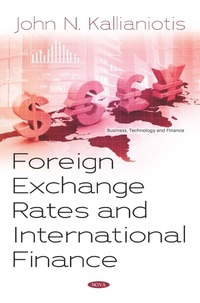
Foreign Exchange Rates and International Finance
Published on 26. September 2019
496 pages
978-1-5361-6551-7 (ISBN)
Description

This book deals with international finance and the role of the foreign exchange rates in our economies. It is constituted from twelve chapters, from the history of our monetary system to the balance of payments and from the exchange rates to multinational businesses and their management. The internationalization of business, the interdependence and conflicts among nations, the enormous capital mobility, the foreign exchange market that provides the payments and instruments for all these international transactions, the risk that is involved among markets, economies, and businesses all require studies, instruments, insurance policies, management, correct public policies, and empirical work on international financial transactions, cultures, and the different value systems, so a finance or political science (undergraduate or graduate) student, a professional, a trader, or any other individual interested in international business could be able to deal with all these conflicts, challenges, and adversities, which their trend is incremental. Also, the role of the exchange rate and trade policies in improving the trade account and the social welfare of the country's citizens are considered and examined in detail. Further, the determination and forecasting of the exchange rate are analyzed by using economic theories, mathematics and statistical models. The foreign exchange exposure (risk) is measured and managed by using hedging techniques. The multinational corporations and their cost of capital is covered extensively. The multinational capital budgeting of our MNCs is taking place and the criteria of evaluating the foreign projects are discussed, too. The foreign direct investments (FDI), which increase business, income, and employment in the host countries, the international portfolio theory and its effect on risk minimization from this global diversification are analyzed. The sources and instruments of financing international trade and multinational corporations are presented with the role of commercial banks, money market, and international transportation. Lastly, the political risk involved in different countries is covered and assessed. Thus, this book can be used by itself as a complete text on international finance or can be employed to supplement a reference book devoted to international finance, multinational business, or international financial economics.
More details
Other editions
Additional editions
John N. Kallianiotis
Foreign Exchange Rates and International Finance
Book
10/2019
Nova Science Publishers Inc
€355.63
Shipment within 15-20 days
Content
- Intro
- Contents
- List of Figures
- List of Exhibits
- List of Graphs
- Preface
- Acknowledgments
- Chapter 1
- History of Monetary System
- 1. Introduction: History of Money
- 2. History of Currencies
- 2.1. Fixed Exchange Rate
- 2.1.1. Payments of Trade Account Deficits
- 2.1.2. Gold Standard before World War II
- 2.1.3. After the Bretton Woods
- 2.1.4. Special Drawing Rights
- 2.1.5. The Abandonment of the Gold Exchange Standard
- 2.1.6. The "Golden Age" of the Twentieth Century
- 2.2. Floating Exchange Rate
- 2.3. Eurodollars and Eurocurrencies
- 2.3.1. History of Euro-Currency Market
- 2.3.2. From the European Monetary System to the Economic and Monetary Union
- 2.3.3. The Latest Euro-Zone Debt Crisis
- 2.4. Modern Currency Regimes
- 2.4.1. Optimum Currency Area (OCA)
- 2.4.2. Thoughts for a New Financial System
- Summary
- Appendix
- Chapter 2
- Balance of Payments and Exchange Rates
- 1. Measuring the Balance of Payments
- 1.1. Debits and Credits of the Accounts of the Balance of Payments
- 1.2. Composition of the Accounts of the Balance of Payments
- 1.3. International Imbalances between Countries
- 1.4. Balance of Payments Crises
- 2. Domestic Economy, Balance of Payments, and Public Policies
- 2.1. Factors Affecting the Current and Capital Accounts
- 2.2. Improving the Balance of Payments through Exchange Rates or Protectionism
- 2.3. Improving the Balance of Payments by Adjusting Domestic Prices and Demand
- 2.4. Interaction of the Balance of Payments with the Domestic Economy
- 2.5. Trade Balance and Exchange Rate (The J-Curve)
- 3. National Economies and Balance of Payments: Some Historical Perspectives
- 3.1. The Fixed Exchange Rate Era
- 3.2. The Flexible Exchange Rate Era up to the Global Financial Crisis
- 3.3. From the Post Washington Consensus to the Present
- Summary
- Appendix
- Chapter 3
- The Foreign Exchange Market
- 1. Functions of the Foreign Exchange Market
- 2. Market Participants
- 2.1. Foreign Exchange Dealers and Brokers
- 2.2. Commercial Companies
- 2.3. Central Banks and Treasuries
- 2.4. Foreign Exchange Fixing
- 2.5. Hedge Funds, Speculators, Arbitragers, and Others
- 2.6. Investment Management Firms
- 2.7. Retail Foreign Exchange Traders
- 2.8. Non-Bank Foreign Exchange Companies
- 2.9. Money Transfer/Remittance Companies and Bureaux de Change
- 2.10. Individuals and Firms
- 3. Trading Characteristics
- 4. Transactions in the Foreign Exchange Market
- 4.1. Spot Transactions
- 4.2. Forward Transactions
- 4.3. Swap Transactions
- 4.4. Currency Futures
- 4.5. Foreign Currency Options
- 5. Speculation
- 6. Foreign Exchange Rate Quotations
- 6.1. Direct and Indirect Quotes
- 6.2. Bid and Ask Outright Quotations
- 6.3. Bid and Ask Points Quotations (Swap Rates)
- 6.4. Forward Quotations in Percentage Terms
- 6.4.1. Example of Points Quotations (Swap Rates)
- 6.5. Sources of Foreign Exchange Market Information
- 6.6. Cross Rates
- 7. Foreign Exchange Rate Arbitrage
- 7.1. Simple Intermarket Arbitrage
- 7.2. Intermarket Triangular Arbitrage
- Summary
- Appendix
- Chapter 4
- Exchange Rate Determination and Forecasting
- 1. Foreign Exchange Rate Determination
- 1.1. Exchange Rate Theories
- 1.2. The Balance of Payments Approach
- 1.3. Exchange Rate Determination: The Asset Market Models
- 1.3.1. The Monetary Approach to the Exchange Rate Determination
- 1.3.1.1. The Monetarist Model (Flexible Prices)
- 1.3.1.2. The Exchange Rate Dynamics or Overshooting Model (Sticky Prices)
- 1.3.2. Portfolio-Balance Approach of the Exchange Rate Determination
- 2. Efficiency in the Foreign Exchange Market and Exchange Rate Movement
- 2.1. The Efficiency of the Foreign Exchange Market
- 2.1.1. The Random Walk Hypothesis
- 2.1.2. The Unbiased Forward Rate Hypothesis
- 2.1.3. The Composite Efficiency Hypothesis
- 2.1.4. Exchange Rate Volatility and Predictability
- 2.2. Exchange Rate Expectations and Unanticipated Events ("News")
- 3. Money Market and Exchange Rate
- 4. Exchange Rate and Risk: Wars, Global Financial Crises, and Debt Crises
- 4.1. Wars, Crises and Exchange Rate
- 4.2. Oil Prices, Euro-Zone Debt Crisis, and Exchange Rate
- 4.3. Monetary, Fiscal, and Trade Policies and Exchange Rate
- 5. Foreign Exchange Rate Forecasting
- 5.1. Methods of Exchange Rate Forecasting
- 5.2. Technical Forecasting Techniques and Practices
- 5.2.1. Time-Series Trends
- 5.2.1.1. Deterministic Trends
- 5.2.1.2. Models of Stochastic Trend
- 5.2.2. Time-Series Models
- 5.2.2.1. The Autoregressive [] Model
- 5.2.2.2. The Moving Average [] Model
- 5.2.2.3. The Mixed Autoregressive-Moving Average [] Model
- 5.3. Fundamental Forecasting
- 5.3.1. An Augmented Monetary Model of Exchange Rate Forecasting
- 5.3.2. Combining Regression Analysis with a Time-Series Model: Transfer Function Models
- 5.3.3. Multiequation Time-Series Models
- 5.3.3.1. Vector Autoregression () Analysis
- 5.3.3.2. The Impulse Response Function
- 5.4. Market-Based Forecasting
- 5.4.1. The Current Spot Rate as a Forecasting Indicator
- 5.4.2. The Forward Exchange Rate as a Forecasting Indicator
- 5.5. Forecasting with the Use of Currency Betas (ßS)
- 5.6. Mixed Forecasting
- 5.7. Forecasting Evaluation
- Summary
- Appendix
- Chapter 5
- Exchange Rates and International Parity Conditions
- 1. International Parity Conditions
- 1.1. Prices and Exchange Rates
- 1.1.1. Commodity Price Parity (CPP)
- 1.1.2. Absolute Purchasing Power Parity (PPP)
- 1.1.3. Relative Purchasing Power Parity (PPP)
- 1.1.4. Nominal, Real, and Effective Exchange Rate
- 1.1.5. Deviations from Purchasing Power Parity
- 1.2. Interest Rates and Exchange Rates
- 1.2.1. The Fisher Effect
- 1.2.2. The International Fisher Effect
- 1.2.3. The Real Interest Rate Parity
- 1.3. The Most Important Relation in International Finance: Interest Rate Parity (IRP)
- 1.3.1. Uncovered Interest Arbitrage (UIA)
- 1.3.2. Covered Interest Arbitrage (CIA)
- 1.4. Forward Discount or Premium and Their Relationship with Expected Future Spot Rate and Expected Inflation
- 1.4.1. The Forward Rate as an Unbiased Predictor of the Future Spot Rate
- 1.4.2. The Forward Discount and Expected Inflation Differential
- 2. Foreign Exchange Market Efficiency
- 2.1. Weak Market Efficiency
- 2.2. Semi-Strong Market Efficiency
- 2.3. Strong Market Efficiency
- 2.4. Anomalies in Market Efficiency
- 3. Exchange Rate Expectations
- 3.1. Static Expectations
- 3.2. Extrapolative Expectations
- 3.3. Adaptive Expectations
- 3.4. Rational Expectations
- 3.5. Regressive Expectations
- 3.6. General Specifications of Expectations
- Summary
- Appendix
- 1.1. Exchange Rate and Parity Conditions: Empirical Results
- 1.1.1. Empirical Results of Eqs. (140) and (144)
- 1.1.2. Empirical Results of Eqs. (141), (143), and (145)
- 1.1.3. Deviations from PPP: Empirical Results of Eq. (149)
- 1.2. Interest Rates and Exchange Rates
- 1.2.1. The Forward Rate as an Unbiased Predictor of the Future Spot Rate
- 1.2.2. The Forward Discount and Expected Inflation Differential. Eq. (176)
- 1.3. The Weak Market Efficiency, Eq. (180)
- 1.4. The Semi-Strong Market Efficiency, Eq. (186)
- 1.5. Extrapolative Expectations
- 1.6. Adaptive Expectations
- 1.7. Rational Expectations
- 1.8. Regressive Expectations
- 1.9. General Specifications of Expectations
- Chapter 6
- Foreign Currency Derivatives
- 1. Foreign Currency Forward and Futures Contracts
- 1.1. Foreign Currency Forward Contracts
- 1.2. Foreign Currency Futures Contracts
- 1.2.1. Contract Specifications
- 1.2.2. Speculating by Using Foreign Currency Futures
- 1.2.2.1. Short Positions
- 1.2.2.2. Long Positions
- 1.3. Foreign Currency Swaps
- 2. Foreign Currency Options
- 2.1. Currency Call Options
- 2.1.1. Currency Calls: Quotations and Pricing
- 2.1.2. Currency Calls: Pricing of Premium
- 2.2. Currency Put Options
- 2.2.1. Currency Puts: Quotations and Pricing
- 2.2.2. Currency Puts: Factors Affecting the Premium
- 2.3. European Currency Option Pricing Theory
- 2.4. Currency Futures Options
- 2.5. Foreign Exchange Binary Options
- 2.6. Currency Option Combinations
- 2.6.1. Currency Straddles
- 2.6.2. Currency Strangles
- Summary
- Appendix
- Example A2. European Call Option: A Numerical Example
- Chapter 7
- Foreign Exchange Exposure and Its Management
- 1. Types of Foreign Exchange Exposures and Their Management
- 1.1. Translation Exposure
- 1.1.1. Translation Methods
- 1.1.2. Managing Translation Exposure
- 1.2. Transaction Exposure
- 1.2.1. Measurement of Transaction Exposure
- 1.2.2. Management of Transaction Exposure
- 1.2.2.1. Management of Receivables
- 1.2.2.2. Management of Payables
- 1.3. Economic or Operating Exposure
- 1.3.1. Measurement of Operating Exposure
- 1.3.2. Management of Operating Exposure
- 1.3.2.1. Long-Term Forward Contracts
- 1.3.2.2. Matching Currency Cash Flows
- 1.3.2.3. Risk-Sharing Agreements
- 1.3.2.4. Currency Swaps
- 1.3.2.5. Parallel Loans or Back-to-Back Loans or Credit Swap
- 1.3.2.6. Leading and Lagging
- 1.3.2.7. Cross-Hedging
- 1.3.2.8. Re-Invoicing Centers
- 1.3.2.9. Discounting Bills Receivables
- 1.3.2.10. Factoring Receivables
- 1.3.2.11. Currency Overdrafts
- 1.3.2.12. Currency Diversification
- 1.3.2.13. Government Exchange Risk Guarantees
- 1.4. Alternative Exchange Rate Exposures and Hedging Techniques
- 1.4.1. Contingent Exposure
- 1.4.2. Tax Exposure
- 1.4.3. Exposure Netting
- Summary
- Chapter 8
- Multinational Corporations and International Cost of Capital
- 1. Multinational Corporations
- 1.1. Objective of Multinational Corporation
- 1.2. Corporate Governance
- 1.2.1. Principles of Corporate Governance
- 1.2.2. Corporate Governance Models in the West
- 1.2.2.1. In Continental Europe
- 1.2.2.2. In the United States and the United Kingdom
- 1.2.3. Parties and Structure of Corporate Governance
- 1.2.4. Mechanisms and Controls
- 1.2.5. Executive Pay
- 1.3. Corporate Regulation
- 1.4. Criticism of Multinational Corporations
- 2. Cost of Capital
- 2.1. Cost of Capital of a Domestic Firm
- 2.1.1. Component Cost of Debt ()
- 2.1.2. Component Cost of Preferred Stock ()
- 2.1.3. Component Cost of "Old" Stock or Retained Earnings ()
- 2.1.4. Component Cost of "New" Stock or External Equity ()
- 2.1.5. The Weighted Average Cost of Capital ()
- 2.2. Cost of Capital of the Multinational Corporation
- 3. Capital Structure
- 3.1. Optimal Capital Structure
- 3.2. Equity Capital
- 3.3. Depositary Receipts
- 3.4. Debt Financing
- 3.5. Financing the Foreign Subsidiary
- 3.6. Offshore Financial Centers
- Summary
- Appendix
- Chapter 9
- Multinational Capital Budgeting
- 1. Capital Budgeting for the Multinational Corporation
- 1.1. Complexities of Capital Budgeting for a Foreign Project
- 1.2. Subsidiary (Project) Versus Parent Valuation
- 1.3. Illustrative Case: U.S. International Enters Argentania de America del Sur
- 1.3.1. Sensitivity Analysis: Project Viewpoint
- 1.3.1.1. Political Risk
- 1.3.1.2. Foreign Exchange Risk
- 1.3.2. Sensitivity Analysis: Parent Viewpoint Measurement
- 1.3.2.1. Adjusting Discount Rates
- 1.3.2.2. Adjusting Cash Flows
- 1.3.2.3. Shortcomings of Each Method
- 1.3.2.4. Repercussions to the Investor
- 1.3.2.5. MNCs Practices
- 1.3.3. Portfolio Risk Measurement
- 1.3.4. Project Financing
- 1.4. Cross-Border Mergers and Acquisitions
- 1.4.1. The Cross-Border Acquisition Process
- Stage 1: Identification and Valuation
- Stage 2: Execution of the Acquisition
- Stage 3: Post-Acquisition Management
- 1.4.2. Currency Risks in Cross-Border Acquisitions
- Summary
- Chapter 10
- Foreign Direct Investment and Portfolio Theory
- 1. Foreign Direct Investment
- 1.1. Forms and Competitiveness of Foreign Direct Investment
- 1.2. Types and Motives for Foreign Direct Investment
- 1.3. Methods and Modes of Foreign Direct Investment
- 1.4. Strategic Alliance and Franchising
- 1.5. Global Uncertainty
- 1.6. Opposition to International Financial Institutions and Globalization
- 2. Portfolio Theory
- 2.1. Portfolio Diversification Theory
- 2.1.1. Domestic Portfolio Theory
- 2.1.2. International Portfolio Theory
- 2.1.2.1. International Portfolio Risk
- 2.1.2.2. Foreign Exchange Risk
- 2.1.2.3. Country, Systematic, and Systemic Risks
- 2.1.3. International Market Performance
- 2.2. International Investment
- Summary
- Chapter 11
- International Trade Finance
- 1. Financing International Trade
- 1.1. International Trade Documents
- 1.1.1. Commercial Documents
- 1.1.1.1. Invoice
- 1.1.1.2. Certificate of Origin
- 1.1.1.3. Weight Note or Certificate
- 1.1.1.4. Packing List
- 1.1.1.5. Quality or Inspection Certificate
- 1.1.1.6. Export Declaration
- 1.1.2. Official Documents
- 1.1.2.1. Consular Invoice
- 1.1.2.2. Legalized Invoice
- 1.1.2.3. Black-Listed Certificate
- 1.1.2.4. Health, Veterinary, and Sanitary Certificate/Photo Sanitary Certificate, Certificate of Analysis
- 1.1.3. Insurance Documents
- 1.1.4. Transport Documents
- 1.1.5. Financial and Financing Documents
- 1.1.5.1. Letter of Credit (L/C)
- 1.1.5.2. Draft or Bill of Exchange (B/E)
- 1.1.5.3. Banker's Acceptance (BA)
- 1.1.5.4. Promissory Notes
- 1.1.5.5. Trust Receipts
- 1.1.5.6. Trade Acceptances
- 1.1.5.7. Factoring
- 1.1.5.8. Securitization
- 1.1.5.9. Commercial Paper
- 1.1.5.10. Bank Credit Line
- 1.2. Government Programs Financing Exports and Insurance Policies
- 1.3. Forfaiting
- Summary
- Chapter 12
- Political Risk and Its Management
- 1. Political Risk
- 1.1. Firm-Specific (Micro-) Political Risk
- 1.2. Country-Specific (Macro-) Political Risk
- 1.3. Global-Specific (Universal-) Political Risk
- 1.4. Assessing Political Risk
- 1.4.1. Checklist Approach
- 1.4.2. Delphi Technique
- 1.4.3. Quantitative Analysis
- 1.4.4. Inspection Visits
- 1.4.5. Combination of Techniques
- 2. Political Risk Management
- 2.1. Managing Political Risk
- 2.2. Investment Insurance and Guarantees
- Summary
- Appendix
- References
- About the Author
- Index
- Blank Page
