

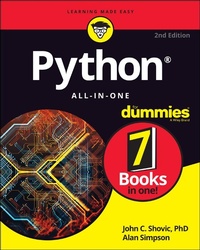
Python All-in-One For Dummies
2nd Edition
Published on 29. March 2021
720 pages
978-1-119-78761-7 (ISBN)
Description

The one-stop resource for all your Python queries
Powerful and flexible, Python is one of the most popular programming languages in the world. It's got all the right stuff for the software driving the cutting-edge of the development world--machine learning, robotics, artificial intelligence, data science, etc. The good news is that it's also pretty straightforward to learn, with a simplified syntax, natural-language flow, and an amazingly supportive user community. The latest edition of Python All-in-One For Dummies gives you an inside look at the exciting possibilities offered in the Python world and provides a springboard to launch yourself into wherever you want your coding career to take you.
These 7 straightforward and friendly mini-books assume the reader is a beginning programmer, and cover everything from the basic elements of Python code to introductions to the specific applications where you'll use it. Intended as a hands-on reference, the focus is on practice over theory, providing you with examples to follow as well as code for you to copy and start modifying in the "real world"--helping you get up and running in your area of interest almost right away. This means you'll be finishing off your first app or building and remote-controlling your own robot much faster than you can believe.
* Get a thorough grounding in the language basics
* Learn how the syntax is applied in high-profile industries
* Apply Python to projects in enterprise
* Find out how Python can get you into hot careers in AI, big data, and more
Whether you're a newbie coder or just want to add Python to your magic box of tricks, this is the perfect, practical introduction--and one you'll return to as you grow your career.
Powerful and flexible, Python is one of the most popular programming languages in the world. It's got all the right stuff for the software driving the cutting-edge of the development world--machine learning, robotics, artificial intelligence, data science, etc. The good news is that it's also pretty straightforward to learn, with a simplified syntax, natural-language flow, and an amazingly supportive user community. The latest edition of Python All-in-One For Dummies gives you an inside look at the exciting possibilities offered in the Python world and provides a springboard to launch yourself into wherever you want your coding career to take you.
These 7 straightforward and friendly mini-books assume the reader is a beginning programmer, and cover everything from the basic elements of Python code to introductions to the specific applications where you'll use it. Intended as a hands-on reference, the focus is on practice over theory, providing you with examples to follow as well as code for you to copy and start modifying in the "real world"--helping you get up and running in your area of interest almost right away. This means you'll be finishing off your first app or building and remote-controlling your own robot much faster than you can believe.
* Get a thorough grounding in the language basics
* Learn how the syntax is applied in high-profile industries
* Apply Python to projects in enterprise
* Find out how Python can get you into hot careers in AI, big data, and more
Whether you're a newbie coder or just want to add Python to your magic box of tricks, this is the perfect, practical introduction--and one you'll return to as you grow your career.
More details
Other editions
Additional editions
John Shovic | Alan Simpson
Python All-in-One For Dummies
Book
06/2021
Wiley
Unfortunately, price unknown
Article exhausted; check for reprint
Persons
John Shovic, PhD, is a computer science faculty member at the University of Idaho specializing in robotics and artificial intelligence.
Alan Simpson is a web development professional who has published more than 100 articles and books on technology.
Alan Simpson is a web development professional who has published more than 100 articles and books on technology.
Content
Introduction 1
Book 1: Getting Started 7
Chapter 1: Starting with Python 9
Chapter 2: Interactive Mode, Getting Help, and Writing Apps 29
Chapter 3: Python Elements and Syntax 53
Chapter 4: Building Your First Python Application 63
Book 2: Understanding Python Building Blocks 85
Chapter 1: Working with Numbers, Text, and Dates 87
Chapter 2: Controlling the Action 127
Chapter 3: Speeding Along with Lists and Tuples 149
Chapter 4: Cruising Massive Data with Dictionaries 171
Chapter 5: Wrangling Bigger Chunks of Code 195
Chapter 6: Doing Python with Class 217
Chapter 7: Sidestepping Errors 251
Book 3: Working With Libraries 269
Chapter 1: Working with External Files 271
Chapter 2: Juggling JSON Data 307
Chapter 3: Interacting with the Internet 327
Chapter 4: Libraries, Packages, and Modules 343
Book 4: Using Artificial Intelligence 357
Chapter 1: Exploring Artificial Intelligence 359
Chapter 2: Building a Neural Network 369
Chapter 3: Doing Machine Learning 399
Chapter 4: Exploring Ai 421
Book 5: Doing Data Science 433
Chapter 1: Understanding the Five Areas of Data Science 435
Chapter 2: Exploring Big Data 441
Chapter 3: Using Big Data from Google Cloud 457
Book 6: Talking To Hardware 475
Chapter 1: Introducing Physical Computing 477
Chapter 2: No Soldering! Using Grove Connectors for Building 493
Chapter 3: Sensing the World 509
Chapter 4: Making Things Move 541
Book 7: Building Robots 569
Chapter 1: Introducing Robotics 571
Chapter 2: Building Your First Python Robot 579
Chapter 3: Programming Your Robot Rover 601
Chapter 4: Using Artificial Intelligence in Robotics 631
Index 667
Book 1: Getting Started 7
Chapter 1: Starting with Python 9
Chapter 2: Interactive Mode, Getting Help, and Writing Apps 29
Chapter 3: Python Elements and Syntax 53
Chapter 4: Building Your First Python Application 63
Book 2: Understanding Python Building Blocks 85
Chapter 1: Working with Numbers, Text, and Dates 87
Chapter 2: Controlling the Action 127
Chapter 3: Speeding Along with Lists and Tuples 149
Chapter 4: Cruising Massive Data with Dictionaries 171
Chapter 5: Wrangling Bigger Chunks of Code 195
Chapter 6: Doing Python with Class 217
Chapter 7: Sidestepping Errors 251
Book 3: Working With Libraries 269
Chapter 1: Working with External Files 271
Chapter 2: Juggling JSON Data 307
Chapter 3: Interacting with the Internet 327
Chapter 4: Libraries, Packages, and Modules 343
Book 4: Using Artificial Intelligence 357
Chapter 1: Exploring Artificial Intelligence 359
Chapter 2: Building a Neural Network 369
Chapter 3: Doing Machine Learning 399
Chapter 4: Exploring Ai 421
Book 5: Doing Data Science 433
Chapter 1: Understanding the Five Areas of Data Science 435
Chapter 2: Exploring Big Data 441
Chapter 3: Using Big Data from Google Cloud 457
Book 6: Talking To Hardware 475
Chapter 1: Introducing Physical Computing 477
Chapter 2: No Soldering! Using Grove Connectors for Building 493
Chapter 3: Sensing the World 509
Chapter 4: Making Things Move 541
Book 7: Building Robots 569
Chapter 1: Introducing Robotics 571
Chapter 2: Building Your First Python Robot 579
Chapter 3: Programming Your Robot Rover 601
Chapter 4: Using Artificial Intelligence in Robotics 631
Index 667
