

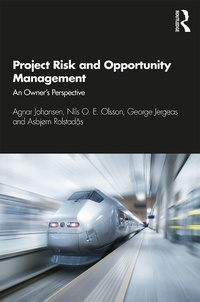
Project Risk and Opportunity Management
The Owner's Perspective
1st Edition
Published on 29. March 2019
162 pages
978-0-429-77341-9 (ISBN)
Description

Effective risk and opportunity management is key to the successful delivery of any major engineering and construction project. This book looks at how all those involved can manage risk and capitalise on the opportunities that uncertainty present. The authors of this book highlight that uncertainties should be managed rather than avoided. This book will look at simple projects with a small team, to megaprojects where some hundreds of people are involved, and the consequences of delays or unforeseen costs. However, while the obvious risks can be planned for, the authors argue that it is often the opportunities in these situations that can have unexploited potential.
This book is about opportunity management seen from the owner's perspective. It will be an invaluable resource for those studying Engineering both undergraduate and postgraduate and set out ways in which projects should be managed from planning to completion. This book is also a great tool for those working in project management and the construction industry. While there are many books that demonstrate effective construction management, this book is the first of its kind to emphasise that there is opportunity in uncertainty, and possibility in the unexpected.
This book is about opportunity management seen from the owner's perspective. It will be an invaluable resource for those studying Engineering both undergraduate and postgraduate and set out ways in which projects should be managed from planning to completion. This book is also a great tool for those working in project management and the construction industry. While there are many books that demonstrate effective construction management, this book is the first of its kind to emphasise that there is opportunity in uncertainty, and possibility in the unexpected.
More details
Edition
1. Auflage
Language
English
Place of publication
London
United Kingdom
Publishing group
Taylor & Francis Ltd
Target group
College/higher education
Professional and scholarly
Illustrations
17 Tables, black and white; 47 Line drawings, black and white; 1 Halftones, black and white
File size
12,62 MB
ISBN-13
978-0-429-77341-9 (9780429773419)
Copyright in bibliographic data and cover images is held by Nielsen Book Services Limited or by the publishers or by their respective licensors: all rights reserved.
Schweitzer Classification
Other editions
Additional editions

Agnar Johansen | Nils Olsson | George Jergeas
Project Risk and Opportunity Management
The Owner's Perspective
Book
04/2019
1st Edition
Routledge
€205.80
Shipment within 10-20 days
Agnar Johansen | Nils Olsson | George Jergeas
Project Risk and Opportunity Management
The Owner's Perspective
Book
04/2019
1st Edition
Routledge
€77.90
Shipment within 10-20 days
Persons
Agnar Johansen is Senior Research Scientist at SINTEF Technology Management, Department of Industrial Management, Trondheim, Norway.
Nils O. E. Olsson is Professor in Project Management at The Norwegian University of Science and Technology, Trondheim, Norway.
George Jergeas is Director, Centre of Project Management Excellence, and Professor at The Schulich School of Engineering, University of Calgary, Calgary, Canada.
Asbjorn Rolstadas is Professor Emeritus of Mechanical and Industrial Engineering at the Norwegian University of Science and Technology, Trondheim, Norway.
Nils O. E. Olsson is Professor in Project Management at The Norwegian University of Science and Technology, Trondheim, Norway.
George Jergeas is Director, Centre of Project Management Excellence, and Professor at The Schulich School of Engineering, University of Calgary, Calgary, Canada.
Asbjorn Rolstadas is Professor Emeritus of Mechanical and Industrial Engineering at the Norwegian University of Science and Technology, Trondheim, Norway.
Content
PREFACE *
CONTENTS *
LIST OF FIGURES *
LIST OF TABLES *
Part I - WHY CHASE OPPORTUNITIES? *
1. PROJECT BUSINESS *
1.1. The lost opportunities *
1.2. Current industry practice *
1.3. From project delivery to value creation *
1.4. Type of projects *
1.5. Major stakeholders *
1.6. Unpredictability in projects *
2. HOW PROJECTS ARE DELIVERED *
2.1. Stage gate models in projects *
2.2. Project phases *
2.3. Planning a project *
2.4. Implementing a project *
3. THE OWNER AND HIS ROLE *
3.1. Project ownership *
3.2. Project sponsor, asset owner and PEO *
3.3. Governance *
3.4. Users *
3.5. Project owners and success *
3.6. Financing of projects *
3.7. Project owners and uncertainty management *
4. RISKS AND OPPORTUNITIES *
4.1. Uncertainty versus risk and opportunity *
4.2. Uncertainty categories *
4.3. Risk and opportunity categories *
4.4. Risk and opportunity from the perspective of time *
4.5. Risk management *
4.6. Project complexity *
4.7. Reflections on project uncertainty in an owner perspective *
5. RISK AND OPPORTUNITY MANAGEMENT APPROACH *
5.1. The management process *
5.2. Identifying and quantifying risks and opportunities *
5.3. Tools and techniques: how to find opportunities *
5.4. Opportunities as reaction and iterations for opportunity management *
5.5. Benefits *
Part II - HOW TO CHASE OPPORTUNITIES? *
6. PRACTICAL RISK AND OPPORTUNITY MANAGEMENT *
6.1. Opportunities in projects *
6.2. Cost and schedule *
6.3. Quality *
6.4. Real options *
6.5. Lean thinking *
6.6. Last responsible moment integrated planning *
6.7. Project flexibility can provide opportunities *
6.8. Exploiting opportunities *
7. CONTINGENCY CALCULATIONS *
7.1. Cost contingency *
7.2. Schedule contingency *
7.3. Generic contingency calculation methods *
7.4. Cost contingency calculations *
7.5. Schedule contingency calculations *
8. CONTRACTUAL PRACTICES AND COLLABORATIVE RELATIONSHIPS *
8.1. Contracts and risk *
8.2. Risk allocation in contracts *
8.3. Contractual arrangements and types *
8.3.1. Design-Bid-Build or General Contractor Concept *
8.3.2. Design-Build or EPC *
8.3.3. Construction Management *
8.4. Contract price arrangements or payment structures *
8.4.1. Fixed Price Contracts *
8.4.2. Cost Reimbursable Contracts *
8.4.3. Guaranteed Maximum Price Contracts *
8.4.4. Convertible Contracts *
8.4.5. Frequent disputes and claims *
8.5. The collaborative construction model *
8.5.1. What is the mission of the systems integrator? *
8.5.2. What does the systems integrator do? *
8.5.3. Where does the systems integrator reside? *
8.5.4. Who should staff the systems integrator? *
8.5.5. Critical success factors for the collaborative construction model *
9. CASE STUDY - RAIL IN MEDIUM SIZE CITY *
9.1. The business case for railway projects *
9.2. Commercial perspective, revenues and costs *
9.3. Socio-economic perspective *
9.4. The case study *
9.5. Uncertainty development *
9.6. Chasing opportunities in the case *
9.6.1. Reducing investment cost *
9.6.2. Reducing operational cost *
9.6.3. Reducing inconveniences *
9.6.4. Increasing benefits *
PART III - CHANGED MINDSET *
10. CHANGED INDUSTRY MINDSET *
10.1. Industry best practices *
10.2. Shifts in mindset *
10.3. The change process *
ABBREVIATIONS *
REFERENCES *
INDEX *
CONTENTS *
LIST OF FIGURES *
LIST OF TABLES *
Part I - WHY CHASE OPPORTUNITIES? *
1. PROJECT BUSINESS *
1.1. The lost opportunities *
1.2. Current industry practice *
1.3. From project delivery to value creation *
1.4. Type of projects *
1.5. Major stakeholders *
1.6. Unpredictability in projects *
2. HOW PROJECTS ARE DELIVERED *
2.1. Stage gate models in projects *
2.2. Project phases *
2.3. Planning a project *
2.4. Implementing a project *
3. THE OWNER AND HIS ROLE *
3.1. Project ownership *
3.2. Project sponsor, asset owner and PEO *
3.3. Governance *
3.4. Users *
3.5. Project owners and success *
3.6. Financing of projects *
3.7. Project owners and uncertainty management *
4. RISKS AND OPPORTUNITIES *
4.1. Uncertainty versus risk and opportunity *
4.2. Uncertainty categories *
4.3. Risk and opportunity categories *
4.4. Risk and opportunity from the perspective of time *
4.5. Risk management *
4.6. Project complexity *
4.7. Reflections on project uncertainty in an owner perspective *
5. RISK AND OPPORTUNITY MANAGEMENT APPROACH *
5.1. The management process *
5.2. Identifying and quantifying risks and opportunities *
5.3. Tools and techniques: how to find opportunities *
5.4. Opportunities as reaction and iterations for opportunity management *
5.5. Benefits *
Part II - HOW TO CHASE OPPORTUNITIES? *
6. PRACTICAL RISK AND OPPORTUNITY MANAGEMENT *
6.1. Opportunities in projects *
6.2. Cost and schedule *
6.3. Quality *
6.4. Real options *
6.5. Lean thinking *
6.6. Last responsible moment integrated planning *
6.7. Project flexibility can provide opportunities *
6.8. Exploiting opportunities *
7. CONTINGENCY CALCULATIONS *
7.1. Cost contingency *
7.2. Schedule contingency *
7.3. Generic contingency calculation methods *
7.4. Cost contingency calculations *
7.5. Schedule contingency calculations *
8. CONTRACTUAL PRACTICES AND COLLABORATIVE RELATIONSHIPS *
8.1. Contracts and risk *
8.2. Risk allocation in contracts *
8.3. Contractual arrangements and types *
8.3.1. Design-Bid-Build or General Contractor Concept *
8.3.2. Design-Build or EPC *
8.3.3. Construction Management *
8.4. Contract price arrangements or payment structures *
8.4.1. Fixed Price Contracts *
8.4.2. Cost Reimbursable Contracts *
8.4.3. Guaranteed Maximum Price Contracts *
8.4.4. Convertible Contracts *
8.4.5. Frequent disputes and claims *
8.5. The collaborative construction model *
8.5.1. What is the mission of the systems integrator? *
8.5.2. What does the systems integrator do? *
8.5.3. Where does the systems integrator reside? *
8.5.4. Who should staff the systems integrator? *
8.5.5. Critical success factors for the collaborative construction model *
9. CASE STUDY - RAIL IN MEDIUM SIZE CITY *
9.1. The business case for railway projects *
9.2. Commercial perspective, revenues and costs *
9.3. Socio-economic perspective *
9.4. The case study *
9.5. Uncertainty development *
9.6. Chasing opportunities in the case *
9.6.1. Reducing investment cost *
9.6.2. Reducing operational cost *
9.6.3. Reducing inconveniences *
9.6.4. Increasing benefits *
PART III - CHANGED MINDSET *
10. CHANGED INDUSTRY MINDSET *
10.1. Industry best practices *
10.2. Shifts in mindset *
10.3. The change process *
ABBREVIATIONS *
REFERENCES *
INDEX *
