

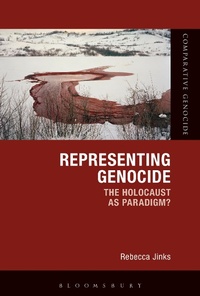
Representing Genocide
The Holocaust as Paradigm?
1st Edition
Published on 2. June 2016
280 pages
978-1-4742-5695-7 (ISBN)
Description

This book explores the diverse ways in which Holocaust representations have influenced and structured how other genocides are understood and represented in the West. Rebecca Jinks focuses in particular on the canonical 20th century cases of genocide: Armenia, Cambodia, Bosnia, and Rwanda. Using literature, film, photography, and memorialisation, she demonstrates that we can only understand the Holocaust's status as a 'benchmark' for other genocides if we look at the deeper, structural resonances which subtly shape many representations of genocide.
Representing Genocide pursues five thematic areas in turn: how genocides are recognised as such by western publics; the representation of the origins and perpetrators of genocide; how western witnesses represent genocide; representations of the aftermath of genocide; and western responses to genocide. Throughout, the book distinguishes between 'mainstream' and other, more nuanced and engaged, representations of genocide. It shows how these mainstream representations - the majority - largely replicate the representational framework of the Holocaust, including the way in which mainstream Holocaust representations resist recognising the rationality, instrumentality and normality of genocide, preferring instead to present it as an aberrant, exceptional event in human society. By contrast, the more engaged representations - often, but not always, originating from those who experienced genocide - tend to revolve around precisely genocide's ordinariness, and the structures and situations common to human society which contribute to and become involved in the violence.
Representing Genocide pursues five thematic areas in turn: how genocides are recognised as such by western publics; the representation of the origins and perpetrators of genocide; how western witnesses represent genocide; representations of the aftermath of genocide; and western responses to genocide. Throughout, the book distinguishes between 'mainstream' and other, more nuanced and engaged, representations of genocide. It shows how these mainstream representations - the majority - largely replicate the representational framework of the Holocaust, including the way in which mainstream Holocaust representations resist recognising the rationality, instrumentality and normality of genocide, preferring instead to present it as an aberrant, exceptional event in human society. By contrast, the more engaged representations - often, but not always, originating from those who experienced genocide - tend to revolve around precisely genocide's ordinariness, and the structures and situations common to human society which contribute to and become involved in the violence.
More details
Series
Edition
1. Auflage
Language
English
Place of publication
London
United Kingdom
Publishing group
Bloomsbury Publishing PLC
Target group
College/higher education
Illustrations
13 bw illus
ISBN-13
978-1-4742-5695-7 (9781474256957)
Copyright in bibliographic data and cover images is held by Nielsen Book Services Limited or by the publishers or by their respective licensors: all rights reserved.
Schweitzer Classification
Other editions
Additional editions
Book
06/2016
Bloomsbury Academic
€193.45
Shipment within 15-20 days
Person
Content
1. Introduction
2. Recognising Genocide: The 'Genocidal Imaginary'
3. Explaining Genocide: Representations of the Origins and Perpetrators of Genocide
4. Witnessing Genocide: Western Protagonists in the Theatre of Genocide
5. Resolving Genocide: Representations of the Aftermath
6. Responding to Genocide: Attitudes and Platitudes
7. Conclusion
Bibliography
Index
2. Recognising Genocide: The 'Genocidal Imaginary'
3. Explaining Genocide: Representations of the Origins and Perpetrators of Genocide
4. Witnessing Genocide: Western Protagonists in the Theatre of Genocide
5. Resolving Genocide: Representations of the Aftermath
6. Responding to Genocide: Attitudes and Platitudes
7. Conclusion
Bibliography
Index
