

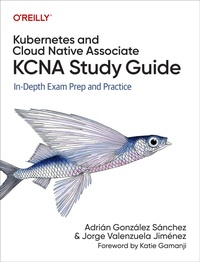
Kubernetes and Cloud Native Associate (KCNA) Study Guide
In-Depth Exam Prep and Practice
Published on 29. May 2024
266 pages
978-1-0981-3891-2 (ISBN)
Description

Learn how to prepare forand passthe Kubernetes and Cloud Native Associate (KCNA) certification exam. This practical guide serves as both a study guide and point of entry for practitioners looking to explore and adopt cloud native technologies. Adrin Gonzlez Snchez and Jorge Valenzuela Jimnez teach you not only the core technology fundamentals, but also the community and industry that KCNA serves.With the meteoric rise in cloud adoption, cloud native technologies such as Kubernetes have become the de facto industry standard. Other Kubernetes certificationsincluding KCSA, CKAD, CKA, and CKSare all geared toward higher-level technical proficiency. The KCNA is the entry door to your cloud native journey, and the certification exam covers the cloud native environment generally as well as fundamental Kubernetes skills and knowledge.This guide helps you learn:How to best and most efficiently prepare for the KCNA examThe latest cloud native developments and their importanceThe fundamentals of Kubernetes, cloud native development, and related CNCF projectsThe core elements of Kubernetes applicationsThe crucial elements of modern cloud native developmentHow to differentiate and choose cloud native technologiesThe market value of passing the KCNA examInsights and testimonials from key cloud native industry experts
More details
Other editions
Additional editions
Adrian Sanchez | Jorge Valenzuela
Kubernetes and Cloud Native Associate (KCNA) Study Guide
In Depth Exam Prep and Practice
Book
04/2025
O'Reilly
€59.50
Shipment within 15-20 days
Content
- Intro
- Copyright
- Table of Contents
- Foreword: An Overview of the Cloud Native Ecosystem
- A Bit of History
- KCNA Overview
- KCNA Is Only the First Step!
- Preface
- How This Book Is Organized
- Who This Book Is For
- What to Expect from This Study Guide
- Conventions Used in This Book
- Accessing the Book's Images Online
- O'Reilly Online Learning
- How to Contact Us
- Chapter 1. Introduction to the KCNA Certification and Study Guide
- Defining Cloud Native
- Inspirational Success Stories
- Self-Questionnaire for New Cloud Native Practitioners
- Part 1: The CNCF Ecosystem
- Part 2: General Cloud Native Concepts
- Part 3: Kubernetes Topics
- Part 4: Kubernetes Commands
- Part 5: Linux Fundamentals
- Part 6: Other Related Projects
- Expert Insights: Walid Shaari
- Summary
- Chapter 2. The KCNA Exam as the Starting Point
- The KCNA Certification by the Linux Foundation and CNCF
- Why the KCNA Matters and Why You Should Get Certified
- Exam Description and Curriculum
- About the Format
- Part 1: Kubernetes Fundamentals
- Part 2: Container Orchestration
- Part 3: Cloud Native Architecture
- Part 4: Cloud Native Observability
- Part 5: Cloud Native Application Delivery
- Additional Areas of Knowledge
- Kubernetes 101 Hands-on
- Linux Fundamentals
- API-Enabled Development
- Telematics
- Web Development
- Applied Usage
- Exam Study Plan
- Step 1: Determine your Current Level of Knowledge
- Step 2: Prepare and Adopt a Study Schedule
- Step 3: Focus on the Right Material
- Exam Logistics and What to Expect
- Step 1: Schedule Your Exam
- Step 2: Prepare for Exam Day
- Step 3: Wait and Check Results
- Potential Certification Paths
- Case Study: Spotify
- End-of-Chapter Knowledge Check
- Summary
- Chapter 3. CNCF and the New Era of Cloud Native
- The Origins of CNCF
- Timeline of the Cloud Native Industry
- Containerization Origins
- The Rise of Kubernetes and CNCF
- Community Dynamics and Governance
- Key CNCF Resources
- Community Forums
- In-Person and Online Events
- Educational Resources
- Mentorship and Ambassadors
- CNCF Projects and Maturity Levels
- Main CNCF Projects for the KCNA Exam
- Related Initiatives and Work Groups
- Expert Insights: Chris Aniszczyk
- End-of-Chapter Knowledge Check
- Summary
- Chapter 4. Essential Concepts for Cloud Native Practitioners
- General Cloud Computing
- Commercialization of Cloud Computing
- Infrastructure as a Service
- Platform as a Service
- Software as a Service
- Container as a Service
- Function as a Service
- Cloud Computing Infrastructure
- Public Cloud
- Private Cloud
- Hybrid Cloud
- Multicloud
- The Virtualization, Containerization, and Orchestration Trifecta
- Virtualization
- Containerization
- Orchestration
- Relationship Between Cloud Computing and Cloud Native
- Building Cloud Native Applications
- Other Relevant Cloud Native Topics
- DevOps and CI/CD
- GitOps and Infrastructure as Code
- Declarative Versus Imperative
- Stateful Versus Stateless
- Egress and Ingress
- Serverless
- Expert Insights: Benjamin Muschko
- Summary
- Chapter 5. The Key Role of Kubernetes
- An Introduction to Containers and Orchestration Technologies
- Containers
- Container Orchestration
- Container Ecosystem and Standards
- Linux Container
- Docker
- What Do the Container Standards Provide?
- Container Solutions
- What Is Kubernetes, and Why Is It So Important?
- Current Industry Trends
- Artificial Intelligence
- Vector Databases
- Edge Computing
- Platform Engineering
- Orchestration Alternatives to Kubernetes
- Apache Mesos and Marathon
- Red Hat OpenShift
- Containerization Benefits for Businesses
- Expert Insights: Brendan Burns
- Summary
- Chapter 6. Technical Kubernetes Topics
- Kubernetes Basic Concepts: From Containers to Clusters
- Kubernetes Cluster
- Components of the Control Plane
- Components of the Data Plane
- Inside Kubernetes Architecture
- Single-Container and Multi-Container Pods
- Container Runtimes in Kubernetes
- Container Network Interface
- Container Storage Interface
- Navigating Kubernetes States
- Stateless Applications
- Stateful Applications
- Deployments: Orchestrating Stateless Scalability
- StatefulSets: The Custodian of Stateful Applications
- ReplicaSets: Safeguarding Replication and Reliability
- DaemonSet Controller
- Job and CronJob Controllers
- Workload Autoscaling, Kubernetes Events, and Pod Lifecycles
- Horizontal Pod Autoscaler
- Vertical Pod Autoscaler
- Cluster Proportional Autoscaler
- Autoscaling Based on Events
- Cluster Autoscaler
- Scheduler
- Kubernetes Observability and Performance
- Logs
- Metrics
- Traces
- Resource Metrics Pipeline
- Full Metrics Pipeline
- Kubernetes Storage
- Persistent Volumes and Persistent Volume Claims
- Storage Classes
- Volumes and Volume Types
- StatefulSets
- Container Storage Interface
- Dynamic Provisioning
- Networking and Service Mesh
- Cluster Networking
- Ingress Controllers
- Network Plug-ins
- Service Discovery
- Service Mesh
- Kubernetes Security
- Container Image Security Strategies
- Kubernetes Cluster Protection Strategies
- Other Kubernetes-Related Components
- Helm
- Dapr
- ConfigMap
- minikube
- Main Commands
- Expert Insights: James Spurin
- Summary
- Chapter 7. Final Recommendations
- Additional Information for Exam Preparation
- Kubernetes Community Experts to Follow
- KCNA-Related Communities
- Useful GitHub Repositories
- Potential Career Options with KCNA Certification
- Other Kubernetes Certifications
- Relevant Books
- Summary
- Appendix A. End-of-Book Knowledge Check
- Appendix B. Solutions to Self-Questionnaire and Knowledge Checks
- Self-Questionnaire Part 1: The CNCF Ecosystem
- Self-Questionnaire Part 2: General Cloud Native Concepts
- Self-Questionnaire Part 3: Kubernetes Topics
- Self-Questionnaire Part 4: Kubernetes Commands
- Self-Questionnaire Part 5: Linux Fundamentals
- Self-Questionnaire Part 6: Other Related Projects
- Chapter 2 Knowledge Check
- Chapter 3 Knowledge Check
- End-of-Book Knowledge Check
- Index
- About the Authors
- Colophon
