

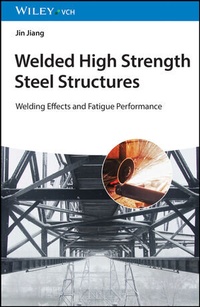
Welded High Strength Steel Structures
Welding Effects and Fatigue Performance
1st Edition
Published on 20. November 2023
240 pages
978-3-527-34727-8 (ISBN)
Description

Offers valuable insights, analysis and a clear understanding of the impact of residual stress on mechanical behavior of high strength steel joints.
More details
Other editions
Additional editions

Book
12/2023
1st Edition
Wiley-VCH
€105.00
Shipment within 5-7 days

Software
10/2023
Wiley-VCH
€140.67
Article exhausted; check different version
Person
Dr. Jin Jiang is Senior Researcher of Civil Engineering at Nanyang Technological University, Singapore. He also serves as associate director of complex steel structure research center of Guangdong province, China. He was previously served as research engineer at Keppel Offshore & Marine Technology Center (KOMTech). He is a technical assessor of Singapore Accreditation Council (SAC). He is a member of American Society of Civil Engineers (ASCE) and Singapore Structural Steel Society.
Content
INTRODUCTION
1.1 Research Background
1.2 Objectives and Scope
1.3 Contributions and Originality
1.4 Organization
LITERATURE REVIEW
2.1 High Strength Steel (HSS)
2.1.1 Overview
2.1.2 Delivery Condition of HSS
2.1.3 Fatigue and Fracture of HSS
2.1.4 Codes and Standards of HSS application
2.2 Welding and Residual Stress
2.2.1 Overview of Arc-Welding
2.2.2 Weldability of Steel
2.2.3 Phase Transformation and Other Phenomenon in Welding Procedure
2.2.4 The Formation of Residual Stress
2.2.5 Residual Stress Investigation Techniques
2.2.6 Exploration on Residual Stress Effects
2.3 Fatigue Analysis of Tubular Joints
2.3.1 Classification and Parameters of Tubular Joints
2.3.2 Stress Analysis of Intact Tubular Joint
EXPERIMENTAL INVESTIGATION OF RESIDUAL STRESS FOR HIGH STRENGTH STEEL PLATE-TO-PLATE JOINTS
3.1 Introduction
3.2 The Hole-Drilling Method and Specimen Details
3.2.1 The ASTM hole-drilling method
3.2.2 Specimen Specifications
3.2.3 Welding Specification
3.3 Residual Stress Investigation
3.3.1 Setup and Modification of the Hole-Drilling Guide
3.3.2 Strain Gauge Locations
3.3.3 Calibration Test for Residual Stress Measurement
3.3.4 Residual Stress Measurement Procedure
3.3.5 Cutting of Brace Plate
3.4 Experimental Results
3.4.1 Distribution of Residual Stress Along the Weld Toe
3.4.2 The Effects of Preheating
3.4.3 The Effects of Joint Angle
3.4.4 The Effects of Plate Thickness
3.4.5 The Effects of Brace Plate Cutting
3.5 Static Tensile Testing
3.5.1 Testing Rig
3.5.2 Strain Gauge Locations
3.5.3 Testing Procedure
3.5.4 Testing Results
3.6 The Influence of Residual Stress on SCF Value
3.6.1 Analysis method
3.6.2 Results and Conclusions
3.7 Conclusion and Summary
NUMERICAL STUDY OF RESIDUAL STRESS FOR HIGH STRENGTH STEEL PLATE-TO-PLATE JOINTS
4.1 Introduction
4.2 Modelling Procedure and Results For 2d Models
4.2.1 Overview
4.2.2 The Lumped Technique
4.2.3 Weld Filler Addition Technique
4.2.4 Heat Transfer Analysis
4.2.5 Mechanical Analysis
4.2.6 Model Validation and Results
4.3 MODELLING PROCEDURE AND RESULTS FOR 3D MODELS
4.3.1 Overview
4.3.2 Heat Source
4.3.3 Modeling for the Weld Filler Adding Process
4.3.4 Modeling Validation
4.3.5 Modeling Results
4.4 PARAMETRIC STUDY
4.4.1 Effect of Boundary Condition
4.4.2 Effect of Preheating Temperature
4.4.3 Effect of Using Different Lumps
4.4.4 Effect of Welding Speed
4.4.5 Effect of Welding Sequence
4.5 Conclusions
EXPERIMENTAL INVESTIGATION OF RESIDUAL STRESS FOR WELDED BOX HIGH STRENGTH STEEL T JOINTS
5.1 Introduction
5.2 Experimental Investigation
5.2.1 Material Properties
5.2.2 Specimen Fabrication
5.2.3 Test Setup and Procedure
5.2.4 Strain Gauge Schemes for Residual Stress Measurement
5.2.5 Computation of Residual Stress
5.3 Testing Results
5.3.1 Preheating Specimen
5.3.2 Ambient Temperature Specimen
5.4 Analyses and Discussion
5.4.1 Preheating Effect
5.4.2 Chord Edge Effect
5.4.3 Corner Effect
5.4.4 Stress Variation in Depths
5.5 Conclusions
NUMERICAL STUDY OF RESIDUAL STRESS FOR WELDED HIGH STRENGTH STEEL BOX T/Y JOINTS
6.1 Introduction
6.2 Modeling Procedure
6.2.1 Overview
6.2.2 Heat Source Model
6.2.3 Thermal Interactions
6.2.4 Arc Touch Moving
6.2.5 Modeling Summary
6.3 Modeling of Pure Heat Transfer
6.4 Fully Coupled Residual Stress Analysis
6.4.1 Modeling Validation
6.4.2 Modeling Results
6.5 Parametric Study
6.5.1 Range of The Modeling
6.5.2 Variation of The Residual Stress with Respect to Joint Angle
6.5.3 Variation of The Residual Stress with Respect To B/C (Ratio of Brace Width to Chord Width)
6.5.4 Variation of The Residual Stress with Respect to Welding Speed
6.6 Conclusions
STRESS CONCENTRATION FACTOR OF WELDED BOX HIGH STRENGTH STEEL T JOINT
7.1 Introduction
7.2 Test Setup and Specimens
7.3 Strain Gauge Schemes
7.4 Test Procedure
7.5 Test Results
7.6 Comparison of Test Results with Cidect Guide
7.7 Effect of
1.1 Research Background
1.2 Objectives and Scope
1.3 Contributions and Originality
1.4 Organization
LITERATURE REVIEW
2.1 High Strength Steel (HSS)
2.1.1 Overview
2.1.2 Delivery Condition of HSS
2.1.3 Fatigue and Fracture of HSS
2.1.4 Codes and Standards of HSS application
2.2 Welding and Residual Stress
2.2.1 Overview of Arc-Welding
2.2.2 Weldability of Steel
2.2.3 Phase Transformation and Other Phenomenon in Welding Procedure
2.2.4 The Formation of Residual Stress
2.2.5 Residual Stress Investigation Techniques
2.2.6 Exploration on Residual Stress Effects
2.3 Fatigue Analysis of Tubular Joints
2.3.1 Classification and Parameters of Tubular Joints
2.3.2 Stress Analysis of Intact Tubular Joint
EXPERIMENTAL INVESTIGATION OF RESIDUAL STRESS FOR HIGH STRENGTH STEEL PLATE-TO-PLATE JOINTS
3.1 Introduction
3.2 The Hole-Drilling Method and Specimen Details
3.2.1 The ASTM hole-drilling method
3.2.2 Specimen Specifications
3.2.3 Welding Specification
3.3 Residual Stress Investigation
3.3.1 Setup and Modification of the Hole-Drilling Guide
3.3.2 Strain Gauge Locations
3.3.3 Calibration Test for Residual Stress Measurement
3.3.4 Residual Stress Measurement Procedure
3.3.5 Cutting of Brace Plate
3.4 Experimental Results
3.4.1 Distribution of Residual Stress Along the Weld Toe
3.4.2 The Effects of Preheating
3.4.3 The Effects of Joint Angle
3.4.4 The Effects of Plate Thickness
3.4.5 The Effects of Brace Plate Cutting
3.5 Static Tensile Testing
3.5.1 Testing Rig
3.5.2 Strain Gauge Locations
3.5.3 Testing Procedure
3.5.4 Testing Results
3.6 The Influence of Residual Stress on SCF Value
3.6.1 Analysis method
3.6.2 Results and Conclusions
3.7 Conclusion and Summary
NUMERICAL STUDY OF RESIDUAL STRESS FOR HIGH STRENGTH STEEL PLATE-TO-PLATE JOINTS
4.1 Introduction
4.2 Modelling Procedure and Results For 2d Models
4.2.1 Overview
4.2.2 The Lumped Technique
4.2.3 Weld Filler Addition Technique
4.2.4 Heat Transfer Analysis
4.2.5 Mechanical Analysis
4.2.6 Model Validation and Results
4.3 MODELLING PROCEDURE AND RESULTS FOR 3D MODELS
4.3.1 Overview
4.3.2 Heat Source
4.3.3 Modeling for the Weld Filler Adding Process
4.3.4 Modeling Validation
4.3.5 Modeling Results
4.4 PARAMETRIC STUDY
4.4.1 Effect of Boundary Condition
4.4.2 Effect of Preheating Temperature
4.4.3 Effect of Using Different Lumps
4.4.4 Effect of Welding Speed
4.4.5 Effect of Welding Sequence
4.5 Conclusions
EXPERIMENTAL INVESTIGATION OF RESIDUAL STRESS FOR WELDED BOX HIGH STRENGTH STEEL T JOINTS
5.1 Introduction
5.2 Experimental Investigation
5.2.1 Material Properties
5.2.2 Specimen Fabrication
5.2.3 Test Setup and Procedure
5.2.4 Strain Gauge Schemes for Residual Stress Measurement
5.2.5 Computation of Residual Stress
5.3 Testing Results
5.3.1 Preheating Specimen
5.3.2 Ambient Temperature Specimen
5.4 Analyses and Discussion
5.4.1 Preheating Effect
5.4.2 Chord Edge Effect
5.4.3 Corner Effect
5.4.4 Stress Variation in Depths
5.5 Conclusions
NUMERICAL STUDY OF RESIDUAL STRESS FOR WELDED HIGH STRENGTH STEEL BOX T/Y JOINTS
6.1 Introduction
6.2 Modeling Procedure
6.2.1 Overview
6.2.2 Heat Source Model
6.2.3 Thermal Interactions
6.2.4 Arc Touch Moving
6.2.5 Modeling Summary
6.3 Modeling of Pure Heat Transfer
6.4 Fully Coupled Residual Stress Analysis
6.4.1 Modeling Validation
6.4.2 Modeling Results
6.5 Parametric Study
6.5.1 Range of The Modeling
6.5.2 Variation of The Residual Stress with Respect to Joint Angle
6.5.3 Variation of The Residual Stress with Respect To B/C (Ratio of Brace Width to Chord Width)
6.5.4 Variation of The Residual Stress with Respect to Welding Speed
6.6 Conclusions
STRESS CONCENTRATION FACTOR OF WELDED BOX HIGH STRENGTH STEEL T JOINT
7.1 Introduction
7.2 Test Setup and Specimens
7.3 Strain Gauge Schemes
7.4 Test Procedure
7.5 Test Results
7.6 Comparison of Test Results with Cidect Guide
7.7 Effect of
