

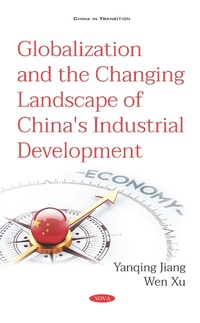
Globalization and the Changing Landscape of China's Industrial Development
Published on 5. June 2019
306 pages
978-1-5361-5779-6 (ISBN)
Description

This book describes and discusses the various aspects of the changing "landscape" of China's industrial development within the general context of globalization. In the past four decades, the spectacular economic growth and development of China has surprised the world. China has leapt from one of the poorest countries to the second-largest economy in the world. The development path of China's economy is different from that of any other country, thanks to its unique national system. As a country that adopted the centrally planned economy in the past, the government played a very important role in the national economy. Even until now, government planning still greatly influences many aspects of the country despite the gradual perfection of the market system. Besides the government's role, external factors coming worldwide can also be major driving forces behind the development of a national economy. For developing countries, industrial development is almost always the national priority. This book focuses its attention on the discussing of the evolution and development of China's industrial structure under the general trends of globalization. It is always preferred that China can constantly strike a balance between its speed of overall economic growth and the soundness of the development of its industrial structure. In this book, we present the reader a true "landscape" of China's industrial development that is changing and being constantly shaped by the various driving forces coming from the current trends of globalization. If you are one of the interested readers, we believe this book is one of the best choices for you.
More details
Other editions
Additional editions
Yanqing Jiang | Wen Xu
Globalization and the Changing Landscape of China's Industrial Development
Book
07/2019
Nova Science Publishers Inc
€303.05
Shipment within 15-20 days
Content
- Intro
- Contents
- Preface
- Acknowledgments
- Chapter 1
- Globalization and China
- 1.1. The Manifestation of Globalization
- 1.1.1. Liberalization of Trade
- 1.1.2. Financial Globalization
- 1.1.3. Investment Liberalization and Production Internationalization
- 1.2. China as a Beneficiary of Globalization
- 1.2.1. Globalization and China's Foreign Trade
- 1.2.2. Globalization and Foreign Investment
- 1.2.3. Globalization and the Upgrading of China's Industrial Structure
- 1.3. China as a Contributor to Globalization
- 1.3.1. Development and the Creation of a Governance Model
- 1.3.2. Development and Win-Win Cooperation
- 1.3.3. Inclusive Development and Balanced Development
- Chapter 2
- China's Industrial Development under Globalization
- 2.1. Industrial Development
- 2.1.1. Industrial Development
- 2.1.1.1. Expanded Industrial Scale and Strengthened Competitiveness
- 2.1.1.2. Rationalization of Industrial Organization
- 2.1.2. The Dynamic Mechanism of Industrial Development
- Chapter 3
- The Development of China's Agriculture
- 3.1. Dynamic Changes of China's Agriculture
- 3.1.1. The Growth of Agricultural Trade
- 3.1.2. Resource Endowment Characteristics
- 3.1.3. The Comparative Advantage and International Competitiveness
- 3.1.4. Agricultural Trade and Food Security under Globalization
- 3.2. Foreign Capital Utilization
- 3.2.1. The Chinese Agriculture and Foreign Capital
- 3.2.2. The Present Situation
- 3.2.3. The Development of Agriculture and Foreign Investment
- 3.3. Agricultural Development Mode under Globalization
- 3.3.1. The Transformation of Agricultural Development Mode
- 3.3.2. The Development of Modern Agriculture
- 3.3.3. Building a Modern Circulation System of Agricultural Products
- Chapter 4
- The Development of China's Manufacturing Industry
- 4.1. The Division of Labor in the Global Value Chain
- 4.1.1. The Participation of Developing Countries
- 4.1.2. The Manufacturing Industry in the Global Value Chain
- 4.1.3. The Impact of Global Value Chain Division
- 4.1.4. The Choice of Development Mode of the Manufacturing Industry
- 4.2. Growth of China's Manufacturing Industry
- 4.2.1. The Growth of China's Manufacturing Industry
- 4.2.1.1. The First Stage: The Early Efforts of China's Modern Manufacturing Industry (1860-1894)
- 4.2.1.2. The Second Stage: The Full Development of the Manufacturing Industry (1895 - 1936)
- 4.2.1.3. The Third Stage: Adjustment and Development of Industry during the War (1937-1948)
- 4.2.1.4. The Fourth Stage: Giving Priority to the Development of Heavy Industry (1949-1978)
- 4.2.1.5. The Fifth Stage: Rapid Development of Manufacturing Industry after Reform and Opening-Up (1979 - 1996)
- 4.2.1.6. The Sixth Stage: "Made in China" Going Global (1997 - Present)
- 4.2.2. The Chinese Manufacturing Industry in the Global Value Chain
- 4.2.3. The Influence of Global Value Chain Division
- 4.2.3.1. The Impact of Value Chain Division on the External Driving Force for the Growth of China's Manufacturing Industry
- 4.2.3.1.1. Value Chain Division Plays a Leading and Complementary Role in China's Manufacturing Investment
- 4.2.3.1.2. The Division of Value Chain Improves the Technological Level of China's Manufacturing Industry
- 4.2.3.1.3. The Demand Effect of Value Chain Division on
- the Development of China's Manufacturing Industry
- 4.2.3.1.4. Value Chain Division Stimulates China's
- Institutional Innovation
- 4.2.3.2. The Impact of Value Chain Division on the Endogenous Driving Force of China's Manufacturing Industry
- 4.2.4. Risks from the Value Chain Division of Labor
- 4.3. The New Direction of China's Manufacturing Industry
- Chapter 5
- The Home Appliance Industry under Globalization
- 5.1. The Development Process of China's Home Appliance Industry
- 5.1.1. Development Stage (1979-1988)
- 5.1.2. Prosperity Stage (1989-1995)
- 5.1.3. Going Global (Since 1996)
- 5.2. International Competitiveness
- 5.2.1. Production of Major Household Appliances
- 5.2.2. Exports of China's Home Appliance Industry
- 5.2.2.1. Overall Trend of Exports
- 5.2.2.2. The Main Export Product
- 5.2.2.3. Main Areas for Export
- 5.2.3. International Competitiveness
- 5.2.3.1. Quantitative Analysis of International Competitiveness of China's Household Appliance Industry
- 5.2.3.1.1. International Market Share
- 5.2.3.1.2. Revealed Comparative Advantage Index
- 5.2.3.1.3. Trade Competition Index
- 5.2.3.2. Qualitative Analysis of the International Competitiveness of China's Household Appliance Industry
- 5.2.3.2.1. Cost and Price
- 5.2.3.2.2. Technological Innovation
- 5.2.3.2.3. Brand Competitiveness
- 5.2.3.2.4. Capability of Informatization
- 5.2.3.2.5. Marketing Level
- 5.3. Rapid Growth of Core Enterprises
- 5.3.1. Haier
- 5.3.2. Gree
- 5.3.3. Midea
- 5.4. The Technology
- 5.5. Recent Data and the Prospects
- (1) The Investment in Technology Research and Development Has Increased and the Layout Has Been Deepened
- (2) Taking Consumer Demand as the Guide and Product Structure Is Further Enhanced
- (3) Prominent Intelligent Features of Products and Manufacturing
- (4) The Achievement of the Internationalization Strategy Is Gradually Emerging
- Chapter 6
- The Automobile Industry under Globalization
- 6.1. Globalization of Automobile Industry
- 6.1.1. Global Configuration of Industrial Chain
- 6.1.1.1. The Competitive Pattern of the International Automobile Industry Has Been Changed
- 6.1.1.2. Leads to the Emergence of New Modes of Specialization and Collaboration
- 6.1.1.3. Promoting Technological and Organizational Changes within Enterprises and Implementing a Platform Sharing Strategy
- 6.1.1.4. Automotive Products are Increasingly Global
- 6.1.2. Cross-Border and Large-Scale Enterprise Restructuring
- 6.2. The Development of China's Automobile Industry
- 6.3. External Conditions
- 6.3.1. Abundant and High-Quality Supply of Production Factors
- 6.3.2. Growing Domestic Market Demand
- 6.3.3. Sound Related and Supporting Industries
- 6.3.4. Enterprise Structure and Industrial Competition
- 6.3.5. Major Opportunities at the Current Stage of Economic Development
- 6.4. The Development Status of China's Automobile Industry
- 6.4.1. Product Production and Has Market Demands
- 6.4.2. The Level of Technology, Independent Research and Development Capabilities
- 6.4.3. Weak Brand Awareness and Weak Competitiveness in the International Market
- 6.5. Future Prospects of China's Automobile Industry
- 6.5.1. Balanced Development and the Main Battlefield of the Automobile Market
- 6.5.2. Independent Research and Development of the Chinese Automobile Enterprises
- 6.5.3. Chinese Auto Companies Going Global
- 6.5.4. The Ecological Civilization System and Automobile Consumption
- Chapter 7
- China's Service Industry under Globalization
- 7.1. New Trends in the Development of Contemporary Service Industry
- 7.1.1. The Convergence Trend of Service Industry and Manufacturing Industry
- 7.1.2. The Combination of Service Industry and New Technology
- 7.1.3. The Combination of Service Industry and E-Commerce
- 7.1.4. The Combination of Service Industry and Globalization
- 7.2. The Challenges for China's Service Industry under the New Trend
- 7.2.1. Productivity in the Service Industry
- 7.2.2. The Development of E-Commerce in the Service Industry
- 7.2.3. Problems in the Service Trade
- 7.2.3.1. The Development of Service Trade and Goods Trade Is not Balanced, and the International Competitiveness of Service Trade Is Inconsistent with the Development of Trade Scale
- 7.2.3.2. The Proportion of Import and Export of Traditional Services Has Been Further Increased, and the Structure of Service Trade Still Needs to Be Optimized
- 7.2.3.3. The Service Trade Deficit Continues to Expand
- 7.2.3.4. Insufficient Openness of Service Industry
- 7.2.4. The Policy and Legal Environment of China's Service Industry
- 7.3. Opportunities for China's Service Industry
- Chapter 8
- China's Financial Industry under Globalization
- 8.1. Financial Globalization and Its Main Characteristics
- 8.1.1. Large-Scale Cross-Border Capital Flows
- 8.1.2. Financial Liberalization and Competition among Financial Institutions
- 8.2. Financial Globalization and China's Financial Industry
- 8.2.1. Opportunities Brought by Financial Globalization
- 8.2.2. Challenges for China's Financial Industry
- 8.3. Financial Globalization and China's Opening Process
- 8.3.1. China's Financial Opening-Up
- 8.3.1.1. The Initial and Exploratory Stage
- 8.3.1.2. The Marketization Degree Promotion Stage
- 8.3.1.3. The Stage of Full Opening-Up
- 8.3.1.3.1. The Banking Industry
- 8.3.1.3.2. The Securities Industry
- 8.3.1.3.3. The Insurance Industry
- 8.3.2. New Signals and Features of China's Financial Opening-Up
- 8.3.3. New Understanding of Greater Openness of the Financial Sector
- 8.4. Meeting the Challenges of Globalization
- 8.4.1. The Reform and Transformation of the Financial System
- 8.4.2. Financial Risks and the Importance of Financial Security
- 8.4.3. Legal Construction and Financial Supervision
- Chapter 9
- The Logistics Industry in China under Globalization
- 9.1. China as the "Manufacturing Center of the World"
- 9.1.1. The Manufacturing Production and Exports
- 9.1.2. Industrial Transfers from Many Multinational Companies
- 9.2. The Supporting Role of the Logistics Industry
- 9.3. The Development History and Shortcomings
- 9.3.1. The Development History and Status Quo of China's Logistics Industry
- 9.3.1.1. The Start-Up Stage (1990s)
- 9.3.1.2. The Development Stage (2000 to Present)
- 9.3.2. Problems and Constraints
- 9.3.2.1. The Lack of Overall Industrial Planning and Repeated Construction of Projects
- 9.3.2.2. The Development of the Industry Is Uneven and the Degree of Specialization Is Not High
- 9.3.2.3. The Standardization of Logistics Services Are Not Uniform, and the Market Segmentation Is Serious
- 9.3.2.4. The Backward Management
- 9.4. A Modern Logistics Industry with the World's Manufacturing Center
- 9.4.1. The Overall Planning for Logistics Development
- 9.4.2. The Logistics Regulatory System and Logistics Standards
- 9.4.3. The Supply Chain Management and Information Construction
- 9.4.4. The Guidance of the Government and Green Logistics
- Chapter 10
- The Cultural Industry under Globalization
- 10.1. The Role of Cultural Industry
- 10.1.1. An Important Force Driving Economic Growth
- 10.1.2. An Important Symbol of Comprehensive National Strength
- 10.1.3. The Key to the Optimization of Economic Structure
- 10.1.4. An Effective Way to Expand Employment
- 10.1.5. A Necessity for Maintaining National Cultural Security
- 10.2. The Development Pattern of Cultural Industry in the World
- 10.2.1. Developed Countries in the Context of Cultural Globalization
- 10.2.2. The Dilemma for National Culture in Developing Countries
- 10.3. China's Rising Cultural Industry
- 10.4. Problems
- Chapter 11
- The Chinese Film Industry under Globalization
- 11.1. The Development of China's Film Industry
- 11.2. The Status Quo of the Chinese Film Market
- 11.2.1. A Large Foreign Trade Deficit
- 11.2.2. The Export Scale of Chinese Films in Overseas Markets
- 11.2.3. The International Competitiveness of China's Film Industry
- 11.3. Underdevelopment of China's Film Industry
- 11.3.1. Strict Regulations and Rules
- 11.3.2. A Late Starter with Slow Progress
- 11.3.3. The Chinese Film Industry and Cultural Empires
- 11.3.4. The Lack of Production Talents and Advanced Technology
- 11.3.5. The Lack of Cultural Value
- 11.4. Future Development
- 11.5. Films and Culture
- Chapter 12
- Industrial Transformation in the New Era
- 12.1. Industrial Transformation and Upgrading under Globalization
- 12.2. "Anti-Globalization" and Industrial Competitiveness
- 12.3. New Reflections on China's Industrial Transformation and Upgrading
- 12.4. A More Inclusive Path for Industrial Transformation and Upgrading
- References
- About the Authors
- Index
- Blank Page
