

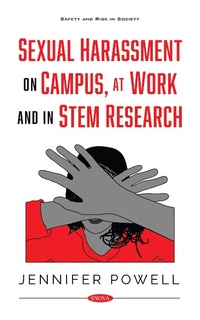
Sexual Harassment on Campus, at Work and in STEM Research
Published on 14. April 2021
421 pages
978-1-5361-9590-3 (ISBN)
Description

Sexual harassment is degrading and illegal. Studies show it has a negative effect on the ability of women to engage in research at the same level as men. Sexual assault on college campuses is a critical concern for students, policy makers, college administrators, and parents of current and prospective students. Chapter 1 identifies the range and scope of policies and practices related to the investigation and adjudication of sexual assaults on college campuses in the U.S. While many workers in the United States experience workplace sexual harassment-resulting in substantial costs to them and their employers-the extent of sexual harassment and the magnitude of its effects are not fully understood as discussed in Chapter 2. Chapter 3 reviews federal science agency policies and procedures for addressing sexual harassment involving federally-funded STEM researchers and their trainees. The book will also explore lessons learned, enduring challenges, and future opportunities for preventing and mitigating the negative impact of sexual harassment in STEM studies and careers. Chapter 4 is the full transcript of the "Combating Sexual Harassment in Science Act of 2019." Title IX prohibits discrimination on the basis of sex in education programs or activities that receive federal financial assistance. Chapter 5 examines some of the major changes established by the Title IX regulations, highlighting many of the most significant new requirements and noting where those obligations depart from prior ED guidance and the NPRM.
More details
Other editions
Additional editions
Jennifer Powell
Sexual Harassment on Campus, at Work and in STEM Research
Book
05/2021
Nova Science Publishers Inc
€303.05
Shipment within 15-20 days
Content
- Intro
- Contents
- Preface
- Chapter 1
- Responding to Sexual Assault on Campus: A National Assessment and Systematic Classification of the Scope and Challenges for Investigation and Adjudication(
- Final Summary Overview
- Executive Summary
- Environmental Web-Scan
- Interviews of Title IX Coordinators
- Acknowledgments
- Introduction
- Principal Aims of the Project
- Environmental Web-Scan
- Background
- Methods-Environmental Web-Scan
- Sample Selection: Environmental Web-Scan
- Data Collection: Environmental Web-Scan
- Findings - Environmental Web-Scan
- Models of Investigation and Adjudication
- Investigation Cluster Analysis Results
- Investigation Cluster 1 - Single Investigator Model (42% of IHEs)
- Investigation Cluster 2 - Quasi-Criminal Justice Investigative Model (40% of IHEs)
- Investigative Cluster 3 - Collaborative Investigative Model (18% of IHEs)
- Adjudication Cluster Analysis Results
- Adjudication Cluster 1 - Basic due Process (57% of Schools)
- Adjudication Cluster 2 - Criminal Justice Based due Process (24% of Schools)
- Adjudication Cluster 3 - Limited Information (18%)
- Title IX Coordinator Interviews
- Background
- Methods - Title IX Coordinator Interviews
- Sample Selection - Title IX Coordinator Interviews
- Data Collection - Title IX Coordinator Interviews
- Data Analysis - Title IX Coordinator Interviews
- Findings - Title IX Coordinator Interviews
- Characteristics of the Interviewed Sample
- Investigation and Adjudication Models and Approaches
- Investigative Approaches
- Who Investigates?
- Concerns About Investigator Availability and Training
- Adjudicatory Decision-Making
- Sanctioning Decision-Making
- Themes Identified from Research and Interviews
- Response to Sexual Assault Should Be Aligned with the Educational Mission of the Institution as Distinguished from the Criminal Justice System
- The Coordinators Emphasized the Motivation to Handle These Cases Well and with Empathy
- The Pressing Need to Professionalize This Work
- Resources, Institutional Structure, and Authority
- Title IX Coordinators' Expectations for the Future
- Dissemination, Discussion and Implications of the Research
- References
- Appendix A: Web Scan Data Collection Form
- RSACscaninventory
- Appendix B: TIX Coordinator Pre-Interview Survey
- RSACC Interview Survey (revised 5/23/18)
- Appendix C: IHE/TIX Coordinator Interview Protocol
- Introduction
- Interview Protocol
- Appendix D: Draft Website Checklist
- Part One: Website Design Guidelines
- Part Two: Semester Review Guidelines
- Part Three: Webpage Checklist
- Appendix D: Clery Offenses Definitions
- Chapter 2
- Workplace Sexual Harassment: Experts Suggest Expanding Data Collection to Improve Understanding of Prevalence and Costs(
- Abbreviations
- Why GAO Did This Study
- What GAO Recommends
- What GAO Found
- Background
- Legal Framework for Workplace Sexual Harassment
- Federal Role in Addressing Sexual Harassment
- Equal Employment Opportunity Commission
- Other Agencies
- Reporting Sexual Harassment
- Retaliation
- Limited Nationwide Data on Workplace Sexual Harassment Hinder a Comprehensive Understanding of Prevalence and Costs
- Few Reliable Nationwide Estimates of the Prevalence of Workplace Sexual Harassment Exist
- Survey Question Structure
- Recall Period
- Prevalence of Sexual Harassment Can Vary based on Demographic and Workplace Characteristics
- Gender
- Age
- Race
- Education Level
- Workplace Gender Composition
- Research Shows Links between Sexual Harassment and Negative Outcomes, but Lacks Specific Cost Estimates
- Health Costs
- Productivity Costs
- Career Costs
- Reporting and Legal Costs
- EEOC Collects Data on Workplace Sexual Harassment Charges and Complaints but Cannot Systematically Analyze Related
- Retaliation Data
- EEOC Maintains Data on Sexual Harassment Charges Filed Against Private, State, and Local Government Employers
- Charges by Gender
- Charges by Race
- Charges by Age
- EEOC Maintains Data on Sexual Harassment Complaints Filed Against Federal Employers
- EEOC Does Not Have the Ability to Systematically Analyze Retaliation Charges to Determine Whether They Stem from Prior Sexual Harassment
- Experts Recommended Developing New or Expanded Nationwide Surveys to Improve Information on Workplace Sexual Harassment
- Administration and Resources
- Data Collection Approach
- Stand-Alone Surveys versus Additions to Existing Surveys
- Supplemental Qualitative Data
- Sampling
- Content and Format
- Prevalence and Cost Data
- Survey Format
- Challenges to Collecting Data on Sexual Harassment
- Conclusion
- Recommendation for Executive Action
- Agency Comments and Our Evaluation
- Appendix I: Objectives, Scope and Methodology
- Sexual Harassment Prevalence and Costs Literature Review
- Federal Data Analysis
- Equal Employment Opportunity Commission
- Merit Systems Protection Board
- National Institute for Occupational Safety and Health
- Expert Roundtable Discussion and Questionnaire
- Roundtable Discussion
- Roundtable Questionnaire
- Interviews
- Appendix II: Participants in GAO Expert Roundtable on Workplace Sexual Harassment Prevalence and Costs
- Appendix III: Comments from the Equal Employment Opportunity Commission
- Appendix IV: Accessible Data
- Data Tables
- Chapter 3
- Combating Sexual Harassment in Science(
- Purpose
- Witnesses
- Key Questions
- Background
- Scope of the Problem
- Committee Action
- H.R. 36 - Combating Sexual Harassment in Science Act
- Scientific Society Action
- University Action
- Testimony of John Neumann, Managing Director, Science, Technology Assessment, and Analytics, U.S. GAO
- Sexual Harassment in Stem Research: Preliminary Observations on Policies for University Grantees and Information Sharing among Selected Agencies
- Why GAO Did This Study
- What GAO Recommends
- What GAO Found
- Background
- Selected Agencies' Funding for University STEM Research
- Sexual Harassment
- Title IX of the Education Amendments of 1972
- Federal Grant Awards and Grant Life Cycle
- Resources to Address Sexual Harassment Complaints Vary
- Duties and Funding for Offices Responsible for Addressing Complaints
- Number of Complaints Received
- Agencies Have Different Sexual Harassment Prevention Policies and Mechanisms for Communicating Them to Grantees
- Agencies Have Taken Some Steps to Share Information and Collaborate
- Biography
- Testimony of Dr. Paula H. Johnson, President, Wellesley College
- Sexual Harassment of Women in Academic Sciences, Engineering, And Medicine, Statement of Paula A. Johnson, MD, MPH President, Wellesley College and Co-Chair, Committee on the Impacts of Sexual Harassment in Academia Committee on Women in Science, Eng...
- Sexual Harassment of Women, Climate, Culture, and Consequences in Academic Sciences, Engineering, and Medicine
- Recommendations for Congress and Federal Agencies
- Committee on Impacts of Sexual Harassment in Academia
- Paula A. Johnson, MD, MPH
- Testimony of Dr. Jean Morrison, University Provost and Chief Academic Officer, Boston University
- Testimony of Dr. Jean Morrison, Provost and Chief Academic Officer of Boston University, House Committee on Science, Space, and Technology, Hearing on Combatting Sexual Harassment in Science, June 12, 2019
- My Story
- Boston University
- BU's Path to Change
- The Role of Federal Policymakers
- Testimony of Dr. Philip Kass, Vice Provost for Academic Affairs and Professor of Analytic Epidemiology, University of California, Davis
- Testimony of Philip H. Kass, DVM, MPVM, MS, PhD, Vice Provost for Academic Affairs, Professor of Analytic Epidemiology, University of California, Davis, before the U.S. House of Representatives, Committee on Science, Space, and Technology, on Comba...
- Background
- Implementation
- Biography
- Appendix I: Answers to Post-Hearing Questions
- Responses by Mr. John Neumann
- Questions for the Record, the Honorable Eddie Bernice Johnson, Chairwoman, Committee on Science, Space and Technology, United States House of Reporesentatives
- Questions for the Record, the Honorable Mikie Sherrill, Committee on Science, Space, and Technology, United States House of Representatives
- Responses by Dr. Paula A. Johnson
- Responses to Questions for the Record, For Dr. Paula Johnson, Chair, National Academies Study Committee on Sexual Harassment of Women: Climate, Culture, and Consequences in Academic Sciences, Engineering, and Medicine, July 15, 2019
- Question Submitted by Ranking Member Frank Lucas
- Response by Dr. Johnson
- Sexual Harassment and Policies on Research Misconduct and Research Integrity
- Responses by Dr. Philip Kass
- House Committee on Science, Space, and Technology, Questions for the Record to: Dr. Philip II. Kass, Vice President for Academic Affairs, Professor of Analytic Epidemiology, University of California, Davis, Submitted by Chairwoman Eddie Bernice Johnson
- Appendix II: Additional Material for the Record
- Statement Submitted by Representative Eddie Bernice Johnson, Statement from the American Society for Microbiology, in response to the House Science, Space and Technology Committee Hearing: "Combatting Sexual Harassment in Science," June 12. 2019.
- Chapter 4
- Combating Sexual Harassment in Science Act of 2019(
- Amendment
- Section 1. Short Title
- Table of Contents
- Sec. 2. Findings
- Sec. 3. Definitions
- Sec. 4. Research Grants
- Sec. 5. Data Collection
- Sec. 6. Responsible Conduct Guide
- Sec. 7. Interagency Working Group
- Sec. 8. National Academies Assessment
- Sec. 9. Authorization of Appropriations
- Purpose of the Bill
- Background and Need for the Legislation
- Committee Hearings
- Committee Consideration and Votes
- Summary of Major Provisions of the Bill
- Section-By-Section Analysis (By Title And Section)
- Committee Views
- Cost Estimate
- Congressional Budget Office Cost Estimate
- Federal Mandates Statement
- Committee Oversight Findings and Recommendations
- Statement on General Performance Goals and Objectives
- Federal Advisory Committee Statement
- Duplication of Federal Programs
- Earmark Identification
- Applicability to the Legislative Branch
- Statement on Preemption of State, Local, or Tribal Law
- Proceedings of the Full Committee Markup
- Markups: H.R. 2528, STEM Opportunities Act of 2019
- H.R. 36, Combating Sexual Harassment in Science Act of 2019
- H.R. 3196, Vera Rubin Survey Telescope Designation Act
- and H.R. 3153, Expanding Findings for Federal Opioid Research and Treatment Act
- H.R. 36
- A Bill
- Section 1. Short Title
- Table of Contents
- Sec. 2. Findings
- Sec. 3. Definitions
- Sec. 4. Research Grants
- Sec. 5. Data Collection
- Sec. 6. Responsible Conduct Guide
- Sec. 7. Interagency Working Group
- Sec. 8. National Academies Assessment
- Sec. 9. Authorization of Appropriations
- Amendment in the Nature of a Substitute to H.R. 36 Offered
- Section 1. Short Title
- Table of Contents
- Sec. 2. Findings
- Sec. 3. Definitions
- Sec. 5. Data Collection
- Sec. 6. Responsible Conduct Guide
- Sec. 7. Interagency Working Group
- Sec. 8. National Academies Assessment
- Sec. 9. Authorization Of Appropriations
- Amendment to the Amendment in the Nature of a Substitute to H.R. 36
- Amendment to the Amendment in the Nature of a Substitute to H.R. 36
- Chapter 5
- New Title IX Sexual Harassment Regulations Overhaul Responsibilities for Schools(
- Title IX Enforcement Background
- New Title IX Regulations Regarding Sexual Harassment
- Definition: What Conduct Constitutes Sexual Harassment?
- Notice: When Must a School Respond to Sexual Harassment Allegations?
- Response: What Actions Must a School Take Once It Has Notice?
- Initial Response to Allegations
- Grievance Procedures
- Investigative Report
- Hearings
- Determinations of Responsibility, Standard of Evidence, and Appeals
- Informal Resolution
- Retaliation
- Conclusion
- Index
- Blank Page
