

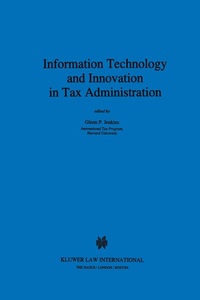
Information Technology and Innovation in Tax Administration
Published on 1. May 1996
230 pages
978-90-411-7226-6 (ISBN)
Description

Nothing impacts more on citizens than taxes, and nothing has had more impact on the way taxes are administered than the information technology revolution. This volume analyzes the experiences of a dozen or more countries in their effort to use information technology to improve taxpayer service, compliance, and revenue performance.
Administrative re-engineering using information technology is the order of the day. Information technology is changing the boundaries of tax administration from isolated single tax administrative units, to unified tax authorities that administer all taxes including the functions of customs. Information sharing by the many areas of tax administration is the key to reducing compliance costs borne by taxpayers, as well as enhancing the levels of voluntary compliance with tax laws.
Private sector service providers are becoming an integrated part of the administration of taxes. The tax administration system of the future is likely to operate much more like the service oriented financial services sector of the present, than the heavy handed, and too often corrupt, bureaucratic institutions of the past.
This volume provides some insight into what is being done now, including a sobering discussion of the implementation problems being faced, in order to bring the possibilities of the information technology revolution into the reality of tax administration.
Administrative re-engineering using information technology is the order of the day. Information technology is changing the boundaries of tax administration from isolated single tax administrative units, to unified tax authorities that administer all taxes including the functions of customs. Information sharing by the many areas of tax administration is the key to reducing compliance costs borne by taxpayers, as well as enhancing the levels of voluntary compliance with tax laws.
Private sector service providers are becoming an integrated part of the administration of taxes. The tax administration system of the future is likely to operate much more like the service oriented financial services sector of the present, than the heavy handed, and too often corrupt, bureaucratic institutions of the past.
This volume provides some insight into what is being done now, including a sobering discussion of the implementation problems being faced, in order to bring the possibilities of the information technology revolution into the reality of tax administration.
More details
Other editions
Additional editions
Book
05/1996
1st Edition
Kluwer Law International
€101.65
Shipment within 10-20 days
Content
- Cover
- Half Title Page
- Title Page
- Copyright Page
- Acknowledgments
- Table of Contents
- Chapter Authors
- CHAPTER 1 Information Technology and Innovation in Tax Administration
- Introduction
- Implementation of Information Technology Systems as Part of Tax Reform
- Information Technology and the Re-Engineering of Tax Administrations
- Innovation in Property Taxation Through the Use of Information Technology
- Information Technology and the Facilitation of International Trade
- Implementation: Organizational State, Human Resource Base and Strategic Plan
- Notes
- CHAPTER 2 Tax Administration and Information Systems in Spain
- Introduction
- Fiscal Reform and Tax Administration
- The Computerization Process
- Characteristics of the Computerization Project
- Assessment of Computerization
- Conclusions
- References
- CHAPTER 3 Reforming Mexico's Tax Administration
- Introduction
- Tax Reform
- Tax Administration
- The Administrative Reform
- Conclusions
- CHAPTER 4 The Use of Technology in the Administration of the Canadian Goods and Services Tax
- Introduction
- Background
- How The GST Works
- Definition of Sales
- Registrants
- Zero-rated Goods and Services
- Goods and Services Exempted From Taxes
- Imports
- Voluntary Compliance as a Principle of Tax Administration
- Introducing the GST
- Advisory Committees
- Speaking Engagements
- Advisory Program
- Seminar Program
- Business Information Sessions
- Electronic Legislation Rulings, and Questions and Answers
- Inquiries
- Automation for the GST
- Automation
- Links to the Administration of Customs
- Registration
- Collecting and Recording the GST
- Collections
- Notices
- Telephone Bank
- Collections Officer
- Audit
- Audit Laptop System
- Special Investigations
- Internal Administration
- Portability of the Canadian Automation Process
- Future Directions in the Automation of the GST
- Imaging of Tax Returns
- Electronic Filing of Tax Returns
- Integrated Account Management
- Continuous Tax Collection
- Systems Development Generally
- CHAPTER 5 Strategic Directions in Tax Administration: The Internal Revenue Service of the United States
- Introduction
- High-Level Vision
- The Strategies For Change
- The Need for the Modernization of the Tax System
- Past Attempts
- Technology as the Enabler
- Modernization Plan
- Business Functions' Efforts
- Planning for Tax Systems Modernization
- Gradual Shifting of Participation
- Radical Changes
- Core Business Systems
- Changing the Organization of Information Systems
- Achieving the Goals
- Conclusions
- CHAPTER 6 Technology, Taxpayer Service, and the Future of Tax Administration in Canada
- Introduction
- Canada's Income Tax
- Strategy on Technology
- Using Technology to Improve Service
- Tax Information Telephone Service (TIPS)
- TIPS Info-Tax
- TIPS Telerefund
- TIPS Goods and Services Tax Credit (GSTC)
- TIPS Registered Retirement Savings Plan (RRSP) Contribution Limit
- The Public Facsimile Service
- Electronic Filing of Tax Returns
- Electronic Notification of Debt
- Correspondence Systems
- The Electronic Publishing System
- The Taxation Information Bank
- The Public Inquiries Information Bank
- Electronic Data Interchange
- Direct Deposit Program
- Expert Systems
- On-Line Reassessment Program
- Automated Collections and Source Deduction Enforcement System
- Payments-Automated Data Capture
- Promoting Compliance
- Do Our Clients Care About this Technology?
- Only People Can Make It Happen
- CHAPTER 7 Application of Information Technology to Integrated Administration of Core Tax Systems
- Introduction
- Planning
- First Stage: The Environment
- Second Stage: Core Taxation Systems
- Where to from Here?
- New Priorities
- New Directions and Technologies
- Conclusions
- CHAPTER 8 The Value-Added Tax Information Exchange System and Administrative Cooperation Between the Tax Authorities of the European Community
- Introduction
- Background
- Regulations
- Planning and Timing
- VAT Information Exchange System
- Fact-Finding Study
- Feasibility Study
- Implementation
- Systems Management
- Structure and Organization
- Visiting Program
- Control Philosophy
- Future Developments
- Postscript
- Notes
- References
- CHAPTER 9 The Evolution of a Property Tax Information Management System in Indonesia
- Introduction
- The Introduction of Computer Technology in Indonesia's Tax Administration: An Overview
- First Stage
- Second Stage
- Third Stage
- The Property Tax Information Management System
- SISMIOP Structure and Operation
- Design Guidelines of SISMIOP
- The Implementation of SISMIOP
- Lessons for Building a Property Tax Information Management System
- Conclusion
- Notes
- References
- CHAPTER 10 Development and Operation of the Property Tax Information System in Chile
- Introduction
- The 1974 Tax Reform
- The Legal Reform
- The Administrative Reform
- The Approach to Information Management for Tax Administration
- Territorial Tax Structure
- The Structure of the Territorial Tax Information Management System
- Internal Tax Service
- Treasury Service
- Conclusions
- CHAPTER 11 Trade Efficiency-Automated SYstem for CUstoms DAta (ASYCUDA)
- Introduction
- Trade Efficiency and Information Technology
- The International Environment for Trade
- UNCTAD and Trade Efficiency
- The Impact of Information Technology on Trade
- Automated SYstem For CUstoms DAta-ASYCUDA
- Main Objectives
- System Design and Development
- Functions of ASYCUDA
- Implementation Strategy
- Implementation Experiences
- Lessons Learned from ASYCUDA Implementation
- Upgrading and Maintenance
- Future Prospects for ASYCUDA
- Conclusions
- Notes
- References
- CHAPTER 12 The Computerization of Customs in Singapore: TradeNet
- Introduction
- First Phase of Computerization
- Permit Control
- Bank Guarantee
- Cargo Accounting
- Duty Payment
- Warehouse Inventory Control
- Revenue Collection and Analysis
- Inter-Bank Giro
- Second Stage of Computerization
- Cargo Clearance
- Petroleum Control
- Excise Inventory Control
- Exemptions Inventory Control
- Telephone Information Service
- Inventory Control of Duty-Free Shops
- Passenger Clearance
- Office Automation
- Maritime Information Systems
- TradeNet
- Training
- Conclusion
- Notes
- CHAPTER 13 Making IT Work: Implementing Effective Financial Information Systems in Bureaucracies of Developing Countries
- Introduction
- A Framework for Introducing IT: Trust, Need, Help, Urgency
- The Cashbook Expenditure System of the Ministry of Livestock Development
- Trust
- Need
- Help
- Urgency
- Implementing Low-Intensity Versus High-Intensity IT Systems
- Conclusion
- Notes
- References
- CHAPTER 14 Perspectives on the Computerization of Tax Systems in Sub-Saharan Africa
- Introduction
- Categorization of Computerization Situations
- Significance of Computer Usage
- Complexity of Computerization
- Administrative Capacity
- The Administrative Environment
- Administrative Systems
- Management
- Budgeting
- The State of Preparedness for Computerization
- Computer Experience
- Computerization Policy
- Leadership
- Potential Pitfalls
- Private Sector Preparedness
- Potential Computerization Strategies
- Reducing Complexity
- Stages of Computerization
- Project Management
- Administrative Capacity
- Conclusion
- Notes
- References
- Back Cover
