

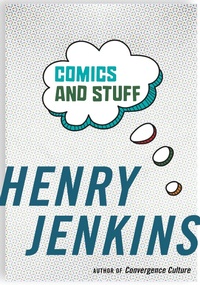
Comics and Stuff
1st Edition
Published on 14. April 2020
277 pages
978-1-4798-3125-8 (ISBN)
Description

Considers how comics display our everyday stuff-junk drawers, bookshelves, attics-as a way into understanding how we represent ourselves now
For most of their history, comics were widely understood as disposable-you read them and discarded them, and the pulp paper they were printed on decomposed over time. Today, comic books have been rebranded as graphic novels-clothbound high-gloss volumes that can be purchased in bookstores, checked out of libraries, and displayed proudly on bookshelves. They are reviewed by serious critics and studied in university classrooms. A medium once considered trash has been transformed into a respectable, if not elite, genre.
While the American comics of the past were about hyperbolic battles between good and evil, most of today's graphic novels focus on everyday personal experiences. Contemporary culture is awash with stuff. They give vivid expression to a culture preoccupied with the processes of circulation and appraisal, accumulation and possession. By design, comics encourage the reader to scan the landscape, to pay attention to the physical objects that fill our lives and constitute our familiar surroundings. Because comics take place in a completely fabricated world, everything is there intentionally. Comics are stuff; comics tell stories about stuff; and they display stuff.
When we use the phrase "and stuff" in everyday speech, we often mean something vague, something like "etcetera." In this book, stuff refers not only to physical objects, but also to the emotions, sentimental attachments, and nostalgic longings that we express-or hold at bay-through our relationships with stuff.
In Comics and Stuff, his first solo authored book in over a decade, pioneering media scholar Henry Jenkins moves through anthropology, material culture, literary criticism, and art history to resituate comics in the cultural landscape. Through over one hundred full-color illustrations, using close readings of contemporary graphic novels, Jenkins explores how comics depict stuff and exposes the central role that stuff plays in how we curate our identities, sustain memory, and make meaning. Comics and Stuff presents an innovative new way of thinking about comics and graphic novels that will change how we think about our stuff and ourselves.
For most of their history, comics were widely understood as disposable-you read them and discarded them, and the pulp paper they were printed on decomposed over time. Today, comic books have been rebranded as graphic novels-clothbound high-gloss volumes that can be purchased in bookstores, checked out of libraries, and displayed proudly on bookshelves. They are reviewed by serious critics and studied in university classrooms. A medium once considered trash has been transformed into a respectable, if not elite, genre.
While the American comics of the past were about hyperbolic battles between good and evil, most of today's graphic novels focus on everyday personal experiences. Contemporary culture is awash with stuff. They give vivid expression to a culture preoccupied with the processes of circulation and appraisal, accumulation and possession. By design, comics encourage the reader to scan the landscape, to pay attention to the physical objects that fill our lives and constitute our familiar surroundings. Because comics take place in a completely fabricated world, everything is there intentionally. Comics are stuff; comics tell stories about stuff; and they display stuff.
When we use the phrase "and stuff" in everyday speech, we often mean something vague, something like "etcetera." In this book, stuff refers not only to physical objects, but also to the emotions, sentimental attachments, and nostalgic longings that we express-or hold at bay-through our relationships with stuff.
In Comics and Stuff, his first solo authored book in over a decade, pioneering media scholar Henry Jenkins moves through anthropology, material culture, literary criticism, and art history to resituate comics in the cultural landscape. Through over one hundred full-color illustrations, using close readings of contemporary graphic novels, Jenkins explores how comics depict stuff and exposes the central role that stuff plays in how we curate our identities, sustain memory, and make meaning. Comics and Stuff presents an innovative new way of thinking about comics and graphic novels that will change how we think about our stuff and ourselves.
Reviews / Votes
"As the American vernacular art of comics cements its cultural and academic respectability, other areas of cultural studies are being brought to bear on the form. That project yields interesting and illuminating results in University of Southern California communications professor Henry Jenkins' new book, Comics and Stuff." (Reason Magazine) "I cannot recommend this book more for those of us who love to study the medium that is comic books. This book needs to sit right next to Scott McCloud's Understanding Comics and Will Eisner's Comics and Sequential Art as a must have resource to truly understand all that comic books can be. ... Thanks to Henry Jenkins I also know I'm far from alone and feel like I understand myself better at the end of this book than I did before." (Masked Library) "A major book from a major contemporary thinker. Comics and Stuff models a rigorous but supple interdisciplinarity that the hybrid form of comics itself inspires; its range is wide and enlivening. A lucid, brilliant, and important book." - Hillary Chute, author of Why Comics? From Underground to Everywhere "Jenkins examines graphic novels with regard to patterns and values in material culture. His broad view of 'stuff' encompasses possessions and objects and also cultural icons. ... Including color illustrations and extensive references, this compelling exploration of comics will inspire readers to think about stuff." (Choice) "For nearly a century, comic books have been an integral part of 'the stuff' of our collective fantasies, both a wildly successful form of entertainment and a visual archive of our developing identities. In Henry Jenkins's Comics and Stuff, one of our greatest cultural critics offers an expansive and exuberant study of the ways that contemporary comics and graphic novels document the material life of American culture, from collecting to artistic curation and hoarding to archiving. Jenkins introduces readers to aesthetically innovative, yet largely understudied, comics and graphic novels to show us how this enduring medium provides a visual map of our most cherished object worlds." - Ramzi Fawaz, author of The New Mutants: Superheroes and the Radical Imagination of American Comics "Jenkins characterizes comics as communicating a series of rituals and personal agendas ... His grasp of comics as a cornucopia of contemporary/past cultures is far reaching." (CHOICE)More details
Language
English
Place of publication
New York
United States
Target group
Professional and scholarly
Illustrations
104 color illustrations
File size
12,89 MB
ISBN-13
978-1-4798-3125-8 (9781479831258)
Copyright in bibliographic data and cover images is held by Nielsen Book Services Limited or by the publishers or by their respective licensors: all rights reserved.
Schweitzer Classification
Other editions
Additional editions
Henry Jenkins
Comics and Stuff
Book
04/2020
New York University Press
€35.00
Shipment within 10-20 days
Henry Jenkins
Comics and Stuff
Book
04/2020
New York University Press
€112.85
Article not available at the moment
Person
Henry Jenkins is Provost's Professor of Communication, Journalism, Cinematic Arts and Education at the University of Southern California. He is the author or coauthor of twenty books including Textual Poachers: Television Fans and Participatory Culture, Convergence Culture: Where Old and New Media Collide, Spreadable Media: Creating Value and Meaning in a Networked Culture, and By Any Media Necessary: The New Youth Activism.
Content
- Cover
- COMICS AND STUFF
- Title
- Copyright
- CONTENTS
- INTRODUCTION Comics and Stuff-Core Concepts
- 1 How to Look at Stuff From Still Life to Graphic Novel
- COLLECTING STORIES
- 2 "What Are You Collecting Now?" Seth and His Finds
- 3 "The Stuff of Dreams" Kim Deitch's Remarkable Displays
- 4 Wonders, Curiosities, and Diversions Accumulation in Bryan Talbot's Alice in Sunderland
- 5 "Monsters" and Other "Things" Emil Ferris's Transformative Vision
- OBJECT LESSONS
- 6 Scrapbooks and Army Surplus C. Tyler's You'll Never Know
- 7 Sorting, Culling, Hoarding, and Cleaning Joyce Farmer's Special Exits and Roz Chast's Can't We Talk about Something More Pleasant?
- 8 "Contemptible Collectibles": Confronting the Residual in Jeremy Love's Bayou
- EPILOGUE Unpacking My Comics
- Acknowledgments
- List of Figures
- References
- Index
- About the Author
