

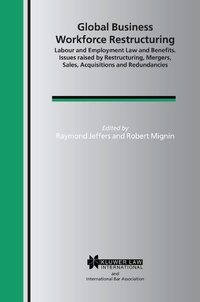
Global Business Workforce Restructuring
Labour and Employment Law and Benefits. Issues raised by Restructuring, Mergers, Sales, Acquisitions and Redundancies
Published on 29. December 2003
210 pages
978-90-411-5702-7 (ISBN)
Description

During two decades of intensive economic globalisation, business firms in nearly every country have undergone mergers, acquisitions, sales, reductions in the workforce, plant closures, and other forms of restructuring. Many legal issues of critical importance to employers arise in the course of such transactions and activities.
This book offers clear comparative legal analysis of these issues, derived from the labour and employment law of 12 major trading jurisdictions: Argentina, Belgium, Canada, Chile, England and Wales, France, Germany, Luxembourg, Mexico, Spain, Sweden and the United States.
The emphasis throughout is on answers to practical questions, such as the following:
Is a purchasing company required to hire some or all of the employees of a target business?
Can the purchaser pick and choose which employees are transferred or hired?
Is a purchaser required to assume a target company¿s collective bargaining agreement?
What is the nature and timing of notices required of purchasers?
Can an acquisition, closure, or reduction in force be delayed by a strike or other industrial action?
Can a company dismiss any or all employees at a facility it wants to close?
How questions like these are answered in each of the 12 countries is spelled out in detail by panels of outstanding practitioners from each of the jurisdictions.
The chapters in this book were developed by the 22 authors from a set of more theoretical papers delivered at a full-day session presented by Committee P (the Employment and Industrial Relations Law Committee of the section on Business Law) at the October 2002 annual conference of the International Bar Association in Durban, South Africa.
This book offers clear comparative legal analysis of these issues, derived from the labour and employment law of 12 major trading jurisdictions: Argentina, Belgium, Canada, Chile, England and Wales, France, Germany, Luxembourg, Mexico, Spain, Sweden and the United States.
The emphasis throughout is on answers to practical questions, such as the following:
Is a purchasing company required to hire some or all of the employees of a target business?
Can the purchaser pick and choose which employees are transferred or hired?
Is a purchaser required to assume a target company¿s collective bargaining agreement?
What is the nature and timing of notices required of purchasers?
Can an acquisition, closure, or reduction in force be delayed by a strike or other industrial action?
Can a company dismiss any or all employees at a facility it wants to close?
How questions like these are answered in each of the 12 countries is spelled out in detail by panels of outstanding practitioners from each of the jurisdictions.
The chapters in this book were developed by the 22 authors from a set of more theoretical papers delivered at a full-day session presented by Committee P (the Employment and Industrial Relations Law Committee of the section on Business Law) at the October 2002 annual conference of the International Bar Association in Durban, South Africa.
More details
Other editions
Additional editions
Raymond Jeffers | Robert J. Mignin
Global Business Workforce Restructuring
Labour and Employment Law and Benefits. Issues raised by Restructuring, Mergers, Sales, Acquisitions and Redundancies
Book
01/2004
Kluwer Law International
€228.78
Shipment within 10-20 days
Content
- Cover
- Half Title Page
- Title Page
- Copyright Page
- Foreword
- Table of Contents
- List of Contributors
- Case Study
- Chapter One Business Restructuring Issues in Argentina
- 1. ACQUISITION OF BUSINESS/COMPANY
- 1.1. Assuming an assets purchase
- 1.2. Would your answers to 1.1 differ if the acquisition were a stock purchase?
- 1.3. Assuming an assets purchase, what (if any) notices, communications or negotiations must be given or held by "Global Worldwide" with employee representatives, employees, customers, Government or other persons? Before the closing date? After the closing date?
- 1.4. Would your answer to 1.3 differ if the acquisition was a stock purchase?
- 1.5. Assuming an assets purchase, what type of due diligence should be undertaken by legal counsel for "Global Worldwide" as related to employee issues prior to the closing date?
- 1.6. Would your answer to 1.5 differ if the acquisition was a stock purchase?
- 1.7. Can the acquisition (whether assets or stock) be delayed, restricted or stopped by a strike or other industrial action?
- 1.8. What terms should be included in the acquisition agreement (whether an assets purchase or stock purchase) to protect "Global Worldwide" as buyer?
- 1.9. Are there any other matters "Global Worldwide" as buyer, should consider from an employment law perspective?
- 2. DISPOSAL (SALE) OF A BUSINESS/COMPANY
- 2.1. Assuming an assets sale
- 2.2. Would your answers to 2.1 differ if the sale was a stock sale?
- 2.3. Assuming an assets sale, what (if any) notices, communications, or negotiations must be given or held with employees, employee representatives, customers, Government or other persons by "Global Worldwide?" Before the closing date? After the closing date?
- 2.4. Would your answer to 2.3 differ if the sale was a stock sale?
- 2.5. Assuming an assets sale, what type of due diligence should be undertaken by legal counsel for "Global Worldwide" as related to employee issues before the closing date?
- 2.6. Would your answer to 2.5 differ if the sale was a stock sale?
- 2.7. Can "Global Worldwide's" sale (whether assets or stock) be delayed, restricted or stopped by a strike or other industrial action?
- 2.8. What terms should be included in the acquisition agreement (whether an assets sale or stock sale) to protect "Global Worldwide" as seller?
- 2.9. Are there any other matters "Global Worldwide," as seller, should consider from an employment law perspective
- 3. CLOSURE OF A FACILITY/BUSINESS OR A REDUCTION IN FORCE
- 3.1. In the case of a facility closure, can "Global Worldwide" dismiss some or all employees engaged at the factory and/or office it wants to close?
- 3.2. What financial or other legal obligations does "Global Worldwide" owe to employees affected by a closure or reduction in force?
- 3.3. What (if any) notice, communication or negotiations must be undertaken by "Global Worldwide" with any trade unions, works council, other employee representatives, employees, customers, or any government bodies prior to the decision?
- 3.4. Can the closure/reduction in force be delayed, restricted or stopped by a strike or other industrial action?
- 3.5. Are there any other matters "Global Worldwide" should consider from an employment law perspective?
- Chapter Two Business Restructuring Issues in Belgium
- 1. ACQUISITION OF BUSINESS/COMPANY
- 1.1. Assuming an assets purchase
- 1.2. Would your answer to 1.1 differ if the acquisition were a stock purchase?
- 1.3. Assuming an assets purchase, what (if any) notices, communications or negotiations must be given or held by "Global Worldwide" with employee representatives, employees, customers, Government or other persons? Before the closing date? After the closing date?
- 1.4. Would your answer to 1.3 differ if the acquisition was a stock purchase?
- 1.5. Assuming an assets purchase, what type of due diligence should be undertaken by legal counsel for "Global Worldwide" as related to the employee issues prior to the closing date?
- 1.6. Would your answer to 1.5 differ if the acquisition was a stock purchase?
- 1.7. Can the acquisition (whether assets or stock) be delayed, restricted or stopped by a strike or other industrial action?
- 1.8. What terms should be included in the acquisition agreement (whether an assets purchase or stock purchase) to protect "Global Worldwide" as buyer?
- 1.9. Are there any other matters "Global Worldwide", as buyer, should consider from an employment law perspective?
- 2. DISPOSAL (SALE) OF A BUSINESS/COMPANY
- 2.1. Assuming an assets sale
- 2.2. Would your answers to 2.1 differ if the sale was a stock sale?
- 2.3. Assuming an assets sale, what (if any) notices, communications or negotiations must be given or held with the employees, employee representatives, customers, Government or other persons by "Global Worldwide"? Before the closing date? After the closing date?
- 2.4. Would your answer to 2.3 differ if the sale was a stock sale?
- 2.5. Assuming an assets sale, what type of due diligence should be undertaken by legal counsel for "Global Worldwide" as related to employee issues before the closing date?
- 2.6. Would your answer to 2.5 differ if the sale was a stock sale?
- 2.7. Can "Global Worldwide's" sale (whether assets or stock) be delayed, restricted or stopped by a strike or other industrial action?
- 2.8. What terms should be included in the acquisition agreement (whether an assets sale or stock sale) to protect "Global Worldwide" as seller?
- 2.9. Are there any other matters "Global Worldwide", as seller, should consider from an, employment law perspective?
- 3. CLOSURE OF A FACILITY/BUSINESS OR REDUCTION INWORKFORCE
- 3.1. In the case of a facility closure, can "Global Worldwide" dismiss some or all of the employees engaged at the factory and/or office it wants to close?
- 3.2. What financial or other legal obligations does "Global Worldwide" owe to employees affected by a closure or reduction in force?
- 3.3. What (if any) notice, communication or negotiations must be undertaken by "Global Worldwide" with any trade unions, works council, other employee representatives, employees, customers, or any government bodies prior to the decision?
- 3.4. Can the closure/reduction in workforce be delayed, restricted or stopped by a strike or other industrial action?
- 3.5. Are there any other matters "Global Worldwide" should consider from a employment law perspective?
- Chapter Three Acquisition, Disposal and Closure Issues in Canada
- INTRODUCTION - CANADIAN BACKGROUND
- 1. ACQUISITION OF BUSINESS/COMPANY
- 1.1. Assuming an assets purchase
- 1.2. Would your answers to 1.1 differ if the acquisition were a stock purchase?
- 1.3. Assuming an assets purchase, what (if any) notices, communications or negotiations must be given or held by "Global Worldwide" with employee representatives, employees, customers, Government or other persons? Before the closing date? After the closing date?
- 1.4. Would your answer to 1.3 differ if the acquisition was a stock purchase?
- 1.5. Assuming an assets purchase, what type of due diligence should be undertaken by legal counsel for "Global Worldwide" as related to employee issues prior to the closing date?
- 1.6. Would your answer to 1.5 differ if the acquisition was a stock purchase?
- 1.7. Can the acquisition (whether assets or stock) be delayed, restricted or stopped by a strike or other industrial action?
- 1.8. What terms should be included in the acquisition agreement (whether an assets purchase or stock purchase) to protect "Global Worldwide" as buyer?
- 1.9. Are there any other matters "Global Worldwide," as buyer, should consider from an employment law perspective?
- 2. DISPOSAL (SALE) OF A BUSINESS/COMPANY
- 2.1. Assuming an assets sale
- 2.2. Would your answers to 2.1 differ if the sale was a stock sale?
- 2.3. Assuming an assets sale, what (if any) notices, communications, or negotiations must be given or held with employees, employee representatives, customers, Government or other persons by "Global Worldwide?" Before the closing date? After the closing date?
- 2.4. Would your answer to 2.3 differ if the sale was a stock sale?
- 2.5. Assuming an assets sale, what type of due diligence should be undertaken by legal counsel for "Global Worldwide" as related to employee issues before the closing date?
- 2.6. Would your answer to 2.5 differ if the sale was a stock sale?
- 2.7. Can "Global Worldwide's" sale (whether assets or stock) be delayed, restricted or stopped by a strike or other industrial action?
- 2.8. What terms should be included in the acquisition agreement (whether an assets sale or stock sale) to protect "Global Worldwide" as seller?
- 2.9. Are there any other matters "Global Worldwide," as seller, should consider from an employment law perspective?
- 3. CLOSURE OF A FACILITY/BUSINESS OR A REDUCTION IN FORCE
- 3.1. In the case of a facility closure, can "Global Worldwide" dismiss some or all employees engaged at the factory and/or office it wants to close?
- 3.2. What financial or other legal obligations does "Global Worldwide" owe to employees affected by a closure or reduction in force?
- 3.3. What (if any) notice, communication or negotiations must be undertaken by "Global Worldwide" with any trade unions, works council, other employee representatives, employees, customers, or any government bodies prior to the decision?
- 3.4. Can the closure/reduction in force be delayed, restricted or stopped by a strike or other industrial action?
- 3.5. Are there any other matters "Global Worldwide" should consider from an employment law perspective?
- Chapter Four Labour Issues in Connection with Business Restructuring in the Republic of Chile
- 1. ACQUISITION OF BUSINESS/COMPANY
- 1.1. Assuming an assets purchase
- 1.2. Would your answers to 1.1 differ if the acquisition was a stock purchase?
- 1.3. Assuming an assets purchase, what (if any) notices, communications or negotiations must be given or held by "Global Worldwide" with employee representatives, employees, customers, Government or other persons? Before the closing date? After the closing date?
- 1.4. Would your answer to 1.3 differ if the acquisition was a stock purchase?
- 1.5. Assuming an assets purchase, what type of due diligence should be undertaken by legal counsel for "Global Worldwide" as related to employee issues before the closing date?
- 1.6. Would your answer to 1.5 differ if the acquisition was a stock purchase?
- 1.7. Can the acquisition (whether assets or stock) be delayed, restricted or stopped by a strike or other industrial action?
- 1.8. What terms should be included in the acquisition agreement (whether an assets purchase or stock purchase) to protect "Global Worldwide" as buyer?
- 1.9. Are there any other matters Global Worldwide, as buyer, should consider from an employment law perspective?
- 2. DISPOSAL (SALE) OF A BUSINESS/COMPANY
- 2.1 Assuming an assets sale
- 2.2. Would your answers to 2.1 differ if the sale was a stock sale?
- 2.3. Assuming an assets sale, what (if any) notices, communications or negotiations must be given or held with employees, employee representatives, customers, Government or other persons by "Global Worldwide"? Before the closing date? After the closing date?
- 2.4. Would your answer to 2.3 differ if the sale was a stock sale?
- 2.5. Assuming an assets sale, what type of due diligence should be undertaken by legal counsel for "Global Worldwide" as related to employee issues before the closing date?
- 2.6. Would your answer to 2.5 differ if the sale was a stock sale?
- 2.7. Can Global's sale (whether assets or stock) be delayed, restricted or stopped by a strike or other industrial action?
- 2.8. What terms should be included in the acquisition agreement (whether an assets sale or stock sale) to protect "Global Worldwide" as seller?
- 2.9. Are there any other matters "Global Worldwide", as seller, should consider from an employment law perspective?
- 3. CLOSURE OF A FACILITY/BUSINESS OR A REDUCTION IN FORCE
- 3.1. In the case of a facility closure, Can "Global Worldwide" dismiss some or all employees engaged at the factory and/or office it wants to close?
- 3.2. What financial or other legal obligations does "Global Worldwide" owe to employees affected by a closure or reduction in force?
- 3.3. What (if any) notice, communication or negotiations must be undertaken by "Global Worldwide" with any trade unions, works council, other employees representatives, employees, customers, any government bodies or other person prior to the decision?
- 3.4. Can the closure/reduction in force be delayed, restricted or stopped by a strike or other industrial action?
- 3.5. Are there any other matters Global Worldwide should consider from an employment law perspective?
- Chapter Five Business Restructuring Issues in England and Wales
- 1. ACQUISITION OF BUSINESS/COMPANY
- 1.1. Assuming an assets purchase
- 1.2. Would your answers to 1.1 differ if the acquisition were a stock purchase?
- 1.3. Assuming an assets purchase, what (if any) notices, communications or negotiations must be given or held by "Global Worldwide" with employee representatives, employees, customers, Government or other persons? Before the closing date? After the closing date?
- 1.4. Would your answer to 1.3 differ if the acquisition was a stock purchase?
- 1.5. Assuming an assets purchase, what type of due diligence should be undertaken by legal counsel for "Global Worldwide" as related to employee issues prior to the closing date?
- 1.6. Would your answer to 1.5 differ if the acquisition was a stock purchase?
- 1.7. Can the acquisition (whether assets or stock) be delayed, restricted or stopped by a strike or other industrial action?
- 1.8. What terms should be included in the acquisition agreement (whether an assets purchase or stock purchase) to protect "Global Worldwide" as buyer?
- 1.9. Are there any other matters "Global Worldwide," as buyer, should consider from an employment law perspective?
- 2. DISPOSAL (SALE) OF A BUSINESS/COMPANY
- 2.1. Assuming an assets sale
- 2.2. Would your answers to 2.1 differ if the sale was a stock sale?
- 2.3. Assuming an assets sale, what (if any) notices, communications, or negotiations must be given or held with employees, employee representatives, customers, Government or other persons by "Global Worldwide?" Before the closing date? After the closing date?
- 2.4. Would your answer to 2.3 differ if the sale was a stock sale?
- 2.5. Assuming an assets sale, what type of due diligence should be undertaken by legal counsel for "Global Worldwide" as related to employee issues before the closing date?
- 2.6. Would your answer to 2.5 differ if the sale was a stock sale?
- 2.7 Can "Global Worldwide's" sale (whether assets or stock) be delayed, restricted or stopped by a strike or other industrial action?
- 2.8. What terms should be included in the acquisition agreement (whether an assets sale or stock sale) to protect "Global Worldwide" as seller?
- 2.9. Are there any other matters "Global Worldwide," as seller, should consider from an employment law perspective?
- 3. CLOSURE OF A FACILITY/BUSINESS OR A REDUCTION IN FORCE
- 3.1. In the case of a facility closure, can "Global Worldwide" dismiss some or all employees engaged at the factory and/or office it wants to close?
- 3.2 What financial or other legal obligations does "Global Worldwide" owe to employees affected by a closure or reduction in force?
- 3.3 What (if any) notice, communication or negotiations must be undertaken by "Global Worldwide" with any trade unions, works council, other employee representatives, employees, customers, or any government bodies prior to the decision?
- 3.4 Can the closure/reduction in the workforce be delayed, restricted or stopped by a strike or other industrial action?
- 3.5 Are there any other matters "Global Worldwide" should consider from an employment law perspective?
- Chapter Six Business Restructuring Issues in France
- 1. ACQUISITION OF A BUSINESS/COMPANY
- 1.1. Assuming an assets purchase
- 1.2. Would your answers to 1.1 differ if the acquisition were a stock purchase?
- 1.3. Assuming an assets purchase, what if any notices, communications, or negotiations must be given or held by Global Worldwide with employee representatives, employees, customers, Government or other persons? Before the closing date? After the closing date?
- 1.4. Would your answers to 1.3 differ if the acquisition were a stock purchase?
- 1.5. Assuming an assets purchase, what type of due diligence should be undertaken by legal counsel for Global Worldwide as related to employee issues prior to the closing date?
- 1.6. Would your answer differ if the acquisition was a stock purchase?
- 1.7. Can the acquisition be delayed, restricted or stopped by a strike or other industrial action?
- 1.8. What terms should be included in the acquisition agreement to protect Global Worldwide as buyer?
- 1.9. Are there any other matters Global Worldwide, as buyer, should consider from an employment law perspective?
- 2. DISPOSAL OF A BUSINESS/COMPANY
- 2.1. Assuming an assets sale:
- 2.2. Would your answers to 2.1 differ if the sale were a stock purchase?
- 2.3. Assuming an assets sale, what (if any) notices, communications, or negotiations must be given or held with employees, employee representatives, customers, Government or other persons by "Global Worldwide"? Before the closing date? After the closing date?
- 2.4. Would your answers to 2.3 differ if the sale were a stock purchase?
- 2.5. Assuming an assets purchase, what type of due diligence should be undertaken by legal counsel for Global Worldwide as related to employee issues prior to the closing date?
- 2.6. Would your answer to 2.5 differ if the sale was a stock purchase?
- 2.7. Can Global Worldwide's sale (whether assets or stock) be delayed, restricted or stopped by a strike or other industrial action?
- 2.8. What terms should be included in the acquisition agreement to protect Global Worldwide as seller?
- 2.9. Are there any other matters Global Worldwide, as seller, should consider from an employment law perspective?
- 3. CLOSURE OF A FACILITY/BUSINESS OR A REDUCTION IN FORCE
- 3.1. In the case of a facility closure, can "Global Worldwide" dismiss some or all employees engaged at the factory and/or office it wants to close?
- 3.2. What financial or other legal obligations does "Global Worldwide" owe to employees affected by a closure or reduction in force?
- 3.3. What (if any) notice, communication or negotiations must be undertaken by "Global Worldwide" with any trade unions, works council, other employee representatives, employees, customers, or any government bodies prior to the decision?
- 3.4. Can the closure/reduction in force be delayed, restricted or stopped by a strike or other industrial action?
- 3.5. Are there any other matters "Global Worldwide" should consider from an employment law perspective?
- Chapter Seven Business Restructuring Issues in Germany
- 1. ACQUISITION OF BUSINESS/COMPANY
- 1.1. Assuming an asset purchase
- 1.2. Would your answers to 1.1 differ if the acquisition were a stock purchase?
- 1.3. Assuming an assets purchase, what (if any) notices, communications or negotiations must be given or held by "Global Worldwide" with employee representatives, employees, customers, Government or other persons? Before the closing date? After the closing date?
- 1.4. Would your answer to 1.3 differ if the acquisition was a stock purchase?
- 1.5. Assuming an assets purchase, what type of due diligence should be undertaken by legal counsel for "Global Worldwide" as related to employee issues prior to the closing date?
- 1.6. Would your answer to 1.5 differ if the acquisition was a stock purchase?
- 1.7. Can the acquisition (whether asset or stock) be delayed, restricted or stopped by a strike or other industrial action?
- 1.8. What terms should be included in the acquisition agreement (whether an assets purchase or stock purchase) to protect "Global Worldwide" as buyer?
- 1.9. Are there any other matters "Global Worldwide," as buyer, should consider from an employment law perspective?
- 2. DISPOSAL (SALE) OF A BUSINESS/COMPANY
- 2.1. Assuming an assets sale
- 2.2. Would your answers to 2.1 differ if the sale was a stock sale?
- 2.3. Assuming an assets sale, what (if any) notices, communications, or negotiations must be given or held with employees, employee representatives, customers, Government or other persons by "Global Worldwide?" Before the closing date? After the closing date?
- 2.4. Would your answer to 2.3 differ if the sale was a stock sale?
- 2.5. Assuming an assets sale, what type of due diligence should be undertaken by legal counsel for "Global Worldwide" as related to employee issues before the closing date?
- 2.6. Would your answer to 2.5 differ if the sale was a stock sale?
- 2.7. Can "Global Worldwide's" sale (whether assets or stock) be delayed, restricted or stopped by a strike or other industrial action?
- 2.8. What terms should be included in the acquisition agreement (whether an assets sale or stock sale) to protect "Global Worldwide" as seller?
- 2.9. Are there any other matters "Global Worldwide," as seller, should consider from an employment law perspective?
- 3. CLOSURE OF A FACILITY/BUSINESS OR A REDUCTION IN FORCE
- 3.1. In the case of a facility closure, can "Global Worldwide" dismiss some or all employees engaged at the factory and/or office it wants to close?
- 3.2. What financial or other legal obligations does "Global Worldwide" owe to employees affected by a closure or reduction in force?
- 3.3. What (if any) notice, communication or negotiations must be undertaken by "Global Worldwide" with any trade unions, works council, other employee representatives, employees, customers, or any government bodies prior to the decision?
- 3.4. Can the closure/reduction in force be delayed, restricted or stopped by a strike or other industrial action?
- 3.5. Are there any other matters "Global Worldwide" should consider from an employment law perspective.
- Chapter Eight Business Restructuring Issues in Luxembourg
- 1. ACQUISITION OF BUSINESS/COMPANY
- 1.1. Assuming an assets purchase
- 1.2. Would your answers to 1.1 differ if the acquisition were a stock purchase?
- 1.3. Assuming an assets purchase, what (if any) notices, communications or negotiations must be given or held by "Global Worldwide" with employee representatives, employees, customers, Government or other persons? Before the closing date? After the closing date?
- 1.4. Would your answer to 1.3 differ if the acquisition was a stock purchase?
- 1.5. Assuming an assets purchase, what type of due diligence should be undertaken by legal counsel for "Global Worldwide" as related to employee issues prior to the closing date?
- 1.6. Would your answer to 1.5 differ if the acquisition was a stock purchase?
- 1.7. Can the acquisition (whether assets or stock) be delayed, restricted or stopped by a strike or other industrial action?
- 1.8. What terms should be included in the acquisition agreement (whether an assets purchase or stock purchase) to protect "Global Worldwide" as buyer?
- 1.9. Are there any other matters "Global Worldwide," as buyer, should consider from an employment law perspective?
- 2. DISPOSAL (SALE) OF A BUSINESS/COMPANY
- 2.1. Assuming an assets sale
- 2.2. Would your answers to 2.1 differ if the sale was a stock sale?
- 2.3. Assuming an assets sale, what (if any) notices, communications, or negotiations must be given or held with employees, employee representatives, customers, Government or other persons by "Global Worldwide?" Before the closing date? After the closing date?
- 2.4. Would your answer to 2.3 differ if the sale was a stock sale?
- 2.5. Assuming an assets sale, what type of due diligence should be undertaken by legal counsel for "Global Worldwide" as related to employee issues before the closing date?
- 2.6. Would your answer to 2.5 differ if the sale was a stock sale?
- 2.7. Can "Global Worldwide's" sale (whether assets or stock) be delayed, restricted or stopped by a strike or other industrial action?
- 2.8. What terms should be included in the acquisition agreement (whether an assets sale or stock sale) to protect"Global Worldwide" as seller?
- 2.9. Are there any other matters "Global Worldwide," as seller, should consider from an employment law perspective?
- 3. CLOSURE OF A FACILITY/BUSINESS OR A REDUCTION IN FORCE
- 3.1. In the case of a facility closure, can "Global Worldwide" dismiss some or all employees engaged at the factory and/or office it wants to close?
- 3.2. What financial or other legal obligations does "Global Worldwide" owe to employees affected by a closure or reduction in force?
- 3.3. What (if any) notice, communication or negotiations must be undertaken by "Global Worldwide" with any trade unions, works council, other employee representatives, employees, customers, or any government bodies prior to the decision?
- 3.4. Can the closure/reduction in force be delayed, restricted or stopped by a strike or other industrial action?
- 3.5. Are there any other matters "Global Worldwide" should consider from an employment law perspective?
- Chapter Nine Business Restructuring Issues in Mexico
- 1. ACQUISITION OF BUSINESS/COMPANY
- 1.1 Assuming an assets purchase
- 1.2 Would your answers to 1.1 differ if the acquisition were a stock purchase?
- 1.3 Assuming an assets purchase, what (if any) notices, communications or negotiations must be given or held by "Global Worldwide" with employee representatives, employees, customers, Government or other persons? Before the closing date? After the closing date?
- 1.4 Would your answer to 1.3 differ if the acquisition was a stock purchase?
- 1.5 Assuming an assets purchase, what type of due diligence should be undertaken by legal counsel for "Global Worldwide" as related to employee issues prior to the closing date?
- 1.6 Would your answer to 1.5 differ if the acquisition was a stock purchase?
- 1.7 Can the acquisition (whether assets or stock) be delayed, restricted or stopped by a strike or other industrial action?
- 1.8 What terms should be included in the acquisition agreement (whether an assets purchase or stock purchase) to protect "Global Worldwide" as buyer?
- 1.9 Are there any other matters "Global Worldwide," as buyer, should consider from an employment law perspective?
- 2 DISPOSAL (SALE) OF A BUSINESS/COMPANY
- 2.1 Assuming an assets sale
- 2.2 Would your answers to 2.1 differ if the sale was a stock sale?
- 2.3 Assuming an assets sale, what (if any) notices, communications, or negotiations must be given or held with employees, employee representatives, customers, Government or other persons by "Global Worldwide? Before the closing date? After the closing date?
- 2.4 Would your answer to 2.3 differ if the sale was a stock sale?
- 2.5 Assuming an assets sale, what type of due diligence should be undertaken by legal counsel for "Global Worldwide" as related to employee issues before the closing date?
- 2.6 Would your answer to 2.5 differ if the sale was a stock sale?
- 2.7 Can "Global Worldwide's" sale (whether assets or stock) be delayed, restricted or stopped by a strike or other industrial action?
- 2.8 What terms should be included in the acquisition agreement (whether an assets sale or stock sale) to protect "Global Worldwide" as seller?
- 2.9 Are there any other matters "Global Worldwide," as seller, should consider from an employment law perspective?
- 3. CLOSURE OF A FACILITY/BUSINESS OR A REDUCTION IN FORCE
- 3.1 In the case of a facility closure, can "Global Worldwide" dismiss some or all employees engaged at the factory and/or office it wants to close?
- 3.2 What financial or other legal obligations does "Global Worldwide" owe to employees affected by a closure or reduction in force?
- 3.3 What (if any) notice, communication or negotiations must be undertaken by "Global Worldwide" with any trade unions, works council, other employee representatives, employees, customers, or any government bodies prior to the decision?
- 3.4 Can the closure/reduction in force be delayed, restricted or stopped by a strike or other industrial action?
- 3.5 Are there any other matters "Global Worldwide" should consider from an employment law perspective.
- Chapter Ten Business Restructuring Issues in Spain
- 1. ACQUISITION OF BUSINESS/COMPANY
- 1.1. Assuming an assets purchase
- 1.2. Would your answers to 1.1 differ if the acquisition were a stock purchase?
- 1.3. Assuming an assets purchase, what (if any) notices, communications or negotiations must be given or held by "Global Worldwide" with employee representatives, employees, customers, Government or other persons? Before the closing date? After the closing date?
- 1.4. Would your answer to 1.3 differ if the acquisition was a stock purchase?
- 1.5. Assuming an assets purchase, what type of due diligence should be undertaken by legal counsel for "Global Worldwide" as related to employee issues prior to the closing date?
- 1.6. Would your answer to 1.5 differ if the acquisition was a stock purchase?
- 1.7. Can the acquisition (whether assets or stock) be delayed, restricted or stopped by a strike or other industrial action?
- 1.8. What terms should be included in the acquisition agreement (whether an assets purchase or stock purchase) to protect "Global Worldwide" as buyer?
- 1.9. Are there any other matters "Global Worldwide," as buyer, should consider from an employment law perspective?
- 2. DISPOSAL (SALE) OF A BUSINESS/COMPANY
- 2.1. Assuming an assets sale
- 2.2. Would your answers to 2.1 differ if the sale was a stock sale?
- 2.3. Assuming an assets sale, what (if any) notices, communications, or negotiations must be given or held with employees, employee representatives, customers, Government or other persons by "Global Worldwide"? Before the closing date? After the closing date?
- 2.4. Would your answer to 2.3 differ if the sale was a stock sale?
- 2.5. Assuming an assets sale, what type of due diligence should be undertaken by legal counsel for "Global Worldwide" as related to employee issues before the closing date?
- 2.6. Would your answer to 2.5 differ if the sale was a stock sale?
- 2.7. Can "Global Worldwide's" sale (whether assets or stock) be delayed, restricted or stopped by a strike or other industrial action?
- 2.8. What terms should be included in the acquisition agreement (whether an assets sale or stock sale) to protect "Global Worldwide" as seller?
- 2.9. Are there any other matters "Global Worldwide," as seller, should consider from an employment law perspective?
- 3. CLOSURE OF A FACILITY/BUSINESS OR A REDUCTION IN FORCE
- 3.1. In the case of a facility closure, can "Global Worldwide" dismiss some or all employees engaged at the factory and/or office it wants to close?
- 3.2. What financial or other legal obligations does "Global Worldwide" owe to employees affected by a closure or reduction in force?
- 3.3. What (if any) notice, communication or negotiations must be undertaken by "Global Worldwide" with any trade unions, works council, other employee representatives, employees, customers, or any government bodies prior to the decision?
- 3.4. Can the closure/reduction in force be delayed, restricted or stopped by a strike or other industrial action?
- 3.5. Are there any other matters "Global Worldwide" should consider from an employment law perspective?
- Chapter Eleven Business Restructuring Issues in Sweden
- 1. ACQUISITION OF BUSINESS/COMPANY
- 1.1. Assuming an assets purchase
- 1.2. Would your answers to 1.1 differ if the acquisition were a stock purchase?
- 1.3. Assuming an assets purchase, what (if any) notices, communications or negotiations must be given or held by "Global Worldwide" with employee representatives, employees, customers, Government or other persons? Before the closing date? After the closing date?
- 1.4. Would your answer to 1.3 differ if the acquisition was a stock purchase?
- 1.5. Assuming an assets purchase, what type of due diligence should be undertaken by legal counsel for "Global Worldwide" as related to employee issues prior to the closing date?
- 1.6. Would your answer to 1.5 differ if the acquisition was a stock purchase?
- 1.7. Can the acquisition (whether assets or stock) be delayed, restricted or stopped by a strike or other industrial action?
- 1.8. What terms should be included in the acquisition agreement (whether an assets purchase or stock purchase) to protect "Global Worldwide" as buyer?
- 1.9. Are there any other matters "Global Worldwide," as buyer, should consider from an employment law perspective?
- 2. DISPOSAL (SALE) OF A BUSINESS/COMPANY
- 2.1. Assuming an assets sale
- 2.2. Would your answers to 2.1 differ if the sale was a stock sale?
- 2.3. Assuming an assets sale, what (if any) notices, communications, or negotiations must be given or held with employees, employee representatives, customers, Government or other persons by Global Worldwide? Before the closing date? After the closing date?
- 2.4. Would your answer to 2.3 differ if the sale was a stock sale?
- 2.5. Assuming an assets sale, what type of due diligence should be undertaken by legal counsel for Global Worldwide as related to employee issues before the closing date?
- 2.6. Would your answer to 2.5 differ if the sale was a stock sale?
- 2.7. Can Global Worldwide's sale (whether assets or stock) be delayed, restricted or stopped by a strike or other industrial action?
- 2.8. What terms should be included in the acquisition agreement (whether an assets sale or stock sale) to protect Global Worldwide as seller?
- 2.9. Are there any other matters Global Worldwide, as seller, should consider from an employment law perspective?
- 3. CLOSURE OF A FACILITY/BUSINESS OR A REDUCTION IN FORCE
- 3.1. In the case of a facility closure, can Global Worldwide dismiss some or all employees engaged at the factory and/or office it wants to close?
- 3.2. What financial or other legal obligations does Global Worldwide owe to employees affected by a closure or reduction in force?
- 3.3. What (if any) notice, communication or negotiations must be undertaken by Global Worldwide with any trade unions, works council, other employee representatives, employees, customers, or any government bodies prior to the decision?
- 3.4. Can the closure/reduction in force be delayed, restricted or stopped by a strike or other industrial action?
- 3.5. Are there any other matters Global Worldwide should consider from an employment law perspective
- Chapter Twelve Business Restructuring Issues in The United States
- 1. ACQUISITION OF A BUSINESS/COMPANY IN THE UNITED STATES
- 1.1. Assuming Global Worldwide wants to purchase the assets of a business
- 1.2. Would your answers to 1.1 differ if Global Worldwide intended to purchase the stock of a business?
- 1.3. Assuming an assets purchase, what (if any) notices, communications or negotiations must be given or held by "Global Worldwide" with employee representatives, employees, customers, Government or other persons? Before the closing date? After the closing date?
- 1.4. Would your answer to 1.3 differ if the acquisition was a stock purchase?
- 1.5. Assuming an assets purchase, what type of due diligence should be undertaken by legal counsel for "Global Worldwide" as related to employee issues prior to the closing date?
- 1.6. Would your answer to 1.5 differ if the acquisition was a stock purchase?
- 1.7. Can the acquisition (whether assets or stock) be delayed, restricted or stopped by a strike or other industrial action?
- 1.8. What terms should be included in the purchase agreement (whether an assets purchase or stock purchase) to protect "Global Worldwide" as buyer?
- 1.9. Are there any other issues "Global Worldwide," as buyer, should consider from an employment law perspective?
- 2. DISPOSAL (SALE) OF A BUSINESS/COMPANY IN THE UNITED STATES
- 2.1. Assuming Global Worldwide wants to sell the assets of one of its businesses
- 2.2. Would your answers to 2.1 differ if Global Worldwide wanted to sell the stock of its business?
- 2.3. Assuming an assets sale, what (if any) notices, communications, or negotiations must be given or held with employees, employee representatives, customers, Government or other persons by "Global Worldwide?" Before the closing date? After the closing date?
- 2.4. Would your answer to 2.3 differ if the sale was a stock sale?
- 2.5. Assuming an assets sale, what type of due diligence should be undertaken by legal counsel for "Global Worldwide" as related to employee issues before the closing date?
- 2.6. Would your answer to 2.5 differ if the sale was a stock sale?
- 2.7. Can "Global Worldwide's" sale (whether assets or stock) be delayed, restricted or stopped by a strike or other industrial action?
- 2.8. What terms should be included in the acquisition agreement (whether an assets sale or stock sale) to protect "Global Worldwide" as seller?
- 2.9. Are there any other matters "Global Worldwide," as seller, should consider from an employment law perspective?
- 3. CLOSURE OF A FACILITY/BUSINESS OR A REDUCTION IN FORCE IN THE UNITED STATES
- 3.1. In the case of a facility closure, can "Global Worldwide" dismiss some or all employees working at the factory and/or office it wants to close?
- 3.2. What financial or other legal obligations does "Global Worldwide" owe to employees affected by a closure or reduction in force?
- 3.3. What (if any) notice, communication or negotiations must be undertaken by "Global Worldwide" with any trade unions, works council, other employee representatives, employees, customers, or any government bodies prior to the decision?
- 3.4. Can the closure/reduction in force be delayed, restricted or stopped by a strike or other industrial action?
- 3.5. Are there any other matters "Global Worldwide" should consider from an employment law perspective?
- Back Cover
