

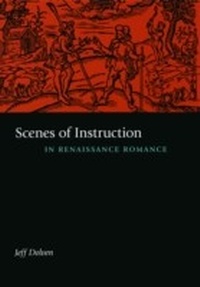
Scenes of Instruction in Renaissance Romance
Description

We take it for granted today that the study of poetry belongs in school-but in sixteenth-century England, making Ovid or Virgil into pillars of the curriculum was a revolution. Scenes of Instruction in Renaissance Romance explores how poets reacted to the new authority of humanist pedagogy, and how they transformed a genre to express their most radical doubts. Jeff Dolven investigates what it meant for a book to teach as he traces the rivalry between poet and schoolmaster in the works of John Lyly, Philip Sydney, Edmund Spenser, and John Milton. Drawing deeply on the era's pedagogical literature, Dolven explores the links between humanist strategies of instruction and romance narrative, rethinking such concepts as experience, sententiousness, example, method, punishment, lessons, and endings. In scrutinizing this pivotal moment in the ancient, intimate contest between art and education, Scenes of Instruction in Renaissance Romance offers a new view of one of the most unconsidered-yet fundamental-problems in literary criticism: poetry's power to please and instruct.
More details
Other editions
Additional editions
Content
- Intro
- CONTENTS
- Introduction
- ONE / Telling Learning
- TWO / Experience: Lyly's Euphues
- THREE / Maxim: The Old Arcadia
- FOUR / Example: The 1590 Faerie Queene
- FIVE / Method: The New Arcadia
- S I X / Punishment: The 1596 Faerie Queene
- Coda: The Sense of a Lesson
- Acknowledgments
- Bibliography
- Index
