

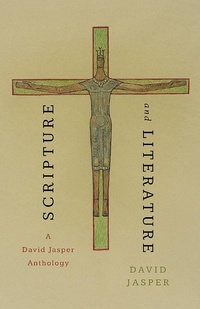
Scripture and Literature
Description

For some, the Bible and literature are at odds. The Bible, it is argued, is not properly literature but a piece of outmoded fiction that ought not to be studied or taken seriously. However, the relationship of the Bible with literature as well as its continuing cultural impact cannot be overlooked. The Bible is an ever-fruitful source for creativity that has contributed to all the great achievements of Western thought, writing, and artistry for the last two millennia.
With Scripture and Literature, David Jasper has compiled forty years of his writings on the relationship between the Bible, literature, and art. These writings are interdisciplinary in nature and are not the work of a specialist in biblical scholarship. Rather, while acknowledging the Bible as a sacred text in more than one religious tradition, they recognize the Bible as literature in conversation with other literary works and traditions as well as the visual arts. During the forty years which these essays span, enormous changes have taken place in our world. Postmodernism has come and gone; issues in feminism and gender are now acutely, and properly, with us; and the world has become much more of a global village, despite its many divisions. On the other hand, and at the same time, it is remarkable how little has changed, and the reader will find that some older pieces remain relevant and necessary today.
Parts of the book deal broadly with questions of translation, rhetoric, war, and evil, while others focus on specific writers and artists, from J. M. W. Turner to the English novelist Jim Crace. Yet behind Scripture and Literature lies a lifetime of careful thought and teaching of the Bible and literature. In the end, Jasper synthesizes his work, offering some reflections on pedagogy and the changes that have occurred from the 1980s up to the present day.
More details
Other editions
Additional editions
Person
Content
Introduction1. Literature and the Power of the Old Testament2. On Reading the Scriptures as Literature3. Settling Hoti's Business: The Impossible Necessity of Biblical Translation4. "Down through All Christian Minstrelsy": Genesis, James Joyce, and Contemporary Vocabularies of Creation Stories5. "In the Sermon Which I Have Just Completed, whenever I Said Aristotle, I Meant St. Paul" (Attrib. Revd. William A. Spooner)6. Evil and Betrayal at the Heart of the Sacred Community7. Jim Crace: Inventor of Worlds8. J. M. W. Turner: Interpreter of the Bible9. The Desert in Biblical Art: William Holman Hunt's The Scapegoat10. The Bible, Christianity, and War in English Literature11. Teaching the Bible and LiteratureAfterwordSelected Reading List
