

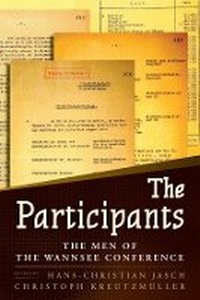
The Participants
The Men of the Wannsee Conference
1st Edition
Published on 1. October 2017
354 pages
978-1-78533-634-8 (ISBN)
Description

Combining accessible prose with scholarly rigor, The Participants presents fascinating profiles of the all-too-human men who implemented some of the most inhuman acts in history.
On 20 January 1942, fifteen senior German government officials attended a short meeting in Berlin to discuss the deportation and murder of the Jews of Nazi-occupied Europe. Despite lasting less than two hours, the Wannsee Conference is today understood as a signal episode in the history of the Holocaust, exemplifying the labor division and bureaucratization that made the "Final Solution" possible. Yet while the conference itself has been exhaustively researched, many of its attendees remain relatively obscure.
From the introduction:
Ten of the fifteen participants had been to university. Eight of them had even been awarded doctorates, although it should be pointed out that it was considerably easier to gain a doctorate in law or philosophy in the 1920s than it is today. Eight of them had studied law, which, then as now, was not uncommon in the top positions of public administration. Many first turned to radical politics as members of Freikorps or student fraternities. Three of the participants (Freisler, Klopfer and Lange) had studied in Jena. In the 1920s, the University of Jena was a fertile breeding ground for nationalist thinking. With dedicated Nazi, race researcher and later SS-Hauptsturmbannfuehrer Karl Astel as rector, it developed into a model Nazi university. Race researcher Hans Guenther also taught there. Others, such as Reinhard Heydrich, joined the SS because they had failed to launch careers elsewhere, and only became radical once they were members of the self-acclaimed Nazi elite order.
On 20 January 1942, fifteen senior German government officials attended a short meeting in Berlin to discuss the deportation and murder of the Jews of Nazi-occupied Europe. Despite lasting less than two hours, the Wannsee Conference is today understood as a signal episode in the history of the Holocaust, exemplifying the labor division and bureaucratization that made the "Final Solution" possible. Yet while the conference itself has been exhaustively researched, many of its attendees remain relatively obscure.
From the introduction:
Ten of the fifteen participants had been to university. Eight of them had even been awarded doctorates, although it should be pointed out that it was considerably easier to gain a doctorate in law or philosophy in the 1920s than it is today. Eight of them had studied law, which, then as now, was not uncommon in the top positions of public administration. Many first turned to radical politics as members of Freikorps or student fraternities. Three of the participants (Freisler, Klopfer and Lange) had studied in Jena. In the 1920s, the University of Jena was a fertile breeding ground for nationalist thinking. With dedicated Nazi, race researcher and later SS-Hauptsturmbannfuehrer Karl Astel as rector, it developed into a model Nazi university. Race researcher Hans Guenther also taught there. Others, such as Reinhard Heydrich, joined the SS because they had failed to launch careers elsewhere, and only became radical once they were members of the self-acclaimed Nazi elite order.
More details
Edition
1. Auflage
Language
English
Place of publication
Oxford
United Kingdom
Target group
Professional and scholarly
Illustrations
Bibliography; Index; 20 Illustrations
ISBN-13
978-1-78533-634-8 (9781785336348)
DOI
10.3167/9781785336331
Copyright in bibliographic data and cover images is held by Nielsen Book Services Limited or by the publishers or by their respective licensors: all rights reserved.
Schweitzer Classification
Other editions
Additional editions
Book
10/2017
1st Edition
Berghahn Books
€31.70
Shipment within 3-4 weeks
Book
10/2017
1st Edition
Berghahn Books
€148.70
Shipment within 3-4 weeks
Persons
Hans-Christian Jasch is the Executive Director of the Memorial and Educational Site of the Wannsee Conference. He has authored the definitive study, published in 2012, of Wilhelm Stuckart, state secretary in the Reich Interior Ministry, and the role of the civil service in Jewish policy.
Content
List of Figures
Foreword
Otto Dov Kulka
Introduction: The Participants: The Men of the Wannsee Conference
Hans-Christian Jasch and Christoph Kreutzmueller
Chapter 1. Biographical Approaches and the Wannsee Conference.
Mark Roseman
Chapter 2. Otto Adolf Eichmann, Reich Main Security Office: The RSHA's "Jewish Expert"
Bettina Stangneth
Chapter 3. Reinhard Heydrich, Reich Main Security Office: The Nazi Terror Enforcer
Robert Gerwarth
Chapter 4. Otto Hofmann, SS Race and Settlement Main Office. A Pragmatic Enforcer of Racial Policy?
Isabel Heinemann
Chapter 5. Dr. Rudolf Lange, Reich Main Security Office: Academic, Ideological Warrior and Mass Murderer
Peter Klein
Chapter 6. Heinrich Mueller, Reich Main Security Office: The Archetypical Desktop Perpetrator
Johannes Tuchel
Chapter 7. Eberhard Schoengarth, Reich Main Security Office: A Practitioner of Mass Murder
Olaf Loeschke
Chapter 8. Josef Buehler, State Secretary for the General Government. A Behind-the-Scenes Perpetrator
Ingo Loose
Chapter 9. Roland Freisler, Reich Ministry of Justice: Hitler's "Political Soldier"
Silke Struck
Chapter 10. Gerhard Klopfer, Nazi Party Chancellery: A Nationalist Ideologue and a Respectable West German
Markus Heckmann
Chapter 11. Friedrich Wilhelm Kritzinger, Reich-Chancellery: A Prussian Civil Servant under the Nazi Regime
Stefan Paul-Jacobs and Lore Kleiber
Chapter 12. Georg Leibbrandt, Reich Ministry for the Occupied Eastern Territories: An Academic Radical
Stefan Paul-Jacobs and Lore Kleiber
Chapter 13. Undersecretary Martin Luther: Defender of Foreign Office Prerogatives
Christopher R. Browning
Chapter 14. Alfred Meyer, Reich Ministry for the Occupied Eastern Territories: From German Monarchist to Nazi Desk Perpetrator
Heinz-Juergen Priamus
Chapter 15. Erich Neumann, Plenipotentiary for the Four Year Plan: A Colorless, Compliant Prussian
Christoph Kreutzmueller
Chapter 16. Wilhelm Stuckart (1902-1953), Reich Interior Ministry: "A Legal Pedant"
Hans-Christian Jasch
Index
Foreword
Otto Dov Kulka
Introduction: The Participants: The Men of the Wannsee Conference
Hans-Christian Jasch and Christoph Kreutzmueller
Chapter 1. Biographical Approaches and the Wannsee Conference.
Mark Roseman
Chapter 2. Otto Adolf Eichmann, Reich Main Security Office: The RSHA's "Jewish Expert"
Bettina Stangneth
Chapter 3. Reinhard Heydrich, Reich Main Security Office: The Nazi Terror Enforcer
Robert Gerwarth
Chapter 4. Otto Hofmann, SS Race and Settlement Main Office. A Pragmatic Enforcer of Racial Policy?
Isabel Heinemann
Chapter 5. Dr. Rudolf Lange, Reich Main Security Office: Academic, Ideological Warrior and Mass Murderer
Peter Klein
Chapter 6. Heinrich Mueller, Reich Main Security Office: The Archetypical Desktop Perpetrator
Johannes Tuchel
Chapter 7. Eberhard Schoengarth, Reich Main Security Office: A Practitioner of Mass Murder
Olaf Loeschke
Chapter 8. Josef Buehler, State Secretary for the General Government. A Behind-the-Scenes Perpetrator
Ingo Loose
Chapter 9. Roland Freisler, Reich Ministry of Justice: Hitler's "Political Soldier"
Silke Struck
Chapter 10. Gerhard Klopfer, Nazi Party Chancellery: A Nationalist Ideologue and a Respectable West German
Markus Heckmann
Chapter 11. Friedrich Wilhelm Kritzinger, Reich-Chancellery: A Prussian Civil Servant under the Nazi Regime
Stefan Paul-Jacobs and Lore Kleiber
Chapter 12. Georg Leibbrandt, Reich Ministry for the Occupied Eastern Territories: An Academic Radical
Stefan Paul-Jacobs and Lore Kleiber
Chapter 13. Undersecretary Martin Luther: Defender of Foreign Office Prerogatives
Christopher R. Browning
Chapter 14. Alfred Meyer, Reich Ministry for the Occupied Eastern Territories: From German Monarchist to Nazi Desk Perpetrator
Heinz-Juergen Priamus
Chapter 15. Erich Neumann, Plenipotentiary for the Four Year Plan: A Colorless, Compliant Prussian
Christoph Kreutzmueller
Chapter 16. Wilhelm Stuckart (1902-1953), Reich Interior Ministry: "A Legal Pedant"
Hans-Christian Jasch
Index
