

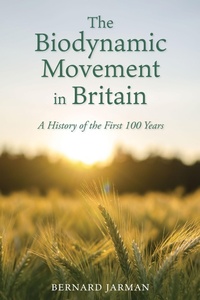
The Biodynamic Movement in Britain
A History of the First 100 Years
Published on 6. February 2024
180 pages
978-1-78250-902-8 (ISBN)
Description

Biodynamics grew out of Rudolf Steiner's Agriculture Course, a series of lectures he gave in 1924. It is now an inspirational worldwide movement bringing a uniquely holistic, organic agriculture to farms, vineyards and gardens.
In this concise and fascinating history, Bernard Jarman, former Director of the Biodynamic Agricultural Association for the UK, charts the development of biodynamics in Britain following its arrival in 1928 through to the present day. He presents engaging personal portraits of biodynamic pioneers, including Daniel Dunlop, George Adams, Lili Kolisko, Marna Pease and Ehrenfried Pfeiffer, and includes accounts of early discoveries, for example the research that led to the development of Maria Thun's Biodynamic Calendar, and later initiatives such as Community Supported Agriculture.
Jarman also examines key moments in the history of the movement, including the emergence of two rival biodynamic organisations in the 1930s and 40s, and the flourishing of the wider organic movement in post-war Britain, as well as the challenges posed by genetically modified crops.
This insightful book provides an important historical overview and grounding for the biodynamic movement as it looks to its future.
In this concise and fascinating history, Bernard Jarman, former Director of the Biodynamic Agricultural Association for the UK, charts the development of biodynamics in Britain following its arrival in 1928 through to the present day. He presents engaging personal portraits of biodynamic pioneers, including Daniel Dunlop, George Adams, Lili Kolisko, Marna Pease and Ehrenfried Pfeiffer, and includes accounts of early discoveries, for example the research that led to the development of Maria Thun's Biodynamic Calendar, and later initiatives such as Community Supported Agriculture.
Jarman also examines key moments in the history of the movement, including the emergence of two rival biodynamic organisations in the 1930s and 40s, and the flourishing of the wider organic movement in post-war Britain, as well as the challenges posed by genetically modified crops.
This insightful book provides an important historical overview and grounding for the biodynamic movement as it looks to its future.
More details
Language
English
Place of publication
Edinburgh
United Kingdom
Product notice
Reflowable
Illustrations
b/w illustrations
ISBN-13
978-1-78250-902-8 (9781782509028)
Copyright in bibliographic data and cover images is held by Nielsen Book Services Limited or by the publishers or by their respective licensors: all rights reserved.
Schweitzer Classification
Other editions
Additional editions
Book
02/2024
Floris Books
€24.00
Shipment within 3-4 weeks
Person
Bernard Jarman worked as an apprentice on a biodynamic farm in Germany before running a hill farm in Botton Camphill Village, North Yorkshire. He was Executive Director of the Biodynamic Agricultural Association in the UK for fifteen years and continues to teach courses in biodynamic agriculture all around the world. He lives in Stroud, England.
