

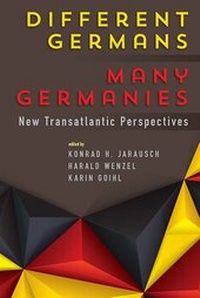
Different Germans, Many Germanies
New Transatlantic Perspectives
1st Edition
Published on 1. December 2016
340 pages
978-1-78533-431-3 (ISBN)
Description

As much as any other nation, Germany has long been understood in terms of totalizing narratives. For Anglo-American observers in particular, the legacies of two world wars still powerfully define twentieth-century German history, whether through the lens of Nazi-era militarism and racial hatred or the nation's emergence as a "model" postwar industrial democracy. This volume transcends such common categories, bringing together transatlantic studies that are unburdened by the ideological and methodological constraints of previous generations of scholarship. From American perceptions of the Kaiserreich to the challenges posed by a multicultural Europe, it argues for-and exemplifies-an approach to German Studies that is nuanced, self-reflective, and holistic.
Reviews / Votes
"Although the book is not intended as a history of modern Germany, advanced students will discover many tantalizing perspectives in what outsiders see as German as well as the German response. With this publication, Berghahn Books remains the strongest source for quality academic publications addressing all aspects of German studies... Highly Recommended." * Choice"The trajectories and transformations examined in this ambitious and thought-provoking volume deserve a wide readership." * German History
"Creative dialogue is palpable in the pages of this rich collection. Together, its chapters make important scholarly contributions to twentieth-century German history and to transatlantic history." * Michael Kimmage, Catholic University of America
More details
Language
English
Place of publication
Oxford
United Kingdom
Target group
Professional and scholarly
Illustrations
Bibliography; Index; 4 Illustrations; 4 Tables, unspecified
ISBN-13
978-1-78533-431-3 (9781785334313)
DOI
10.3167/9781785334306
Copyright in bibliographic data and cover images is held by Nielsen Book Services Limited or by the publishers or by their respective licensors: all rights reserved.
Schweitzer Classification
Other editions
Additional editions
Konrad H. Jarausch | Harald Wenzel | Karin Goihl
Different Germans, Many Germanies
New Transatlantic Perspectives
Book
09/2018
1st Edition
Berghahn Books
€42.20
Shipment within 3-4 weeks
Konrad H. Jarausch | Harald Wenzel | Karin Goihl
Different Germans, Many Germanies
New Transatlantic Perspectives
Book
12/2016
1st Edition
Berghahn Books
€136.50
Shipment within 3-4 weeks
Persons
Konrad H. Jarausch is the Lurcy Professor of European Civilization at the University of North Carolina at Chapel Hill. He has written or edited some fifty books on modern German and European history. He has co-directed the Zentrum fuer Zeithistorische Forschung in Potsdam and co-founded the UNC Center for European Studies. His most recent book is Broken Lives: How Ordinary Germans Experienced the 20th Century (Princeton University Press, 2018).
Content
Preface
Karin Goihl
Introduction
Konrad Jarausch and Harald Wenzel
PART I: RESPONSES TO MODERNITY
Chapter 1. A Modern Reich? American Perceptions of Wilhelmine Germany, 1890-1914
Scott H. Krause
Chapter 2. The Dual Training System: The Southwest's Contributions to German Economic Development
Hal Hansen
Chapter 3. The "German Forest" as an Emblem of Germany's Ambivalent Modernity
Jeffrey K. Wilson
Chapter 4. Health as a Public Good: The Positive Legacies of Volksgesundheit
Annette F. Timm
PART II: DEMOCRATIC TRANSFORMATION
Chapter 5. Antifascist Heroes and Nazi Victims: Myth-making and Political Reorientation in Berlin, 1945-1947
Clara M. Oberle
Chapter 6. The Pen is Mightier Than the Sword?: Student Newspapers and Democracy in Postwar West Germany
Brian M. Puaca
Chapter 7. Human Rights, Pluralism and the Democratization of Post-War Germany
Ned Richardson-Little
Chapter 8. African Students and Racial Ambivalence in the GDR during the 1960s
Sara Pugach
PART III: SEARCHING FOR A NEW MODEL
Chapter 9. The "German Model" in Renewable Energy Development
Carol Hager
Chapter 10. Germany's Approach to the Financial Crisis: A Product of Ordo-Liberalism?
Mark K. Cassell
Chapter 11. Dreams of Divided Berlin: Postmigrant Perspectives on German Nationhood in Die Schwaene vom Schlachthof
Jeffrey Jurgens
PART IV: GLOBAL IMPLICATIONS
Chapter 12. Inventing the German Film as Foreign Film: The Origins of a Fraught Transatlantic Exchange
Sara F. Hall
Chapter 13. Atlantic Transfers of Critical Theory: Alexander Kluge and the U.S. in Fiction
Matthew D. Miller
Chapter 14. Nation and Memory: Redemptive and Reflective Cosmopolitanism in Contemporary Germany
Michael Meng
Bibliography
Index
Karin Goihl
Introduction
Konrad Jarausch and Harald Wenzel
PART I: RESPONSES TO MODERNITY
Chapter 1. A Modern Reich? American Perceptions of Wilhelmine Germany, 1890-1914
Scott H. Krause
Chapter 2. The Dual Training System: The Southwest's Contributions to German Economic Development
Hal Hansen
Chapter 3. The "German Forest" as an Emblem of Germany's Ambivalent Modernity
Jeffrey K. Wilson
Chapter 4. Health as a Public Good: The Positive Legacies of Volksgesundheit
Annette F. Timm
PART II: DEMOCRATIC TRANSFORMATION
Chapter 5. Antifascist Heroes and Nazi Victims: Myth-making and Political Reorientation in Berlin, 1945-1947
Clara M. Oberle
Chapter 6. The Pen is Mightier Than the Sword?: Student Newspapers and Democracy in Postwar West Germany
Brian M. Puaca
Chapter 7. Human Rights, Pluralism and the Democratization of Post-War Germany
Ned Richardson-Little
Chapter 8. African Students and Racial Ambivalence in the GDR during the 1960s
Sara Pugach
PART III: SEARCHING FOR A NEW MODEL
Chapter 9. The "German Model" in Renewable Energy Development
Carol Hager
Chapter 10. Germany's Approach to the Financial Crisis: A Product of Ordo-Liberalism?
Mark K. Cassell
Chapter 11. Dreams of Divided Berlin: Postmigrant Perspectives on German Nationhood in Die Schwaene vom Schlachthof
Jeffrey Jurgens
PART IV: GLOBAL IMPLICATIONS
Chapter 12. Inventing the German Film as Foreign Film: The Origins of a Fraught Transatlantic Exchange
Sara F. Hall
Chapter 13. Atlantic Transfers of Critical Theory: Alexander Kluge and the U.S. in Fiction
Matthew D. Miller
Chapter 14. Nation and Memory: Redemptive and Reflective Cosmopolitanism in Contemporary Germany
Michael Meng
Bibliography
Index
