

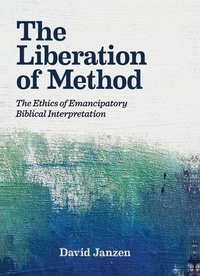
Liberation of Method
Description

The field of biblical studies has championed the historical-critical method as the only way to guarantee objective interpretation. But in recent decades, women, people of color, scholars from the Two-Thirds World, and members of the the LGBTQIA+ community have pursued hermeneutical approaches that provide interpretations useful for marginalized communities who see the Bible as a resource in their struggles against oppression. Such liberative strategies remain at the margins of the field. The Liberation of Method argues that this marginality must end, and that liberative methods should become the central methods of biblical studies.
The first part of the book draws upon the hermeneutics of philosophical pragmatism to argue that, because readers are responsible for the interpretation, there is no necessary connection between the meanings they produce and the ones ancient authors may have intended. As a result, the historical-critical method, which prioritizes the study of the ancient contexts of biblical writings, becomes an optional rather than a necessary aspect of interpretation. The second part of The Liberation of Method argues that if we truly hope to create an ethical academic field, more privileged scholars and students must see their minoritized colleagues as the leaders in the field, as models of the ethical liberative standards of interpretation.
More details
Other editions
Additional editions
Person
Content
- Cover Page
- Title Page
- Copyright Page
- Contents
- 1. Introduction: The Ethics of Emancipatory Biblical Interpretation
- Liberation and Method: The Basic Question
- Ethical Texts: A Hermeneutical Solution
- We/They: Unity and Difference
- 2. The Meaningful Text
- The Historical Critical Method and the Speaking Text
- The Meaningful Text: The Example of the Story of Jephthah's Daughter
- Conclusion: The Reader as Author
- 3. Community, Evidence, and Hermeneutical Change
- Evidence, Worldview, and Objectivity
- Community and Hermeneutical Change
- 4. The Need for Change in Biblical Studies
- Ethical Problems with the Historical Critical Method
- The Primacy of Liberative Dialogue
- 5. Listening, Part 1: Basic Goals and Approaches
- Introduction: The Ethical Imperative to Listen
- Listening: Basic Goals and Approaches
- Beyond Listening: Solidarity and Dialogue, Part 1
- 6. Listening, Part 2: Examples
- Introduction: The Ethics of Emancipatory Biblical Interpretation
- Biblical Parallels for Contemporary Situations
- Reading from the Perspectives of Minor Characters
- Suspicious Readings: Warning of Oppressive Texts
- Transgressing Categories and Crossing Boundaries
- Conclusion: Solidarity and Dialogue, Part 2
- 7. The Danger and Liberation of Ezra-Nehemiah
- Introduction: The Plot and Dangers of Ezra-Nehemiah
- A Suspicious Reading of Ezra-Nehemiah
- Reading Ezra-Nehemiah with Its Marginalized Characters
- Conclusion: Liberations of Ezra-Nehemiah
- 8. The Critique of Royal Injustice in 1 Kings 3:16-28
- Introduction: The Criticism of Solomon in 1 Kings 1-11
- Women, Wisdom, and the Critique of Solomon in 1 Kings 3:16-28
- A Liberated Text and a Culpable God
- 9. The Liberation and Relevance of Biblical Studies
- Bibliography
- Subject Index
- Name Index
