

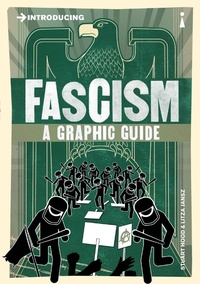
Introducing Fascism
A Graphic Guide
Published on 3. September 2015
176 pages
978-1-78578-007-3 (ISBN)
Description

Did Fascism end with the Allied victory over the Axis powers in 1945, or has it been lying dormant and is now re-awakening as we move into the 21st century? Introducing Fascism trace the origins of Fascism in 19th-century traditions of ultra-conservatism, the ideas of Nietzsche, Wagner and other intellectuals which helped to make racist doctrines respectable and which led to the ultimate horrifying 'logic' of the Holocaust.
Introducing Fascism investigates the four types of Fascism that emerged after the First World War in Italy, Germany, Spain and Japan. It also looks beyond the current headlines of neo-Nazi hooliganism and examines the increasing political success of the far right in Western Europe and the explosion of ultra-nationalisms in Eastern Europe and the former Soviet Union.
Introducing Fascism investigates the four types of Fascism that emerged after the First World War in Italy, Germany, Spain and Japan. It also looks beyond the current headlines of neo-Nazi hooliganism and examines the increasing political success of the far right in Western Europe and the explosion of ultra-nationalisms in Eastern Europe and the former Soviet Union.
More details
Other editions
Additional editions
Book
08/2013
Icon Books
€11.50
Shipment within 3-4 weeks
Persons
Stuart Hood was a Scottish novelist, translator and a former British television producer and Controller of BBC Television. Litza Jansz has also illustrated Introducing Semiotics: A Graphic Guide.
Content
- Intro
- Title Page
- Copyright
- Contents
- Is Fascism Over?
- What is Fascism?
- Ultraconservatism
- The Ultraconservatives and Racism
- The Dreyfus Affair
- Another Forgery
- .and Pogroms
- The Stage Is Set for World War One
- The Breeding-Ground of Fascism
- A Totalitarian or Corporative State
- Nostalgia and Imperialism
- The German Model
- The Instrument is Terror
- Purging the Brownshirt Storm Troopers
- The Survival of the Fittest
- The Logic of the Holocaust
- "Ethnic Cleansing"
- A War Economy
- The End of Hitler's "Thousand-Year" Reich
- The Spanish Model
- El Moviemento
- The International Brigades
- 40 Years of Fascist Dictatorship
- Other Brands of European Fascism
- The British Case
- Reasons for the Failure of Fascism in Pre-war Britain
- The Battle of Cable Street
- The Axis Domination of Europe
- The Case of Japan
- Recession and Rebellion
- The Niniroku
- Before Pearl Harbour
- The Greater East Asia Co-Prosperity Sphere
- The Balance Sheet of Fascism
- The Essential Scapegoat of Fascism
- The Wannsee Conference
- What are the Attractions of Fascism?
- The "Greenness" of Fascism
- THE MEDIA - How Fascism Made Itself Attractive
- Film
- The Pornography of Death
- Fine Art
- A Nostalgia for the Future
- From Marinetti's Futurist Manifesto (1909)
- Caricature
- Symbols and Rituals
- Architecture
- The End of Fascism?
- The Reverse Course and the Cold War
- Japan's Last Shogun
- The Armed Forces That Don't Exist
- And in Occupied Germany?
- And What About Former Collaborators?
- Shelter and Escape Routes
- The Case of Italy
- Consequences of the Cold War Policy in Italy
- The Massacre of Communists in Sicily
- The Accidental Death of an Anarchist
- An Attempted Coup
- The Black Eversion
- Don't Ask Embarrassing Questions!
- Italy in the 90s
- The Case of Spain
- Neo-Nazism in Germany
- What about Neo-Nazi Violence?
- Some Reasons for Neo-Nazism
- Where Does That Leave Germany's Conservatives?
- Neo-Fascism in Eastern Europe
- Neo-Fascism in Britain
- A Left Opposition to the NF
- Neo-Fascism in France
- The Spread of Neo-Fascism
- Did Hitler Really Exist?
- The Respectable Right
- Neo-Fascism - "News Today, Gone Tomorrow?"
- Nostalgia and Maladjustment
- Finally.
- Fascism - An Update
- Suggested Further Reading
- Index
