

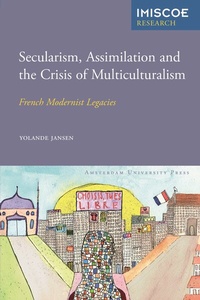
Secularism, Assimilation and the Crisis of Multiculturalism
French Modernist Legacies
Published on 14. November 2013
344 pages
978-90-485-2213-2 (ISBN)
Description

A remarkable study on the theoretical critique of contemporary discourses on secularism and assimilation,and on perspective that assimilating distinct religious minorities by incorporating them into a secular and supposedly neutral public sphere may be self-subverting.
Reviews / Votes
"Jansen's book shows how even the most sophisticated academic views defending secularism and assimilation remain rooted in unexamined 'modernist dichotomies' inherited from French (and to some extent, European) modernism. " - Rainer Bauboeck, European University Institute"For anyone who seeks to understand the roots of the "deepening crisis of multiculturalism" in Europe, Yolande Jansen's book is required reading. Jansen's brilliant and insightful analysis draws on a variety of fields and lucidly shows how the crisis is a crisis in modernity. Subtly weaving Proust into the argument, she brings a dry subject to life." -- Brian Klug, University of Oxford
"This book offers a sharp analysis supported by a surprising array of materials. ... In this way, the author's aim of philosophising in the manner of 'critical activity' rather than composing an ideal theory is successfully achieved." - Carolina Ivanescu, Erasmus University Rotterdam
"Highly accessible and up-to-date, Jansen's ambitious and brave analysis provides a very welcome and refreshing examination of issues regarding secularism, assimilation and the crisis of multiculturalism in France. ... This work will definitely appeal to scholars, for whom the approach taken by Jansen may give fresh input in this field, something that is sorely needed." -- Rim-Sarah Alouane, University Tolouse 1-Capitole
More details
Series
Edition
Digital original
Language
English
Place of publication
Amsterdam
Netherlands
Target group
Professional and scholarly
US School Grade: College Graduate Student
Edition type
Digital original
File size
1,39 MB
ISBN-13
978-90-485-2213-2 (9789048522132)
Copyright in bibliographic data and cover images is held by Nielsen Book Services Limited or by the publishers or by their respective licensors: all rights reserved.
Schweitzer Classification
Other editions
Additional editions
Book
11/2013
Amsterdam University Press
€63.00
Article not available at the moment
Persons
Yolande Jansen is the Socrates Professor of Humanism in Relation to Religion and Secularity at the VU University Amsterdam and a senior researcher at the Amsterdam Center for Globalization Studies at the University of Amsterdam.
Content
Chapter one. The crisis of multiculturalism, new assimilationism and secularism
Chapter two. Assimilation in the French sociology of incorporation from a multicultural perspective Introduction: Why reintroduce assimilation?
1. Gerard Noiriel. Writing the history of power in the context of migration
2. A multicultural perspective: I been in the right place, but it must have been the wrong time
Chapter three. The new liberal sociology of assimilation and its transnationalist alternatives
Introduction: The international sociological debate about assimilation and its normative implications
1. Critique of postnationalism, multiculturalism and integration
2. The alternatives proposed by the 'liberal assimilationists'
3. Complications for a diagnosis: 'On their turf'
4. Alternatives
5. Against the new discourses of assimilation
Transit I: To the Proustian pluriverse or Proust as a witness of assimilation in nineteenth19th-century France
Europe; initial connections with the secularism-religion framework
Chapter four. Alfred Bloch's personal integration test at the threshold of the protagonist's family's home
1. 'And what's the name of this friend of yours who is coming this evening?'
2. The Revolution's conditions of Emancipation
3. Bloch coping with paradox
Chapter five. Stuck in a revolving door. Cultural memory, assimilation and secularisation
Introduction: Assimilation, cultural memory and metaphor
1. Bloch and his family being 'picturesque rather than pleasing' at the beach
2. Hannah Arendt reads Proust; from Judaism to Jewishness
3. Scratching the surface; Zygmunt Bauman and the paradoxes of assimilation
4. 'A consubstantial malaise of republican society'
Transit II: Laicite and assimilation in the Third Republic and today
Chapter six. Elements for a critique of the laicite?-religion framework
Introduction: Towards a genealogy of the laicite?-religion framework
1. Laicite and neo-Kantian liberalism
2. Kant at school; Durkheim and Buisson
3. The genealogy of the religious 'sign' with a French twist towards ordre public
Chapter seven. Secularism, sociology, security
Introduction: The sociology of secularisation and the normative concept of laicite
1. The Stasir Report: Un rapport sans mediation
2. Secularism or democratic multiculturalism?
Chapter eight. The highly precarious structure of assimilation: modernist philosophical schemes, memory and the Proustian narrative
Introduction: The invention of tense pasts 'after' assimilation
1. Adorno and Benjamin on assimilation and the rejection of Swann
2. Public and private Dreyfusism
3. The social discipline of forgetting
Democratic memory
1. The assimilation of the French Jews as a memory for today
2. Getting stuck in a revolving door in the early twenty-first21st century
3. Problematising the laicite-religion framework instead of defining a better laicite
4. Multicultural alternatives
Chapter two. Assimilation in the French sociology of incorporation from a multicultural perspective Introduction: Why reintroduce assimilation?
1. Gerard Noiriel. Writing the history of power in the context of migration
2. A multicultural perspective: I been in the right place, but it must have been the wrong time
Chapter three. The new liberal sociology of assimilation and its transnationalist alternatives
Introduction: The international sociological debate about assimilation and its normative implications
1. Critique of postnationalism, multiculturalism and integration
2. The alternatives proposed by the 'liberal assimilationists'
3. Complications for a diagnosis: 'On their turf'
4. Alternatives
5. Against the new discourses of assimilation
Transit I: To the Proustian pluriverse or Proust as a witness of assimilation in nineteenth19th-century France
Europe; initial connections with the secularism-religion framework
Chapter four. Alfred Bloch's personal integration test at the threshold of the protagonist's family's home
1. 'And what's the name of this friend of yours who is coming this evening?'
2. The Revolution's conditions of Emancipation
3. Bloch coping with paradox
Chapter five. Stuck in a revolving door. Cultural memory, assimilation and secularisation
Introduction: Assimilation, cultural memory and metaphor
1. Bloch and his family being 'picturesque rather than pleasing' at the beach
2. Hannah Arendt reads Proust; from Judaism to Jewishness
3. Scratching the surface; Zygmunt Bauman and the paradoxes of assimilation
4. 'A consubstantial malaise of republican society'
Transit II: Laicite and assimilation in the Third Republic and today
Chapter six. Elements for a critique of the laicite?-religion framework
Introduction: Towards a genealogy of the laicite?-religion framework
1. Laicite and neo-Kantian liberalism
2. Kant at school; Durkheim and Buisson
3. The genealogy of the religious 'sign' with a French twist towards ordre public
Chapter seven. Secularism, sociology, security
Introduction: The sociology of secularisation and the normative concept of laicite
1. The Stasir Report: Un rapport sans mediation
2. Secularism or democratic multiculturalism?
Chapter eight. The highly precarious structure of assimilation: modernist philosophical schemes, memory and the Proustian narrative
Introduction: The invention of tense pasts 'after' assimilation
1. Adorno and Benjamin on assimilation and the rejection of Swann
2. Public and private Dreyfusism
3. The social discipline of forgetting
Democratic memory
1. The assimilation of the French Jews as a memory for today
2. Getting stuck in a revolving door in the early twenty-first21st century
3. Problematising the laicite-religion framework instead of defining a better laicite
4. Multicultural alternatives
