

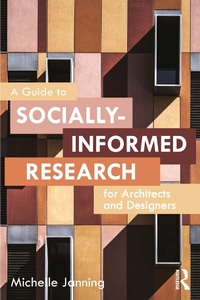
A Guide to Socially-Informed Research for Architects and Designers
1st Edition
Published on 9. December 2022
178 pages
978-1-000-79284-3 (ISBN)
Description

This book offers an efficient set of step-by-step tips and overarching lessons about how to gather useful, meaningful, and socially-informed data about clients' and other stakeholders' experiences in architecture and interior design professions.
In this guide, author Michelle Janning helps the design professional conduct ongoing evaluation of design projects, create useful pre- and post-design evaluations, frame effective questions for improved future design, involve various stakeholders in the research process, and focus on responsible and evidence-based human-centered design to improve the relationship between design and people's experiences. Examining a variety of both large- and small-scale project examples from different institutional realms, including healthcare sites, schools, residences, eating establishments, museums, and theaters, this book highlights not only the overlap in these types of projects but also the differences between project sizes that may impact the methods used in any given project. It also offers tools for how to communicate design success to audiences that include potential clients, occupants, and other designers.
A Guide to Socially-Informed Research for Architects and Designers is a go-to reference for design professionals interested in using accessible social scientific methods to gather essential and practical information from people who occupy the spaces they design and to do so in an ethical, inclusive, and socially-informed way in order to enhance social sustainability in the built environment.
In this guide, author Michelle Janning helps the design professional conduct ongoing evaluation of design projects, create useful pre- and post-design evaluations, frame effective questions for improved future design, involve various stakeholders in the research process, and focus on responsible and evidence-based human-centered design to improve the relationship between design and people's experiences. Examining a variety of both large- and small-scale project examples from different institutional realms, including healthcare sites, schools, residences, eating establishments, museums, and theaters, this book highlights not only the overlap in these types of projects but also the differences between project sizes that may impact the methods used in any given project. It also offers tools for how to communicate design success to audiences that include potential clients, occupants, and other designers.
A Guide to Socially-Informed Research for Architects and Designers is a go-to reference for design professionals interested in using accessible social scientific methods to gather essential and practical information from people who occupy the spaces they design and to do so in an ethical, inclusive, and socially-informed way in order to enhance social sustainability in the built environment.
Reviews / Votes
'I am always answering the question of "why" as I practice interior design. Solutions may appear as beautiful draperies or furniture, but they are physical manifestations to specific analysis that includes client needs, wants and constraints. But I haven't always thought about inherent prejudices and assumptions that I may bring to a project. Michelle gives academic tools to designers and architects to help them reach beyond their personal framework and create a more inclusive analysis of what constitutes good design.' - Robin Daly, Interior Designer, Robin Daly Color & Design'As a leader in social science research on space and interactions, Janning is the ideal guide to help designers better understand the value of sociology in the work they do. Janning is intellectually, disciplinarily, and methodologically promiscuous in ways that make this book an incredible and one-of-a-kind resource. With accessible and engaging prose, I imagine this how-to will make amateur sociologists out of a collection of designers to the benefit of all the rest of us who engage and interact with their decisions and designs.' - Tristan Bridges, Vice Chair and Associate Professor, Department of Sociology, University of California, Santa Barbara
More details
Edition
1. Auflage
Language
English
Place of publication
London
United Kingdom
Publishing group
Taylor & Francis Ltd
Target group
College/higher education
Professional and scholarly
Illustrations
2 Tables, black and white
ISBN-13
978-1-000-79284-3 (9781000792843)
Copyright in bibliographic data and cover images is held by Nielsen Book Services Limited or by the publishers or by their respective licensors: all rights reserved.
Schweitzer Classification
Other editions
Additional editions
Michelle Janning
A Guide to Socially-Informed Research for Architects and Designers
Book
12/2022
1st Edition
Routledge
€52.70
Shipment within 10-20 days
Michelle Janning
A Guide to Socially-Informed Research for Architects and Designers
Book
12/2022
1st Edition
Routledge
€185.00
Shipment within 10-20 days
Person
Michelle Janning is the Raymond and Elsie DeBurgh Chair of Social Sciences and Professor of Sociology at Whitman College.
Content
Introduction: Incorporating Socially-Informed Research into Design - The WHY 1. Framing a Project's Goals and Research Question - The WHAT 2. Choosing a Research Method to Inform Design - The HOW 3. Choosing a Sample and Communicating with People during the Research Process - The WHO 4. Setting and Pace for Data Collection - The WHERE and WHEN 5. Telling the Data Story with Analysis and Presentation - Continuing the HOW Conclusion: Informing Future Design and Designing Socially Sustainable Communities - Revisiting the WHY
