

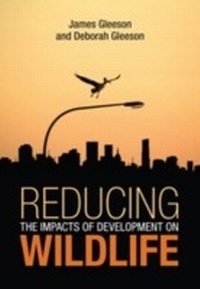
Reducing the Impacts of Development on Wildlife
1st Edition
Published on 12. April 2012
280 pages
978-0-643-10693-2 (ISBN)
Description

2012 Whitley Award Commendation for Zoological Text The rapidly increasing number of threatened flora and fauna species worldwide is one of the chief problems confronting environmental professionals today. This problem is largely due to the impact humans have had on land use through development (e.g. agricultural, residential, industrial, infrastructure and mining developments). The requirement for developers to implement measures to reduce the impacts of development on wildlife is underpinned by government legislation. A variety of measures or strategies are available to reduce such impacts, including those to reduce impacts on flora and fauna during land clearance, to deter fauna from potential hazards, to facilitate the movement of fauna around and through a development site as well as those to provide additional habitat. In recent years, considerable advances have been made in the techniques used to reduce the impacts of development on wildlife in Australia and overseas. Reducing the Impacts of Development on Wildlife contains a comprehensive range of practical measures to assist others to reduce the impacts resulting from development on terrestrial flora and fauna, and promotes ecologically sustainable development. It will be very useful to environmental consultants and managers, developers, strategists, policy makers and regulators, as well as community environmental groups and students.
More details
Other editions
Additional editions
James Gleeson | Deborah Gleeson
Reducing the Impacts of Development on Wildlife
Book
04/2012
CSIRO Publishing
€86.60
Article exhausted; check different version
Content
- Intro
- Title
- Copyright
- Dedication
- Foreword
- Contents
- Acknowledgements
- About the authors
- Contributors
- 1 Introduction
- Why this book was written
- The scope of this book
- The structure of this book
- 2 Potential impacts of development on flora and fauna
- Types of impacts
- Assessing impacts
- 3 Selecting measures to reduce impacts of development on wildlife - why an understanding of ecology is fundamental
- Ecosystem processes, function and resilience
- Species present and absent, and their habitat
- Population ecology
- Animal behaviour
- Movement and dispersal
- 4 Avoiding impacts on flora and fauna
- Conservation planning
- Ecologically sustainable development and the precautionary principle
- Measures to avoid impacts on wildlife
- Wildlife buffers
- 5 Modifying human behaviour to reduce impacts of development on flora and fauna
- Wildlife education
- Fauna crossing signs
- Reducing vehicle speed
- 6 Measures to reduce direct fauna and flora mortality during land clearance
- Fauna rescue
- Plant salvage
- 7 Measures to exclude or deter fauna from a development site
- Fauna exclusion fences
- Coverings
- Reducing the attractiveness of fauna habitat
- Visual deterrents
- Chemical deterrents
- Auditory deterrents
- 8 Measures to promote safe movement of fauna around and through a development site
- Natural habitat linkages
- Land bridges
- Fauna underpasses
- Canopy bridges
- Glide poles
- Escape routes
- Fauna inclusion fences
- Alternatives to barbed wire
- 9 Measures to minimise habitat degradation near a development site
- Weed prevention and control
- Discouraging exotic vertebrates
- Reduction of artificial lighting
- 10 Measures to provide additional habitat for flora and fauna impacted by development
- Revegetation and restoration of ecosystems
- Artificial frog ponds
- Wildlife-friendly dams
- Artificial tree hollows
- Artificial subterranean bat roosts
- Artificial nesting platforms
- Artificial retreats for reptiles
- Salvaged habitat features
- 11 Ex situ measures for conservation of flora and fauna
- Seed preservation
- Translocation
- 12 Environmental offsets
- Description and potential applications
- Effectiveness
- 13 Monitoring
- How can monitoring be used?
- Ecological monitoring approaches
- Monitoring results
- 14 Adaptive management
- 15 Concluding remarks
- References
- Index
