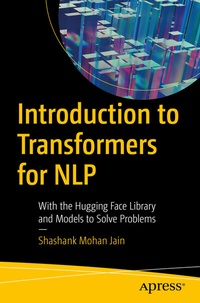
Introduction to Transformers for NLP
Description

Get a hands-on introduction to Transformer architecture using the Hugging Face library. This book explains how Transformers are changing the AI domain, particularly in the area of natural language processing.
This book covers Transformer architecture and its relevance in natural language processing (NLP). It starts with an introduction to NLP and a progression of language models from n-grams to a Transformer-based architecture. Next, it offers some basic Transformers examples using the Google colab engine. Then, it introduces the Hugging Face ecosystem and the different libraries and models provided by it. Moving forward, it explains language models such as Google BERT with some examples before providing a deep dive into Hugging Face API using different language models to address tasks such as sentence classification, sentiment analysis, summarization, and text generation.
After completing Introduction to Transformers for NLP , you will understand Transformer concepts and be able to solve problems using the Hugging Face library.
What You Will Learn
- Understand language models and their importance in NLP and NLU (Natural Language Understanding)
- Master Transformer architecture through practical examples
- Use the Hugging Face library in Transformer-based language models
- Create a simple code generator in Python based on Transformer architecture
Who This Book Is For Data Scientists and software developers interested in developing their skills in NLP and NLU (Natural Language Understanding)
More details
Other editions
Additional editions