


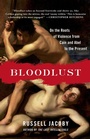
Bloodlust
On the Roots of Violence from Cain and Abel to the Present
Published on 5. April 2011
256 pages
978-1-4391-1756-9 (ISBN)
Description

THROUGHOUT HISTORY AND ACROSS CULTURES, the most common form of violence is that between family members and neighbors or kindred communities?in civil wars writ large and small. From assault to genocide, from assassination to massacre, violence usually emerges from inside the fold. You have more to fear from a spouse, an ex-spouse, or a coworker than you do from someone you don't know.
In this brilliant polemic, Russell Jacoby argues that violence erupts most often, and most savagely, between those of us most closely related. An Indian nationalist assassinated Mohandas Gandhi, ?the father? of India. An Egyptian Muslim assassinated Anwar Sadat, the president of Egypt and a recipient of the Nobel Peace Prize. An Israeli Jew assassinated Yitzhak Rabin, the Israeli prime minister and similarly a recipient of the Nobel Peace Prize. Genocide most often involves kindred groups. The German Christians of the 1930s were so closely intertwined with German Jews that a yellow star was required to tell the groups apart. Serbs and Muslims in Bosnia, like the Hutu and Tutsi in Rwanda, are often indistinguishable even to one another.
This idea contradicts both common sense and the collective wisdom of teachers and preachers, who declaim that we fear?and sometimes should fear?the ?other,? the dangerous stranger. Citizens and scholars alike believe that enemies lurk in the street and beyond, where we confront a ?clash of civilizations? with foreigners who challenge our way of life. Jacoby offers a more unsettling truth: it is not so much the unknown that threatens us, but the known. We attack our brothers?our kin, our acquaintances, our neighbors?with far greater regularity and venom than we attack outsiders.
Weaving together the biblical story of Cain and Abel, Freud's ?narcissism of minor differences,? insights on anti-Semitism and misogyny, as well as fresh analysesof ?civil? bloodbaths from the St. Bartholomew's Day Massacre in the sixteenth century to genocide and terrorism in our own time, Jacoby turns history inside out to offer a provocative new understanding of violentconfrontation over the centuries. ?In thinking about the bad, we reach for the good,? he says in his Introduction. This passionate, counterintuitive account affords us an unprecedented insight into the roots of violence.
In this brilliant polemic, Russell Jacoby argues that violence erupts most often, and most savagely, between those of us most closely related. An Indian nationalist assassinated Mohandas Gandhi, ?the father? of India. An Egyptian Muslim assassinated Anwar Sadat, the president of Egypt and a recipient of the Nobel Peace Prize. An Israeli Jew assassinated Yitzhak Rabin, the Israeli prime minister and similarly a recipient of the Nobel Peace Prize. Genocide most often involves kindred groups. The German Christians of the 1930s were so closely intertwined with German Jews that a yellow star was required to tell the groups apart. Serbs and Muslims in Bosnia, like the Hutu and Tutsi in Rwanda, are often indistinguishable even to one another.
This idea contradicts both common sense and the collective wisdom of teachers and preachers, who declaim that we fear?and sometimes should fear?the ?other,? the dangerous stranger. Citizens and scholars alike believe that enemies lurk in the street and beyond, where we confront a ?clash of civilizations? with foreigners who challenge our way of life. Jacoby offers a more unsettling truth: it is not so much the unknown that threatens us, but the known. We attack our brothers?our kin, our acquaintances, our neighbors?with far greater regularity and venom than we attack outsiders.
Weaving together the biblical story of Cain and Abel, Freud's ?narcissism of minor differences,? insights on anti-Semitism and misogyny, as well as fresh analysesof ?civil? bloodbaths from the St. Bartholomew's Day Massacre in the sixteenth century to genocide and terrorism in our own time, Jacoby turns history inside out to offer a provocative new understanding of violentconfrontation over the centuries. ?In thinking about the bad, we reach for the good,? he says in his Introduction. This passionate, counterintuitive account affords us an unprecedented insight into the roots of violence.
More details
Other editions
Additional editions
Book
04/2014
Free Press
€17.30
Shipment within 10-20 days
Person
Russell Jacoby
Content
- Cover
- Front Flap
- Title Page
- Copyright Page
- Dedication
- Contents
- Preface
- Chapter 1: "Kinsmen, Neighbors, and Compatriots"
- Chapter 2: Uncivil Wars
- Chapter 3: Genocide in History: Kill Thy Neighbor
- Chapter 4: Fearful Symmetries
- Chapter Acknowledgments
- Notes
- Index
- About the Author
- Back Flap
- Back Cover
