


Animal, Vegetal, Marginal
Description

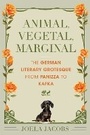
Vegetal, Animal, Marginal explores the oft-forgotten yet provocative German genre of die Groteske, or the literary grotesque. This short prose form challenges the norms of being human and being accepted as such by society in exaggerated and satirical ways. Between the Kaiser's and Hitler's Reichs, the genre's irreverent comedy and criticism sold out cabarets, drew droves of radio listeners, and created bestsellers.
Yet, because its authors were ruthlessly censored and persecuted, die Groteske is virtually unknown today and neglected by scholarship.
Joela Jacobs examines the development and influence of the genre on some of its leading exponents, including Oskar Panizza, Hanns Heinz Ewers, Salomo Friedlaender, and Franz Kafka.
Vegetal, Animal, Marginal is the first full-length study of the genre and shows how its portrayals of marginalized and nonhuman perspectives mounted resistance against the rise of the biopolitical structures underpinning nationalism, racism, and antisemitism.
More details
Other editions
Additional editions

Person
Joela Jacobs is Assistant Professor of German Studies at the University of Arizona. Her research engages with plants, animals, the environment, Jewish identity, science, gender, and sexuality in Germanophone literature and culture since the nineteenth century. She cofounded and maintains the Literary and Cultural Plant Studies Network.
Content
Acknowledgments
Introduction
Section I: The Grotesque: A Censored Literary Genre and Its Authors
1. Characteristics of die Groteske
2. Grotesken in a Nexus of Censorship
3. A Literary Network of the Marginalized
Section II: The Vegetal: Panizza, Ewers, and Turn-of-the-Century Censorship
4. The Crime in Tavistock-Square
5. The Petition
6. Why Plants?
Section III: The Animal: Panizza, Kafka, and the Modernist Crisis of the Self
7. From the Diary of a Dog
8. Investigations/Researches of a Dog
9. Why Dogs?
Section IV: The Human: Panizza, Friedlaender, and the Rise of Fascism
10. The Operated Jew
11. The Operated Goy
12. Why Humans?
Conclusion
Notes
Bibliography
