

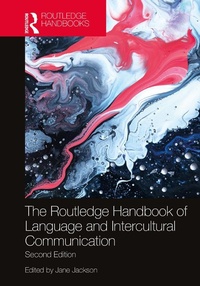
The Routledge Handbook of Language and Intercultural Communication
2nd Edition
Published on 29. April 2020
610 pages
978-1-000-05619-8 (ISBN)
Description

The Routledge Handbook of Language and Intercultural Communication provides a comprehensive historical survey of language and intercultural communication studies with a critical assessment of past and present theory, research, and practice, as well as an insight into future directions.
Drawing on the expertise of leading scholars from different parts of the world, this second edition offers updated chapters by returning authors and many new contributions on a broad range of topics, including reflexivity and criticality, translanguaging, and social justice in relation to intercultural communication.With an emphasis on contemporary, critical perspectives, this handbook showcases the varied range of issues, perspectives, and approaches that characterise this increasingly important field in today's globalised world.
Offering 34 chapters with examples from a variety of languages and international settings, this handbook is an indispensable resource for students and scholars working in the fields of intercultural communication, applied linguistics, TESOL/ TEFL, and communication studies.
Drawing on the expertise of leading scholars from different parts of the world, this second edition offers updated chapters by returning authors and many new contributions on a broad range of topics, including reflexivity and criticality, translanguaging, and social justice in relation to intercultural communication.With an emphasis on contemporary, critical perspectives, this handbook showcases the varied range of issues, perspectives, and approaches that characterise this increasingly important field in today's globalised world.
Offering 34 chapters with examples from a variety of languages and international settings, this handbook is an indispensable resource for students and scholars working in the fields of intercultural communication, applied linguistics, TESOL/ TEFL, and communication studies.
Reviews / Votes
From reviews of the first edition:'This volume ...fills gaps between national demarcations and serves as a bridge for educators, policymakers, and others interested in and/or working in the field... Essential. Upper-division undergraduates through faculty and professionals.'
K. Liu, CUNY in CHOICE
'This stimulating volume dwells in the realm of the "inter," engaging the complexity of the interdisciplinary perspective and the interrelated theories and models that inform our intercultural work,... offering expertise, insight, and resources for teaching and learning language and culture.'
Janet M. Bennett, Executive Director, Intercultural Communication Institute, USA
'Jane Jackson has managed to assemble a multidisciplinary volume of amazing breadth. In a field as fragmented and contested as Intercultural Communication, the diversity and polyphony of research traditions, approaches and contexts brought together in this handbook is an impressive achievement.'
Ingrid Piller, Macquarie University, Australia
More details
Series
Edition
2nd edition
Language
English
Place of publication
London
United Kingdom
Publishing group
Taylor & Francis Ltd
Target group
College/higher education
Professional and scholarly
Product notice
Reflowable
Illustrations
9 Tables, black and white; 7 Line drawings, black and white; 1 Halftones, black and white; 8 Illustrations, black and white
ISBN-13
978-1-000-05619-8 (9781000056198)
Copyright in bibliographic data and cover images is held by Nielsen Book Services Limited or by the publishers or by their respective licensors: all rights reserved.
Schweitzer Classification
Other editions
Additional editions
Book
05/2023
2nd Edition
Routledge
€75.30
Shipment within 10-20 days

Book
05/2020
2nd Edition
Routledge
€335.60
Shipment within 10-20 days
Person
Jane Jackson is Professor in the English Department at the Chinese University of Hong Kong.
Content
Acknowledgements
List of Figures and Tables
List of Contributors
Introduction and overview
Section I: Foundations of language and intercultural communication studies
A global look at the history and development of language and intercultural communication studies
Culture, communication, context, and power
Language, identity, and intercultural communication
Conceptualizing intercultural (communicative) competence and intercultural citizenship
Reflexivity and criticality in language and intercultural communication research and practice
Section II: Core Themes and issues
Language, culture, and communication
Linguaculture and transnationality: the cultural dimensions of language
Intercultural rhetoric and intercultural communication
Interculturality and intercultural pragmatics
Speech acts, facework, and politeness: sociopragmatics, facework, and intercultural relationship-building
Translation, interpreting, and intercultural communication
Language, identity, and intercultural communication
Constructing the cultural Other: prejudice and stereotyping
Intercultural contact, hybridity, and third space
Gender, language, identity, and intercultural communication
Translanguaging, identity, and migration
Language learning, identity, and intercultural communication in contexts of conflict and insecurity
Language, intercultural (communicative) competence, and intercultural citizenship
Language: an essential component of intercultural communicative competence
From native speaker to intercultural speaker and beyond: intercultural (communicative) competence in foreign language education
World Englishes and intercultural communication
Language education and global citizenship: decolonial and posthuman perspectives through pedagogies of discomfort
Section III: Theory into practice: Towards intercultural (communicative) competence and citizenship
Intercultural second language teacher education
Intercultural responsibility: transnational research and glocal critical citizenship
Intercultural communicative competence development through telecollaboration and virtual exchange
Social justice, diversity, and intercultural-global citizenship education in the global context
Assessing intercultural language learning
Section IV: Language and intercultural communication in context
Intercultural language teaching and learning in classroom practice
Intercultural communication in the multicultural classroom
The language and intercultural dimension of education abroad
Intercultural business education: the role of critical theory and experiential learning
Intercultural communication in professional and workplace settings
Linguistically and culturally diverse project partnerships and teams
Intercultural communication in health care settings
Intercultural communication in legal contexts
Intercultural communication in tourism
Section V: New Debates and future directions
A global agenda for ethical language and intercultural communication research and practice
Index
List of Figures and Tables
List of Contributors
Introduction and overview
Section I: Foundations of language and intercultural communication studies
A global look at the history and development of language and intercultural communication studies
Culture, communication, context, and power
Language, identity, and intercultural communication
Conceptualizing intercultural (communicative) competence and intercultural citizenship
Reflexivity and criticality in language and intercultural communication research and practice
Section II: Core Themes and issues
Language, culture, and communication
Linguaculture and transnationality: the cultural dimensions of language
Intercultural rhetoric and intercultural communication
Interculturality and intercultural pragmatics
Speech acts, facework, and politeness: sociopragmatics, facework, and intercultural relationship-building
Translation, interpreting, and intercultural communication
Language, identity, and intercultural communication
Constructing the cultural Other: prejudice and stereotyping
Intercultural contact, hybridity, and third space
Gender, language, identity, and intercultural communication
Translanguaging, identity, and migration
Language learning, identity, and intercultural communication in contexts of conflict and insecurity
Language, intercultural (communicative) competence, and intercultural citizenship
Language: an essential component of intercultural communicative competence
From native speaker to intercultural speaker and beyond: intercultural (communicative) competence in foreign language education
World Englishes and intercultural communication
Language education and global citizenship: decolonial and posthuman perspectives through pedagogies of discomfort
Section III: Theory into practice: Towards intercultural (communicative) competence and citizenship
Intercultural second language teacher education
Intercultural responsibility: transnational research and glocal critical citizenship
Intercultural communicative competence development through telecollaboration and virtual exchange
Social justice, diversity, and intercultural-global citizenship education in the global context
Assessing intercultural language learning
Section IV: Language and intercultural communication in context
Intercultural language teaching and learning in classroom practice
Intercultural communication in the multicultural classroom
The language and intercultural dimension of education abroad
Intercultural business education: the role of critical theory and experiential learning
Intercultural communication in professional and workplace settings
Linguistically and culturally diverse project partnerships and teams
Intercultural communication in health care settings
Intercultural communication in legal contexts
Intercultural communication in tourism
Section V: New Debates and future directions
A global agenda for ethical language and intercultural communication research and practice
Index
