

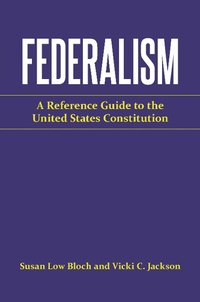
Federalism
A Reference Guide to the United States Constitution
1st Edition
Published on 9. September 2013
332 pages
978-1-4408-2996-3 (ISBN)
Description

This book analyzes the structure of our constitutional system of government, providing an overview of the constitutional history of American federalism as it has been developed in decisions of the United States Supreme Court.
Federalism: A Reference Guide to the United States Constitution provides a thorough examination of this significant and distinctive part of the U.S. constitutional system, documenting its role in major domestic constitutional controversies in every period of American history.
Although the book is organized historically rather than doctrinally, the marked evolutions of important areas of doctrine are addressed over time. These subject areas include the scope of Congress's power under the Commerce Clause, the scope of Congress's powers under the Fourteenth and other post-Civil War Amendments, the states' authority to regulate commercial and economic matters when Congress is silent, the principle of the supremacy of federal law and the law of preemption that follows from it, intergovernmental and sovereign immunities, the obligation of state courts to enforce federal law, and the scope of national power to regulate or impose obligations on the states.
Federalism: A Reference Guide to the United States Constitution provides a thorough examination of this significant and distinctive part of the U.S. constitutional system, documenting its role in major domestic constitutional controversies in every period of American history.
Although the book is organized historically rather than doctrinally, the marked evolutions of important areas of doctrine are addressed over time. These subject areas include the scope of Congress's power under the Commerce Clause, the scope of Congress's powers under the Fourteenth and other post-Civil War Amendments, the states' authority to regulate commercial and economic matters when Congress is silent, the principle of the supremacy of federal law and the law of preemption that follows from it, intergovernmental and sovereign immunities, the obligation of state courts to enforce federal law, and the scope of national power to regulate or impose obligations on the states.
More details
Series
Edition
1. Auflage
Language
English
Place of publication
United States
Publishing group
Bloomsbury Publishing Plc
Target group
Interest Age: From 7 to 17 years
ISBN-13
978-1-4408-2996-3 (9781440829963)
Copyright in bibliographic data and cover images is held by Nielsen Book Services Limited or by the publishers or by their respective licensors: all rights reserved.
Schweitzer Classification
Other editions
Additional editions
Book
09/2013
Praeger Publishers Inc
€114.50
Shipment within 15-20 days
Persons
Susan Low Bloch, JD, is professor of constitutional law at Georgetown University Law Center, Washington, DC. Bloch is the coauthor of Inside the Supreme Court: The Institution and Its Procedures as well as Supreme Court Politics: The Institution and Its Procedures.
Vicki C. Jackson, JD, BA, is Thurgood Marshall Professor of constitutional law at Harvard Law School, Cambridge, MA. Her published works include Constitutional Engagement in a Transnational Era; Federal Courts Stories, with Judith Resnik; and Inside the Supreme Court: The Institution and Its Procedures with Susan Low Bloch.
Vicki C. Jackson, JD, BA, is Thurgood Marshall Professor of constitutional law at Harvard Law School, Cambridge, MA. Her published works include Constitutional Engagement in a Transnational Era; Federal Courts Stories, with Judith Resnik; and Inside the Supreme Court: The Institution and Its Procedures with Susan Low Bloch.
Content
Acknowledgments
Introduction
Chapter I: The Founding to the Civil War
The Convention and the Constitution
Federal Power to Review State Court Decisions and Laws
Contracts Clause
Eleventh Amendment
State Law in Federal Diversity Cases
Broad Scope of National Legislative Powers
Intergovernmental Tax Immunity
Gibbons
Indian Tribes as "Dependent Sovereigns"
State Legislative Authority in Light of Federal Power: Exclusivity, Concurrency, Supremacy, and Preemption
Federal Obligations and State Officials: Extradition and Return
State Court Jurisdiction
National Powers, Part II: Dred Scott as "Antiprecedent"
Chapter II: The Civil War and Its Aftermath
The Court's Approach to the Thirteenth, Fourteenth, and Fifteenth Amendments: Federalism Unchanged? Racism Untamed?
State Contracts, Reconstruction Debt, and Eleventh-Amendment Sovereign Immunity
State Court Jurisdiction, Intergovernmental Immunity, and Judicial Federalism
Business Regulation in a Changing Economy: Due-Process and Commerce-Clause Challenges to State and Federal Regulation
Federal Power, Finance, and the National Government's Powers
Foreign Affairs: The Rising Claims for Federal Exclusivity
Chapter III: The Early Twentieth Century
The Distinctive Role of Amendments in Reshaping American Federalism: Taxing, Spending, and the Senate
"Classical" Legal Thought and Federal Power over Economic Matters: Commerce Clause, Due Process, and Taxes
Child Labor, Outlaw Products, and Lottery Tickets
Taxing and Spending
Rate Regulation and Business Affected with a Public Interest
Railroad Safety, Employment, and the Draft
Special Rules for Unions?
The Early New Deal Decisions: Commerce, Spending, and Taxing
The Dormant Commerce Clause
Other Constitutional Limitations on the States
Immunities: Sovereign Immunity and Intergovernmental Taxes
Judicial Federalism
Federalism and Foreign Affairs
Chapter IV: The New Deal Court through the Warren Court
New Deal Jurisprudence and Federal Power Unleashed
The Threat of Court-Packing and the 1937 "Switch in Time"
Federal Power Expanded
The Commerce Clause and Economic Regulation
The Taxing and Spending Power and Cooperative Federalism
War Powers: Threats to Federalism?
State Government Powers and the Economy
Regulatory Powers Unleashed: Due Process and Economic Regulation
Erie and Federal Common Law: State Law Extended?
The "Dormant" Commerce Clause
Foreign Affairs and the Interplay of Federal and State Power
Preemption
Intergovernmental Immunities
State Sovereign Immunity
Tax Immunities, Tenth Amendment, and Testamentary Dispositions
Judicial and Legislative Immunities
Protecting Civil Rights and Liberties: The Changing Role of the Federal Government
Brown v. Board of Education and Its Aftermath
Federal Civil Rights Legislation: Commerce Clause, Fourteenth and Fifteenth Amendment Powers of Congress
The Incorporation Debate and the Criminal Procedure Revolution
Reapportionment
State Obligations to Hear Federal Claims and Judicial Federalism
Judicially Developed Abstention Doctrines: Equity and Comity from Pullman to Dombrowski
Habeas Corpus
Supreme Court Review of State Court Decisions
Chapter V: The "New" Federalism and Its Future
The Tenth Amendment: From "Truism" to Constraint
Constraining Congress's Enumerated Powers
The Commerce and Necessary and Proper Clauses
The Spending and Taxing Powers
The Enforcement Clause of the Fourteenth Amendment
Prophylactic Power: Congruent and Proportional
Similar or Different Standards of Review in Affirmative Action Cases?
The Eleventh Amendment and Other Doctrines of Intergovernmental Immunity and State Equality
The Fundamental Meaning of the Eleventh Amendment: Clear Statements and Limits on Congress's Power
Waiver of Immunity; Abrogation under the Fourteenth Amendment
Prospective Relief against State Officers
Other Intergovernmental Immunities and State Equality Doctrine
States' Powers and Constitutional Federalism Constraints
Preemption and the Supremacy Clause, Congress and the President, Foreign and Domestic Affairs
Constraints Imposed by the "Dormant" Commerce Clause
Discrimination
Burdens and Balancing
Market Participant Doctrine and Permissible Discrimination
Subsidies and Permissible Discrimination
The Decisive Role of Public Ownership: Municipal Flow Control
Privileges and Immunities, the Second Amendment, and Federalism
The Interaction of Federal and State Courts: Judicial Federalism
Anti-Injunction Act, Younger Abstention, and "Our Federalism"
Supreme Court Review of State Court Judgments: Michigan v. Long
Habeas Corpus
Federal Common Law
Other Aspects of Judicial Federalism
Conclusion
Note on Theories of Federalism and Bibliography
Table of Cases
Index
Introduction
Chapter I: The Founding to the Civil War
The Convention and the Constitution
Federal Power to Review State Court Decisions and Laws
Contracts Clause
Eleventh Amendment
State Law in Federal Diversity Cases
Broad Scope of National Legislative Powers
Intergovernmental Tax Immunity
Gibbons
Indian Tribes as "Dependent Sovereigns"
State Legislative Authority in Light of Federal Power: Exclusivity, Concurrency, Supremacy, and Preemption
Federal Obligations and State Officials: Extradition and Return
State Court Jurisdiction
National Powers, Part II: Dred Scott as "Antiprecedent"
Chapter II: The Civil War and Its Aftermath
The Court's Approach to the Thirteenth, Fourteenth, and Fifteenth Amendments: Federalism Unchanged? Racism Untamed?
State Contracts, Reconstruction Debt, and Eleventh-Amendment Sovereign Immunity
State Court Jurisdiction, Intergovernmental Immunity, and Judicial Federalism
Business Regulation in a Changing Economy: Due-Process and Commerce-Clause Challenges to State and Federal Regulation
Federal Power, Finance, and the National Government's Powers
Foreign Affairs: The Rising Claims for Federal Exclusivity
Chapter III: The Early Twentieth Century
The Distinctive Role of Amendments in Reshaping American Federalism: Taxing, Spending, and the Senate
"Classical" Legal Thought and Federal Power over Economic Matters: Commerce Clause, Due Process, and Taxes
Child Labor, Outlaw Products, and Lottery Tickets
Taxing and Spending
Rate Regulation and Business Affected with a Public Interest
Railroad Safety, Employment, and the Draft
Special Rules for Unions?
The Early New Deal Decisions: Commerce, Spending, and Taxing
The Dormant Commerce Clause
Other Constitutional Limitations on the States
Immunities: Sovereign Immunity and Intergovernmental Taxes
Judicial Federalism
Federalism and Foreign Affairs
Chapter IV: The New Deal Court through the Warren Court
New Deal Jurisprudence and Federal Power Unleashed
The Threat of Court-Packing and the 1937 "Switch in Time"
Federal Power Expanded
The Commerce Clause and Economic Regulation
The Taxing and Spending Power and Cooperative Federalism
War Powers: Threats to Federalism?
State Government Powers and the Economy
Regulatory Powers Unleashed: Due Process and Economic Regulation
Erie and Federal Common Law: State Law Extended?
The "Dormant" Commerce Clause
Foreign Affairs and the Interplay of Federal and State Power
Preemption
Intergovernmental Immunities
State Sovereign Immunity
Tax Immunities, Tenth Amendment, and Testamentary Dispositions
Judicial and Legislative Immunities
Protecting Civil Rights and Liberties: The Changing Role of the Federal Government
Brown v. Board of Education and Its Aftermath
Federal Civil Rights Legislation: Commerce Clause, Fourteenth and Fifteenth Amendment Powers of Congress
The Incorporation Debate and the Criminal Procedure Revolution
Reapportionment
State Obligations to Hear Federal Claims and Judicial Federalism
Judicially Developed Abstention Doctrines: Equity and Comity from Pullman to Dombrowski
Habeas Corpus
Supreme Court Review of State Court Decisions
Chapter V: The "New" Federalism and Its Future
The Tenth Amendment: From "Truism" to Constraint
Constraining Congress's Enumerated Powers
The Commerce and Necessary and Proper Clauses
The Spending and Taxing Powers
The Enforcement Clause of the Fourteenth Amendment
Prophylactic Power: Congruent and Proportional
Similar or Different Standards of Review in Affirmative Action Cases?
The Eleventh Amendment and Other Doctrines of Intergovernmental Immunity and State Equality
The Fundamental Meaning of the Eleventh Amendment: Clear Statements and Limits on Congress's Power
Waiver of Immunity; Abrogation under the Fourteenth Amendment
Prospective Relief against State Officers
Other Intergovernmental Immunities and State Equality Doctrine
States' Powers and Constitutional Federalism Constraints
Preemption and the Supremacy Clause, Congress and the President, Foreign and Domestic Affairs
Constraints Imposed by the "Dormant" Commerce Clause
Discrimination
Burdens and Balancing
Market Participant Doctrine and Permissible Discrimination
Subsidies and Permissible Discrimination
The Decisive Role of Public Ownership: Municipal Flow Control
Privileges and Immunities, the Second Amendment, and Federalism
The Interaction of Federal and State Courts: Judicial Federalism
Anti-Injunction Act, Younger Abstention, and "Our Federalism"
Supreme Court Review of State Court Judgments: Michigan v. Long
Habeas Corpus
Federal Common Law
Other Aspects of Judicial Federalism
Conclusion
Note on Theories of Federalism and Bibliography
Table of Cases
Index
