

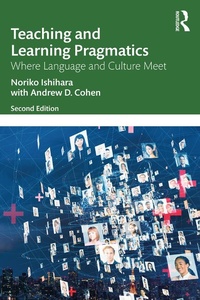
Teaching and Learning Pragmatics
Where Language and Culture Meet
2nd Edition
Published on 30. September 2021
354 pages
978-1-000-39717-8 (ISBN)
Description

An understanding of sociocultural context is crucial in second language learning-yet developing this awareness often poses a real challenge to the typical language learner.
This book is a language teachers' guide that focuses on how to teach socially and culturally preferred language for effective intercultural communication. Moving beyond a purely theoretical approach to pragmatics, the volume offers practical advice to teachers, with hands-on classroom tasks included in every chapter.
Readers will be able to:
? Understand the link between language use, linguacultural diversity, and multilingual identity
? Identify possible causes of learner errors and choices in intercultural communication
? Understand applied linguistics theories that support culturally sensitive classroom practices
? Develop a pragmatics-focused instructional component, classroom-based assessments, and curricula
? Help learners to become more strategic about their learning and performance of speech acts
? Incorporate technology into their approach to teaching pragmatics
This book aims to close the gap between what research in pragmatics has found and how language is generally taught today. It will be of interest to all language teachers, graduate students in language teaching and linguistics, teacher educators, and developers of materials for teaching language.
This book is a language teachers' guide that focuses on how to teach socially and culturally preferred language for effective intercultural communication. Moving beyond a purely theoretical approach to pragmatics, the volume offers practical advice to teachers, with hands-on classroom tasks included in every chapter.
Readers will be able to:
? Understand the link between language use, linguacultural diversity, and multilingual identity
? Identify possible causes of learner errors and choices in intercultural communication
? Understand applied linguistics theories that support culturally sensitive classroom practices
? Develop a pragmatics-focused instructional component, classroom-based assessments, and curricula
? Help learners to become more strategic about their learning and performance of speech acts
? Incorporate technology into their approach to teaching pragmatics
This book aims to close the gap between what research in pragmatics has found and how language is generally taught today. It will be of interest to all language teachers, graduate students in language teaching and linguistics, teacher educators, and developers of materials for teaching language.
More details
Edition
2nd edition
Language
English
Place of publication
London
United Kingdom
Publishing group
Taylor & Francis Ltd
Target group
College/higher education
Illustrations
14 Line drawings, black and white; 3 Halftones, black and white; 17 Illustrations, black and white
ISBN-13
978-1-000-39717-8 (9781000397178)
Copyright in bibliographic data and cover images is held by Nielsen Book Services Limited or by the publishers or by their respective licensors: all rights reserved.
Schweitzer Classification
Other editions
Additional editions
Book
09/2021
2nd Edition
Routledge
€61.00
Shipment within 15-20 days
Book
09/2021
2nd Edition
Routledge
€207.20
Shipment within 15-20 days
Persons
Noriko Ishihara, Ph.D., is Professor of Applied Linguistics at Hosei University in Tokyo and facilitates language teachers' professional development courses in Japan, online, and elsewhere, with a special focus on L2 pragmatics and intercultural communication. She serves as a researcher in applied linguistics, teacher of English as an additional language, and language teacher educator while working to bridge peace linguistics and critical awareness of equity and diversity in language learning/teaching.
Andrew D. Cohen (contributor) was a Peace Corps Volunteer in rural community development with the Aymara Indians on the High Plains of Bolivia (1965-1967); Professor of ESL at UCLA (1972-1975); Professor of Language Education at the Hebrew University (1975-1991) with a year as Fulbright Lecturer and Researcher at the PUC in Sao Paulo, Brazil (1986-1987); and Professor of Second Language Studies at the University of Minnesota (1991-2013) with a year as a visiting professor at Auckland University, NZ (2004-2005).
Andrew D. Cohen (contributor) was a Peace Corps Volunteer in rural community development with the Aymara Indians on the High Plains of Bolivia (1965-1967); Professor of ESL at UCLA (1972-1975); Professor of Language Education at the Hebrew University (1975-1991) with a year as Fulbright Lecturer and Researcher at the PUC in Sao Paulo, Brazil (1986-1987); and Professor of Second Language Studies at the University of Minnesota (1991-2013) with a year as a visiting professor at Auckland University, NZ (2004-2005).
Content
Table of contents
Preface
Acknowledgments
CHAPTER 1 Terms and concepts in pragmatics for language educators
CHAPTER 2 Teachers' professional development in instructional pragmatics
CHAPTER 3 Collecting data reflecting the pragmatic use of language
CHAPTER 4 Describing pragmatic use of language: Linking research and pedagogy
CHAPTER 5 Learners' pragmatics: Potential causes of divergence
CHAPTER 6 Theories of second language acquisition and the teaching of pragmatics
CHAPTER 7 Class observation and instructional examples for L2 pragmatics
CHAPTER 8 Adapting textbooks for teaching pragmatics
CHAPTER 9 Curriculum writing for L2 pragmatics: Principles and practice in the teaching of L2 pragmatics
CHAPTER 10 Strategies for Learning and Performing Speech Acts
Andrew D. Cohen
CHAPTER 11 Incorporating technology into pragmatics-focused instruction
CHAPTER 12 Assessment of L2 pragmatics in the classroom
Conclusion
References
Index
Preface
Acknowledgments
CHAPTER 1 Terms and concepts in pragmatics for language educators
CHAPTER 2 Teachers' professional development in instructional pragmatics
CHAPTER 3 Collecting data reflecting the pragmatic use of language
CHAPTER 4 Describing pragmatic use of language: Linking research and pedagogy
CHAPTER 5 Learners' pragmatics: Potential causes of divergence
CHAPTER 6 Theories of second language acquisition and the teaching of pragmatics
CHAPTER 7 Class observation and instructional examples for L2 pragmatics
CHAPTER 8 Adapting textbooks for teaching pragmatics
CHAPTER 9 Curriculum writing for L2 pragmatics: Principles and practice in the teaching of L2 pragmatics
CHAPTER 10 Strategies for Learning and Performing Speech Acts
Andrew D. Cohen
CHAPTER 11 Incorporating technology into pragmatics-focused instruction
CHAPTER 12 Assessment of L2 pragmatics in the classroom
Conclusion
References
Index
