

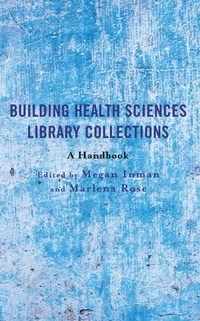
Building Health Sciences Library Collections
A Handbook
1st Edition
Published on 3. July 2023
156 pages
979-8-216-20402-2 (ISBN)
Description

Selected as a 2025 Doody's Core Title
Collection development is a cornerstone of librarianship; and with the rapid pace that library materials are produced, a thorough knowledge of collection development is more important than ever before. However, with the myriad of choices available, creating a meaningful collection can be a daunting task. Building and maintaining a health sciences library collection can be a challenge, especially in scenarios where there is no dedicated collection services department or collection development librarian. Often in library school curriculum, collection development strategies are discussed, but specific examples of bibliographic sources may not be covered in detail, particularly for health sciences resources.
Many collection development books often discuss the creation of policies, budgeting practices, and usability. This book is a comprehensive reference guide for those who will be creating and curating their library health sciences collections. Moving beyond a traditional list of titles, this guide will focus on several formats and areas. It features specific bibliographic information for top resources for a variety of subject areas and in a variety of formats. This book is designed for all librarians, whether new or experienced. Each chapter of this title does a deep dive into an area of health sciences library collection building, as well as covering how to maintain a current collection.
This book is designed to provide readers with a resource to lean on in determining the best bets in providing their users with health sciences resources to support curriculum, practice, and other user needs. Readers who are interested in gleaning techniques for maintaining their health sciences library collection will also benefit from this how-to guide as it details the deselection process. Every health sciences librarian, no matter their experience, can benefit from this reference guide.
Collection development is a cornerstone of librarianship; and with the rapid pace that library materials are produced, a thorough knowledge of collection development is more important than ever before. However, with the myriad of choices available, creating a meaningful collection can be a daunting task. Building and maintaining a health sciences library collection can be a challenge, especially in scenarios where there is no dedicated collection services department or collection development librarian. Often in library school curriculum, collection development strategies are discussed, but specific examples of bibliographic sources may not be covered in detail, particularly for health sciences resources.
Many collection development books often discuss the creation of policies, budgeting practices, and usability. This book is a comprehensive reference guide for those who will be creating and curating their library health sciences collections. Moving beyond a traditional list of titles, this guide will focus on several formats and areas. It features specific bibliographic information for top resources for a variety of subject areas and in a variety of formats. This book is designed for all librarians, whether new or experienced. Each chapter of this title does a deep dive into an area of health sciences library collection building, as well as covering how to maintain a current collection.
This book is designed to provide readers with a resource to lean on in determining the best bets in providing their users with health sciences resources to support curriculum, practice, and other user needs. Readers who are interested in gleaning techniques for maintaining their health sciences library collection will also benefit from this how-to guide as it details the deselection process. Every health sciences librarian, no matter their experience, can benefit from this reference guide.
More details
Other editions
Additional editions
Book
07/2023
Rowman & Littlefield Publishers
€123.70
Shipment within 3-4 weeks
Persons
Megan Inman, MLIS, is the collection development librarian at East Carolina University, William E. Laupus Health Sciences Library. She has served in this role for the past seven years, following a number of years in reference services. She has a BA in psychology from Queens University of Charlotte and an MLIS from the University of Pittsburgh. Megan serves on the editorial board for Journal of Electronic Resources in Medical Libraries. She has published several book chapters, articles, reviews, and an edited book. She has served on numerous national and regional committees in varying leadership roles.
Marlena Rose is the assistant director of collections & historical services at the Laupus Health Sciences Library at East Carolina University. She has presented at library conferences and written articles on collection development and technical services. Rose holds an MLIS from San Jose State University and a BA in communications from the University of Memphis. Rose previously served as chair of the Technical Services Caucus of the Medical Library Association (MLA) and has served on national and regional committees associated with health science librarianship. She is certified by MLA as an Academy of Health Information Professional at the senior level.
Marlena Rose is the assistant director of collections & historical services at the Laupus Health Sciences Library at East Carolina University. She has presented at library conferences and written articles on collection development and technical services. Rose holds an MLIS from San Jose State University and a BA in communications from the University of Memphis. Rose previously served as chair of the Technical Services Caucus of the Medical Library Association (MLA) and has served on national and regional committees associated with health science librarianship. She is certified by MLA as an Academy of Health Information Professional at the senior level.
Content
Preface
Acknowledgments
1 Collection Development in the Health Sciences
Megan Inman
2 Developing Diverse and Inclusive Collections
Derek Marshall
3 Managing Collections through Deselection Processes
Marlena Rose and Alessia Zanin-Yost
4 Keeping Up to Date with Emerging Topics in Collections
Matthew Noe
5 Developing Your Medicine Collection
Robyn Gleasner
6 Developing Your Nursing Collection
Robyn Gleasner
7 Developing Your Allied Health Collection
Alessia Zanin-Yost
8 Open Educational Resources in Health Sciences Collections: Great Promise, Great Challenges
Kerry Sewell and Jeanne Hoover
9 Nontraditional Online Collections
Megan Inman
About the Editors
About the Contributors
Acknowledgments
1 Collection Development in the Health Sciences
Megan Inman
2 Developing Diverse and Inclusive Collections
Derek Marshall
3 Managing Collections through Deselection Processes
Marlena Rose and Alessia Zanin-Yost
4 Keeping Up to Date with Emerging Topics in Collections
Matthew Noe
5 Developing Your Medicine Collection
Robyn Gleasner
6 Developing Your Nursing Collection
Robyn Gleasner
7 Developing Your Allied Health Collection
Alessia Zanin-Yost
8 Open Educational Resources in Health Sciences Collections: Great Promise, Great Challenges
Kerry Sewell and Jeanne Hoover
9 Nontraditional Online Collections
Megan Inman
About the Editors
About the Contributors
