

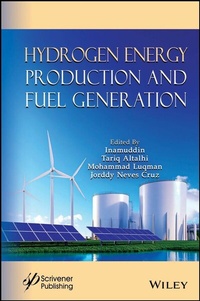
Hydrogen Energy Production and Fuel Generation
Description

Invest in the future of the planet by delving into this comprehensive guide on hydrogen energy, a critical solution for sustainable power, and gain the knowledge to contribute to this revolutionary field.
Hydrogen energy has emerged as one of the most promising solutions to the energy and environmental challenges of the 21st century. As we look for sustainable and clean alternatives to replace fossil fuels, hydrogen stands out not only for its abundance but also for its potential to revolutionize diverse sectors such as transport, industry, and energy generation. However, for this revolution to become a reality, a comprehensive and interdisciplinary understanding of the technologies and methods related to the production, storage, distribution, and utilization of hydrogen is essential. The subject of hydrogen energy production and fuel generation is closely linked to the broader goals of sustainability, energy transition, and climate change mitigation. The development of efficient and cost-effective methods to produce hydrogen from renewable sources, such as electrolysis powered by renewable electricity, contributes to the shift towards a green energy economy. Additionally, the integration of hydrogen with renewable energy systems enables the storage and utilization of intermittent renewable sources, enhancing the reliability and stability of the grid.
This book encompasses principles and advancements in chemistry, physics, materials science, engineering, and environmental sciences. This interdisciplinary approach fosters collaboration and knowledge exchange, leading to breakthroughs in hydrogen production, storage, and utilization. In terms of industry development, the book addresses the growing demand for alternative energy sources in sectors such as transportation, industry, and power generation. As the world moves towards decarbonization and reducing reliance on fossil fuels, hydrogen has emerged as a promising solution due to its high energy density and potential for zero-emission operations. The book explores the practical applications of hydrogen energy, including fuel cell vehicles, hydrogen-powered industrial processes, and integrated energy systems. By addressing this comprehensive context, the book serves as a valuable resource for researchers, professionals, and policymakers seeking to understand and contribute to the advancement of this critical field.
More details
Other editions
Additional editions
Persons
Inamuddin, PhD, is an assistant professor at the Department of Applied Chemistry, Zakir Husain College of Engineering and Technology, Faculty of Engineering and Technology, Aligarh Muslim University, Aligarh, India. He has extensive research experience in multidisciplinary fields of analytical chemistry, materials chemistry, electrochemistry, renewable energy, and environmental science. He has worked on different research projects funded by various government agencies and universities and is the recipient of awards, including the Department of Science and Technology, India, Fast-Track Young Scientist Award and Young Researcher of the Year Award 2020 from Aligarh Muslim University. He has published about 210 research articles in various international scientific journals, many book chapters, and dozens of edited books, many with Wiley-Scrivener.
Tariq Altalhi, PhD, is an associate professor in the Department of Chemistry at Taif University, Saudi Arabia. He received his doctorate degree from University of Adelaide, Australia in the year 2014 with Dean's Commendation for Doctoral Thesis Excellence. He has worked as head of the Chemistry Department at Taif university and Vice Dean of Science College. In 2015, one of his works was nominated for Green Tech awards from Germany, Europe's largest environmental and business prize, amongst top 10 entries. He has also co-edited a number of scientific books.
Mohammad Luqman, PhD, has more than 12 years of post-PhD experience in teaching, research, and administration. Currently, he is serving as an assistant professor of chemical engineering at Taibah University, Saudi Arabia. Moreover, he served as a post-doctoral fellow at Artificial Muscle Research Center, Konkuk University, South Korea, and he earned his PhD degree in the field of ionomers (Ion-containing Polymers), from Chosun University, South Korea. He has edited three books and published numerous scientific papers and book chapters. He is an editor for several journals, and he has been awarded several grants for academic research.
Jorddy Neves Cruz is a researcher at the Federal University of Pará and the Emilio Goeldi Museum. He has experience in multidisciplinary research in the areas of medicinal chemistry, drug design, extraction of bioactive compounds, extraction of essential oils, food chemistry and biological testing. He has published several research articles in scientific journals and is an associate editor of the Journal of Medicine.
Content
Preface xxiii
1 Introduction to the Hydrogen Energy Production and Fuel Generation 1
Gazi Farhan Ishraque Toki and M. Khalid Hossain
1.1 Introduction 2
1.2 Hydrogen, Types, and Its Properties 4
1.3 Hydrogen Production Methods 6
1.4 H2 Storage Approaches 12
1.5 Transportation and Distribution of Hydrogen 17
1.6 Applications of Hydrogen Fuel 21
1.7 Future Outlook and Challenges 23
1.8 Conclusion 27
2 Solar-Driven Water Splitting for Hydrogen Production 37
Leena V. Bora, Ritul Tiwari, Ananya Singh and Nisha V. Bora
2.1 Introduction 37
2.2 Water Splitting Techniques Driven by Solar Energy 38
2.3 Recent Advancements 53
2.4 Market Perspective and Demand 55
2.5 Challenges 56
2.6 Conclusions 56
3 Advances in Catalysts and Materials for Hydrogen Production 63
Adriana Marizcal-Barba, Karina Nava-Andrade, Suresh Ghotekar, Mamoun Fellah and Alejandro Pérez-Larios
4 Dark Fermentation: The Path to an Economically and Environmentally Viable Energy Source 95
Ballesteros-Lopez, M.E., Rodríguez-Villa, A.G., Cruz-Salas, A.A., Alvarez-Zeferino J.C., Galicia-Piedra, M.L. and Hernández-Soriano, A.I.
4.1 Introduction 96
4.2 Dark Fermentation (DF) 96
4.3 Energy Comparison of BioH2 with Other Energy Sources 106
4.4 Perspectives 110
4.5 Final Comments 114
5 Metal Hydrides for Hydrogen Storage 121
Urwa Muaaz, Syed Ali Raza Naqvi, Tauqir A. Sherazi, Sadaf Ul Hassan, Naseem Abbas, Mazhar Hussain, Muhammad Rehan Hasan ShahGilani, Mahreen Imam and Aisha Yasin
5.1 Introduction 122
5.2 Metal Hydrides 123
5.3 Classes of Metal Hydrides 124
5.4 Techniques that Generate Nanoscale or Nanocrystalline Metal Hydrides 133
5.5 Morphological Effects on the Characteristics of Hydrogen Storage 137
5.6 Hydrogen Storage Tank 144
5.7 Comparison between H2 Storage Alternatives 146
5.8 Material Properties and Application Requirements 147
6 Solid-State Hydrogen Storage Materials 161
K.R. Hariprasath, M. Priyadharshini, P. Balaji and T. Pazhanivel
6.1 Introduction 161
6.2 Hydrogen as Fuel 163\
6.3 Hydrogen Storage Techniques 165
6.4 Physically Bound Hydrogen Storage 168
6.5 Chemically Bound Hydrogen Storage 170
6.6 Carbonaceous Materials for Hydrogen Storage 172
6.7 Non-Carbonaceous Materials for Hydrogen Storage 175
6.8 The Adsorption Models for Hydrogen Storage 177
6.9 Application for Energy Storage and Conversion 179
6.10 Challenges and Future Prospects 182
6.11 Conclusion 185
7 Nanomaterials for Hydrogen Storage 189
Aisha Yasin, Syed Ali Raza Naqvi, Tauqir A. Sherazi, Sadaf Ul Hassan, Muhammad Ramzan Saeed Ashraf Janjua, Muhammad Rehan Hasan Shah Gilani, Naseem Abbas, Mazhar Hussain and Urwa Muaaz
7.1 Introduction 190
7.2 Thermodynamics and Kinetics of Hydrogen Storage 191
7.3 Strategies for Enhanced Hydrogen Storage Capacity 193
7.4 Nanostructuring 195
7.5 Methods for Hydrogen Storage 198
7.6 Carbon Nanomaterials 200
7.7 Nano-Objects with a Composite Architecture 203
7.8 Metal and Metal Oxide Nanoparticles 208
7.9 Metal Hydride Nanoparticles 210
7.10 Conclusion and Future Outlook 214
8 Carbon-Based Materials for Hydrogen Storage 221
Ahmad Hussain, Nawishta Jabeen, Tafheem ul Haq and Masooma Zahra
8.1 Introduction 222
8.2 Hydrogen as a Green Energy System 224
8.3 Hydrogen Storage Carbon-Based Materials 226
8.4 Mechanism of Hydrogen Adsorption 232
8.5 Factors Affecting the Hydrogen Storage on Carbon-Based Materials 237
8.6 Hydrogen for Energy Application 240
8.7 Challenges and Future Perspectives 241
8.8 Conclusion 242
9 Composite Materials for Hydrogen Storage 247
Serkan Baslayici, Mehmet Bugdayci, Ozan Coban and Candeniz Uysal
9.1 Introduction 248
9.2 The Importance of Hydrogen for Energy Storage 248
9.3 Hydrogen Storage Methods 250
9.4 The Role of Composite Materials in Hydrogen Storage 255
9.5 Design and Structure of Composite Materials 257
9.6 Hydrogen Storage Performance and Analysis 259
10 Properties and Characteristics of Hydrogen 269
Vyacheslav S. Protsenko and Alexander B. Velichenko
10.1 Short History of Discovery and Utilization of Hydrogen 269
10.2 Occurrence of Hydrogen in Nature 272\
10.3 Hydrogen Atom 273
10.4 Hydrogen Molecule 274
10.5 Parahydrogen and Orthohydrogen 275
10.6 Hydrogen Isotopes 276
10.7 Physical Properties of Hydrogen 277
10.8 Chemical and Electrochemical Properties of Hydrogen 278
10.9 Different Colors of Hydrogen 281
10.10 Conclusions 284
11 Technological Innovations and Research Frontiers in Hydrogen Energy 289
Charles Rashama, Clemence Kudakwashe Simende and Wilfred Chipangura
11.1 Introduction 289
11.2 Innovations in Hydrogen Production Technologies 291
11.3 Innovations in Hydrogen's Energy Applications 298\
11.4 Research in Hydrogen Energy 300
11.5 Future Perspectives on Hydrogen Energy 311
12 Organic Hydrides for Hydrogen Storage 317
Melkamu Biyana Regasa and Shibiru Yadeta Ejeta
12.1 Introduction 318
12.2 Importance and Sources of Hydrogen 319\
12.3 Importance of Hydrogen Energy 320
12.4 Methods for Clean Hydrogen Production 321
12.5 Methods of Storing Hydrogen Energy 322
12.6 Organic Hydrides 324
12.7 Requirements for Hydrogen Chemical Storage 326
12.8 Application of Organic Hydrides in Hydrogen Storage 327
12.9 Comparison of Organic Hydrides and Metal-Organic Hydrides 332
12.10 Conclusions and Future Perspectives 333
13 Microbial Electrolysis for Hydrogen Generation 341
Figen Balo and Lutfu S. Sua
13.1 Introduction 342
13.2 Design of Microbial Electrolysis Cells 347
13.3 AHP Analysis 353
13.4 Conclusions 366
14 Hydrogen in Power Generation: Fuel Cells and Combustion 373
Muthudineshkumar Ramaswamy, Vinoth Thangarasu, C. Ponmurugan Muthusamy, S. Jaisankar, T. Balamurugan, K. Manoj Prabhakar, Santhoshkumar and Gnana Sagaya Raj
14.1 Introduction 374
14.2 Hydrogen Utilization in the Power Generation Sector 380
14.3 Hydrogen Utilization in Transportation Sector 383
14.4 Conclusions and Future Research Outlook 384
15 Thermophilic Bacteria for Biohydrogen Production 389
Chun Yuan Tan and Adeline Su Yien Ting
15.1 Introduction 390
15.2 Diversity of Thermophilic Bio-H2 Producers 392
15.3 Significance of Thermophilic Isolates in Bio-H2 Production 404
15.4 Processing Conditions and Technological Advances that Influence Bio-H2 Yield 410
15.5 Conclusion 415
16 Economic Viability and Market Potential of Hydrogen Energy 427
Muthudineshkumar Ramaswamy, S. Jaisankar, R. Karthikeyan, P. Arunachalam, P. Rajasekaran, Vinoth Thangarasu, C. Ponmurugan Muthusamy and K. Sobha
16.1 Introduction 428
16.2 Hydrogen Energy and Transition of Fuel Cell 433
16.3 Economic and Environmental Impacts 434
16.4 Future Scope 437
16.5 Conclusion 437
17 Methods for Hydrogen Energy Production and Fuel Generation 441
Mukilarasan Nedunchezhiyan, Ravikumar Jayabal, Sathiyamoorthy Ramalingam and Jayabalan Chelladurai
17.1 An Overview of Massive Amounts of Hydrogen Production 442
17.2 Fuel Cell 447
17.3 Hydrogen as a Fuel 448
17.4 Environmental Impact of Hydrogen Fuel 451
17.5 Conclusion 453
18 Infrastructure and Distribution Challenges for Hydrogen Energy 457
Vimalananth V. T., Gnanamoorthi V., Jayabalan C., Muthudineshkumar Ramaswamy, N. Mukilarasan and P. Prasannaa
18.1 Introduction 458
18.2 Hydrogen Energy Overview 458
18.3 Infrastructure Challenges on Hydrogen Energy 460
18.4 Distribution Challenges 463
18.5 Technological Hurdles 464
18.6 Regulatory and Policy Challenges 465
18.7 Future Outlook 466
18.8 Conclusion 468
19 Liquid Organic Hydrogen Carriers (LOHCs) 473
Devaraj Naik Bukke, Muthudineshkumar Ramaswamy, Vinoth Thangarasu and Santhoshkumar Annamalai
19.1 Introduction 474
19.2 Concepts and Development 475
19.3 Hydrogenation and Dehydrogenation Processes 475
19.4 Advantages of LOHCs 477
19.5 Disadvantages of LOHCs 478
19.6 Safety Issues in Liquid Organic Hydrogen Carriers 479
19.7 Application of Liquid Organic Hydrogen Carriers (LOHCs) 482
19.8 Conclusions 486
20 Grid-Scale Hydrogen Energy Systems Projects and Implementation 489
Chinmay Deheri, Binayak Pattanayak, Abinash Mahapatro and Saroj Kumar Acharya
20.1 Introduction 490
20.2 Different Applications of Hydrogen in the Energy Sector 494
20.3 Green Hydrogen Production 495
20.4 Re-Electrification of Hydrogen Energy 498
20.5 Projects and Implementation 500
20.6 Conclusion 503
21 Hydrogen in Industrial Processes 509
Guocai Tian
21.1 Introduction 510
21.2 Preparation, Storage, and Transportation of Hydrogen 511
21.3 The Application of Hydrogen in the Metallurgical Industry 520
21.4 Hydrogen Application in the Petroleum and Chemical Industry 563
21.5 Main Constraints of Large-Scale Industrial Application of Green Hydrogen 586
21.6 Future Path and Strategy of Green Hydrogen in the Industrial Field 587
Acknowledgment 588
References 588
Index 605
Preface
Hydrogen energy has emerged as one of the most promising solutions to the energy and environmental challenges of the 21st century. As we look for sustainable and clean alternatives to replace fossil fuels, hydrogen stands out not only for its abundance but also for its potential to revolutionize diverse sectors such as transport, industry, and energy generation. However, for this revolution to become a reality, a comprehensive and interdisciplinary understanding of the technologies and methods related to the production, storage, distribution, and utilization of hydrogen is essential. The subject of hydrogen energy production and fuel generation is closely linked to the broader goals of sustainability, energy transition, and climate change mitigation. The development of efficient and cost-effective methods to produce hydrogen from renewable sources, such as electrolysis powered by renewable electricity, contributes to the shift toward a green energy economy. Additionally, the integration of hydrogen with renewable energy systems enables the storage and utilization of intermittent renewable sources, enhancing the reliability and stability of the grid.
From a disciplinary perspective, the subject encompasses principles and advancements in chemistry, physics, materials science, engineering, and environmental sciences. Researchers in these disciplines are exploring innovative methods and technologies to produce hydrogen, store it efficiently, and utilize it as a clean fuel. This interdisciplinary approach fosters collaboration and knowledge exchange, leading to breakthroughs in hydrogen production, storage, and utilization. In terms of industry development, the book addresses the growing demand for alternative energy sources in sectors such as transportation, industry, and power generation. As the world moves toward decarbonization and reducing reliance on fossil fuels, hydrogen has emerged as a promising solution due to its high energy density and potential for zero-emission operations. The book explores the practical applications of hydrogen energy, including fuel cell vehicles, hydrogen-powered industrial processes, and integrated energy systems. Overall, the subject of hydrogen energy production and fuel generation represents a multidisciplinary effort that drives innovation, supports sustainable development, and contributes to the global transition toward a low-carbon future. By addressing this comprehensive context, the book provides a valuable resource for researchers, professionals, and policymakers seeking to understand and contribute to the advancement of this critical field. The chapters included in the book are summarized below:
Chapter 1 addresses the viability of a hydrogen (H2)-based economy, focusing on improving methods for making, storing, conveying, distributing, and modifying H2, as well as examining prospects and barriers. The chapter then discusses H2 production methods alongside H2 storage, transport, and distribution technologies. It explains how overcoming hurdles in H2 applications can lead to the implementation of large-scale H2 production, distribution, and transportation systems.
Chapter 2 explains various existing water-splitting methods for hydrogen production. The techniques discussed rely on solar energy as the main energy source, emphasizing that the sun is an unlimited pool of energy that can be conveniently harnessed.
Chapter 3 reviews recent advancements in catalysts and materials for sustainable hydrogen production, emphasizing alternative methods such as water electrolysis, photoelectrochemical water splitting, and biomass gasification. Key developments include the transition from noble metal-based to more abundant, cost-effective catalysts, advancements in nanostructured catalysts, and the integration of computational tools for material optimization, all contributing to enhanced efficiency and sustainability in hydrogen production processes.
Chapter 4 details the most relevant aspects of biohydrogen, including its generation through dark fermentation and the main production parameters. It specifies its differences from other processes and fuels, as well as the challenges and opportunities of biohydrogen in the current context.
Chapter 5 explains the use of metal hydrides for hydrogen storage. The global energy crisis has opened the door to new energy sources. Hydrogen carries three times more energy content than fossil fuel. The chapter also explains what metal hydrides are, their types, synthesis, morphology, and their effect on hydrogen storage.
Chapter 6 elaborates on advanced materials designed to safely and efficiently store hydrogen for various applications, including energy storage and transportation. These materials are crucial for overcoming challenges associated with the storage and use of hydrogen as a clean energy carrier under ambient conditions for easy transportation.
Chapter 7 explores the importance of hydrogen storage in the renewable energy process. This chapter explains various key factors that affect the hydrogen storage mechanism, such as the thermodynamics and kinetics of hydrogen. Different objects/nanomaterials (nanoparticles and nanocomposites) that support hydrogen storage are discussed in detail with suitable examples.
Chapter 8 discusses recent technological advancements regarding carbon-based materials for hydrogen storage. Hydrogen (H2) energy is emerging as a clean alternative to fossil fuels. Crucial factors for its storage include pressure, temperature, kinetics, heat transfer, and capacity. This chapter explores carbon-based materials, such as graphene and activated carbon, for efficient H2 storage, emphasizing performance, monitoring, and tuning techniques.
Chapter 9 provides detailed information about the importance of hydrogen energy storage. It explains hydrogen storage methods: physical methods, chemical storage methods, adsorption and desorption storage methods, and molecular storage methods. It also explains the role of composite materials in hydrogen storage. In the last part, composite material design parameters and their effects are investigated.
Chapter 10 reports the literature data regarding the history of the discovery and utilization of hydrogen, its prevalence in nature, atomic and molecular structures, isotope properties, key physical and chemical characteristics defining hydrogen's use as a fuel, and the conditional color indexing of hydrogen.
Chapter 11 discusses technological innovations applicable to hydrogen production, use, and research. The discussion explores cleaner ways and resources for hydrogen production compared to fossil-based hydrogen. It further outlines how hydrogen can be used in many ways, especially in energy applications. The chapter concludes by reporting ongoing research in the hydrogen energy space.
Chapter 12 presents the applications of organic hydrides for the storage and transfer of hydrogen energy. The chapter also discusses the various types of organic hydrides that can be used to store hydrogen based on chemical methods. The potential of organic hydrides for carrying hydrogen with high storage capabilities and safe handling is also described.
Chapter 13 starts with a comprehensive overview of microbial electrolysis cells. It then provides detailed information related to the design of microbial electrolysis cell generation. The most effective substrate among the diverse substrates used in microbial electrolysis cells for H2 generation is determined using an AHP analysis.
Chapter 14 introduces hydrogen in power generation, explores catalysts for steam reforming, and examines partial oxidation. It covers hydrogen's use in power generation and the transportation sector.
Chapter 15 discusses the potential of generating biohydrogen using thermophilic bacteria. Both temperature and partial pressure of hydrogen are known to influence the formation of biohydrogen. The application of thermophilic bacteria is expected to fulfill the requirements of generating biohydrogen efficiently under these conditions, revealing their potential as biohydrogen producers.
Chapter 16 covers hydrogen energy, including production, delivery, and storage. It explores hydrogen's chemistry in fuel cells, the transition to fuel cells, and their economic and environmental impacts. Future prospects of fuel cells are also discussed.
Chapter 17 explores hydrogen energy production methods like electrolysis and steam methane reforming, emphasizing environmental benefits and renewable energy use. It discusses advancements in technology, scalable production, storage, transportation, and safety standards, highlighting global efforts to integrate hydrogen into sustainable energy infrastructure.
Chapter 18 explores hydrogen energy's promise as a clean energy source, focusing on challenges in production, storage, transportation, and distribution infrastructure. It addresses key factors such as policy, technology, and investment needed to fully harness hydrogen's potential for a sustainable future.
Chapter 19 discusses liquid organic hydrogen carriers' storage and transportation. Several applications and advantages are discussed in detail. Additionally, the role of safety issues in liquid organic hydrogen carriers is examined. The major focus is on communicating the advantages, disadvantages, drawbacks, and future feasibility of available procedures reported in the literature.
Chapter 20 discusses the prospects of hydrogen energy and its application in the power production, storage, and transportation sectors. The...
