

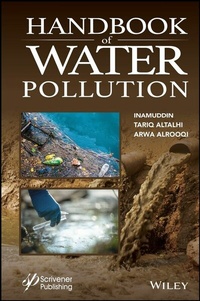
Handbook of Water Pollution
Description

Handbook of Water Pollution discusses a wide range of contaminants heavily affecting our environment and water bodies. The chapters discuss heavy metals, metalloids, pesticides, explosives, toxic chemicals, dyes, plastics, e-wastes, fertilizers, detergents, nitrates/nitrites, phosphates, hydrocarbons, and fecal wastes, along with their sources of action against our environment, their methods of analysis, and finally, their treatments are all presented in detail.
Our environment is heavily affected due to extreme human activities. Environmental pollution is a major concern worldwide. Within this, water pollution is one of the major challenges that puts the total ecology at risk. Water pollution is alarming everywhere; many governing authorities believe it is also an unavoidable result of human activity. However, the economic cost of water pollution far outweighs the benefits of skimping on its cause. Water pollution is not just merely related to financial cost but related to all living beings. Toxic waste is getting into the water bodies in various regions, causing many illnesses in humans and poisoning other living things. The destruction of any single component of our ecosystem can have a devastating effect on our biodiversity. Therefore, it is necessary to understand the causes of pollution, their nature and mechanism, and, at the same time, study the remedies.
The major causes of water pollution are industrial waste, sewage, plastics, oil leakage, biological organisms, toxic chemicals and radioactive waste, and so on. A tremendous amount of research work is going on around the world to understand the causes, their mechanism, and solutions. Many new works are published every day, therefore it's important to gather some of the most relevant findings in one place. This will serve as a link between collected knowledge and current advancements, while also facilitating future thinking.
More details
Other editions
Additional editions
Persons
Inamuddin, PhD, is an assistant professor at the Department of Applied Chemistry, Zakir Husain College of Engineering and Technology, Faculty of Engineering and Technology, Aligarh Muslim University, Aligarh, India. He has extensive research experience in multidisciplinary fields of analytical chemistry, materials chemistry, electrochemistry, renewable energy, and environmental science. He has worked on different research projects funded by various government agencies and universities and is the recipient of awards, including the Department of Science and Technology, India, Fast-Track Young Scientist Award and Young Researcher of the Year Award 2020 from Aligarh Muslim University. He has published about 210 research articles in various international scientific journals, 18 book chapters, and 170 edited books with multiple well-known publishers. His current research interests include ion exchange materials, a sensor for heavy metal ions, biofuel cells, supercapacitors, and bending actuators.
Tariq Altalhi, PhD, is working as an associate professor in the Department of Chemistry at Taif University, Saudi Arabia, where he has served as the head of the chemistry department and vice dean of the science college. He has co-edited various scientific books and established key contacts in major industries in Saudi Arabia. His group is involved in fundamental multidisciplinary research in nanomaterial synthesis and engineering, characterization, and application in molecular separation, desalination, membrane systems, drug delivery, and biosensing.
Arwa Alrooqi is pursuing her PhD in appplied chemistry and working as lecturer at the Department of Chemistry, Faculty of Science, Al Baha University, Saudi Arabia. Her thesis title is "Smart Organic Semiconductors Materials". She has published several research articles in the journals of international repute. She is actively involved in fundamental multidisciplinary research in the area of organic semiconductors and nanomaterials synthesis and engineering, characterization, and their application in smart windows.
Content
1 Introduction to Water Pollution 1
Hira Munir, Areeba Kashaf, Mahnoor Masood, Rabia Sajid, Hira Amjad, Tahreem Shehzadi and Jawayria Najeeb
1.1 Pollution 2
1.2 What is Water Pollution? 2
1.3 Prevalence of Water Pollution 4
1.4 Categories of Water Pollution 4
1.5 Water Pollutants 7
1.6 Kinds of Water Pollution 11
1.7 Determination of Water Quality Parameters 13
1.8 Sources of Water Pollution 15
1.9 Effects of Water Pollution on Humans and Animals 17
1.10 Prevention of Water Pollution 19
1.11 Control and Prevention of Water Pollution by Biotechnology 22
1.12 Conclusion 23
2 Impact of Water Pollution & Perspective Techniques to Mitigate It: An Overview 29
Ambika Sudan, Arpita Ghosh, Mehak Verma and Pushpachaudhary Tomar
2.1 Introduction 30
2.2 Causes of Water Pollution 33
2.3 Effects of Water Pollution on Plant Growth 35
2.4 Techniques of Treating Water Pollution 37
2.5 Removal of Pollutants Through Different Nanomaterial 48
2.6 Discussion and Conclusion 56
3 Pollution of Ground and Surface Waters with Agrochemicals 65
Aloo B. N.
3.1 Introduction 65
3.2 A Recounting of the Global Production and Consumption of Agrochemicals 67
3.3 Characteristics of Agrochemicals 70
3.4 Occurrences and Levels of Pollution 70
3.5 Fates of Agrochemicals in Ground and Surface Waters 81
3.6 Emerging Views and Perspectives 85
3.7 Concluding Remarks 86
4 Fecal Waste Drives Antimicrobial Resistance: Source Tracking, Wastewater Discriminant Analysis and Management 97
Eliezer Ladeia Gomes, Giovanna Velicka Monteiro Vallio, Laura Plazas Tovar, Lucas Bragança de Oliveira, Luiz Sidney Longo Junior, Sarah Isabel Pinto Monteiro do Nascimento Alves, Vinícius Matheus Silva Macedo and Romilda Fernandez-Felisbino
4.1 Introduction 98
4.2 Antibiotics/ARB/ARGs: Source Tracking 101
4.3 Fecal Pollution and the Public Health Risks 104
4.4 Fecal Indicator Bacteria and Discriminant Analysis 108
4.5 Management Strategies to Combat Antibiotic Resistance 109
4.6 Conclusion 112
5 Harmful Effects of Water Pollution 123
C. Justin Dhanaraj
5.1 Introduction 123
5.2 Physical Factors 124
5.3 Chemical Factors 126
5.4 Biological Factors 140
5.5 Conclusion 146
6 Parasites: Sources, Method of Analysis and Treatment 149
Gopikrishnan, T.
6.1 Introduction 149
6.2 Method of Analysis 152
6.3 Methods to Find Concentration of Parasites 154
6.4 Procedures for Enumeration of Parasites 157
6.5 Waterborne Protozoan Parasites 161
6.6 Protozoan Parasite Testing in Water 162
6.7 Waterborne Helminths 163
6.8 Water Treatment 166
6.9 Nanotechnology 170
6.10 Conclusions 174
7 Oils: Source, Method of Analysis and Treatment 181
Hüseyin Kara, Mustafa Talha Gönüllü, Ismail Tarhan, Fatih Erci, Aslan Tas and Fatih Durmaz
7.1 Introduction 182
7.2 Oils Causing Pollution and Their Sources 184
7.3 Method of Analysis 194
7.4 Treatment 198
7.5 Conclusion 224
8 Phosphate: Sources, Method of Analysis and Treatment 235
S. Sathiyamurthi, S. Nalini and M. Sivasakthi
8.1 Introduction 235
8.2 Sources of Phosphate Pollution in Water 236
8.3 Method of Analysis 237
8.4 Phosphate Removal Treatment 239
8.5 Conclusion 264
9 Endocrine Disruptors: Sources, Method of Analysis and Treatment 281
María-José Luján-Facundo, Eva Ferrer-Polonio, María-Amparo Bes Piá and J.A. Mendoza-Roca
9.1 Introduction 282
9.2 Parabens: Sources, Method of Analysis and Treatment 287
9.3 Alkylphenol Ethoxylates: Sources, Method of Analysis and Treatment 295
9.4 Bisphenols: Sources, Method of Analysis and Treatment 301
9.5 Phthalates: Sources, Method of Analysis and Treatment 309
9.6 Conclusions 315
10 Water Pollution by Heavy Metals and Their Impact on Human Health 333
Biplab Roy, Biswanath Bhunia, Tarun Kanti Bandyopadhyay, Shamim Ahmed Khan, Nishithendu Bikash Nandi and Pinku Chandra Nath
10.1 Introduction 334
10.2 Sources of Heavy Metals 335
10.3 Heavy Metals in Water and Their Toxic Effect on Human Health 337
10.4 Different Water Treatment Techniques for Removal of Heavy Metal from Polluted Water 343
10.5 Conclusion 348
11 Dyes: Sources, Method of Analysis and Treatment 353
K. Ravichandran, N. Chidhambaram, M. Ayyanar, P. Kavitha, Arun Thirumurugan, S. Sriram and R. Shalini
11.1 Introduction 354
11.2 Classification of Dyes 355
11.3 Analysis of Dye Pollution 355
11.4 Treatments for Removing Dye Pollution from Water 357
11.5 Conclusions 366
12 Pharmaceutical Pollution of Water Bodies: Sources, Impacts, and Mitigation 371
Suby Mon Benny, Sriparna Datta Gupta, Shahi P. Ismail and Dileep Francis
12.1 Introduction 372
12.2 Pharmaceutical Pollution: The Global Scenario 374
12.3 Sources of Pharmaceutical Pollution 382
12.4 Factors Affecting Pharmaceutical Pollution 388
12.5 Impacts of Pharmaceutical Pollution 390
12.6 Mitigation and Surveillance 398
12.7 Conclusions and Perspectives 405
13 Instrumental Testing of Quality of Water 417
Amita Chaudhary and Ankur Dwivedi
13.1 Introduction 417
13.2 Conclusion 437
14 Catalytic Membranes for Water Pollution 441
J.E. Castanheiro, P.A. Mourão, I. Cansado and M.E. Lopes
14.1 Introduction 441
14.2 Configuration of Reactors 442
14.3 Membrane Reactor for Water Treatment 445
14.4 Conclusions 448
15 LDH-Based Materials for Photocatalytic Dye Degradation 453
Priyadharshini M., Bhuvaneswari K., Palanisamy G. and Pazhanivel T.
15.1 Introduction 453
15.2 Dye Degradation 455
15.3 Factors Affecting Efficient Degradation 457
15.4 Layered Double Hydroxide Materials (LDH) 459
15.5 Polyoxometalates Metal-Based LDH Composite 459
15.6 Carbon-Based LDH Composite 461
15.7 Semiconductor-Based LDH Composite 462
15.8 Conclusion and Future Perspectives 465
16 Biomineralization as a Strategy for the Bioremediation of Toxic Metals--Contaminated Water 471
Charles Rashama, Munashe Maposa, Knowledge Nyenyayi and Marko Chigondo
16.1 Introduction 472
16.2 Minerals Commonly Found in Water and their Effects 473
16.3 Justification for Toxic Metal Detoxification 474
16.4 Water-Based Metal Detoxification through Biomineralisation 475
16.5 Concluding Remarks and Future Outlook 486
17 Phytoremediation of Radioactive Pollutants 491
Siratun Montaha. S. Shaikh, Puspita Barik, Smita S. Aditya, M. T. Jowin Joseph, M. Suresh Kumar and P. V. Nidheesh
17.1 Introduction 492
17.2 Advancement in Methodologies for Phytoremediation of Radionuclides: From Conventional to Novel Approaches 493
17.3 Preliminary Assessment of the Contaminated Site for Phytoremediation 501
17.4 Screening of Plants for Effective Uptake of Radionuclides 502
17.5 Augmentation for Radionuclide Bioavailability 506
17.6 Post-Phytoremediation Management of Radionuclides 508
17.6.1 Pre-Treatment of Biomass 508
17.6.2 Final Disposal Methods 510
17.7 Conclusion 512
Acknowledgment 513
References 513
Index 523
1
Introduction to Water Pollution
Hira Munir1*, Areeba Kashaf1, Mahnoor Masood1, Rabia Sajid1, Hira Amjad1, Tahreem Shehzadi1 and Jawayria Najeeb2
1Department of Biochemistry, Government College Women University Faisalabad, Faisalabad, Pakistan
2Department of Chemistry, University of Gujrat, Gujrat, Pakistan
Abstract
Contamination in natural resources is principally pollution; water pollution is one of them. Natural water is pure and useable but nowadays it is polluted due to human activities. When different contaminants enter water bodies like rivers, lakes and oceans, they make the water unsafe for human consumption and also disturb the aquatic ecosystem. Water pollution from a point source or non-point sources has drastic effects on marine life and human health. Due to urbanization, industrialization increased. Industries, without treating that chemical-containing water, release effluents into water bodies. Later on, chemicals like arsenic, phosphorous and other pesticides will cause severe toxicity for aquatic life and also cause kidney and liver disorders in humans. Color, pH, turbidity, hardness, BOD, and TDS exist as constraints to water quality. Water pollution can be reduced by management or by applying strategies like water maintenance, reducing plastic pollution, controlling air pollution and educating people about environmental preservation. Before releasing any industrial waste, it is essential to treat that contaminated water. By using biotechnological approaches, we can prevent water pollution on a higher level.
Keywords: Water, contamination, pollution, agriculture, biotechnology, plastic wastes, microorganisms, sewage, industry
1.1 Pollution
Pollution can be defined as a flow of physical constituents that harm the human ability or capacity to adore life. Pollution includes running down any resource faster than it can revive itself, physical garbage, air and water pollution, exhaustion of the soil, problems of dichloro-diphenyl-trichloroethane (DDT), noise and radiation levels [1]. The by-product of production is contamination, which is steadily dissolving and damaging the environment. The adverse effects of pollution are ignored by the market outcome and therefore result in greater levels of output and pollution as well [2]. Pollution is a diverse term; it is a form of unwanted energy that is detrimental to well-being [3].
1.2 What is Water Pollution?
In the 21st century, one of the major difficulties that humanity is facing is associated with water quality issues. In all parts of the world, organic toxic waste of water has become the foremost community distress. The unhygienic and poor quality of water is responsible for about 3.1% of deaths worldwide [4]. Due to climate change, there is an escalation of the water cycle; high temperature of water and melting of glaciers are causing water problems to be more serious. Agricultural, domestic and industrial sectors consume more than 1/3rd of water on Earth and these actions are the basis of water impurity. Recreation, urbanization, population growth and exposure to pathogens through food chains are additional threats [5]. Among the natural resources water is the most vigorous component as it is essential for the survival of life, production of food, and economic growth. Seawater is 98% water; high salt concentration makes it unusable while freshwater is only 2% percent and 1.6% is covered by glaciers and ice sheets. Another 0.36% exists as groundwater and water boreholes and 0.036% could be reachable to ponds and channels [6]. Environment and progress are highly affected by the quality (depending upon region and season) and accessibility of water. Worldwide many cities are facing severe water shortages. Water contamination is a stern risk to both the Earth and its inhabitants [7].
The word "pollute" means to make something infected or unclean. In the case of water, pollution infers observable floating debris is present [8]. A water pollutant is the accumulation of any material to water that alters its usual characteristics to such a degree that it can be used or whatever thing which brings about a decline in the diversity of aquatic life and ultimately disturbs the balance of life [9]. About 80% of the population is showing higher levels of hazards related to water [10]. Living beings require pure, safe water to grow. Water is the universal solvent and hence a major cause of infections worldwide. Waterborne diseases are 80% as stated by WHO. In most countries, potable water does not reach WHO standards [11].
Outflow from water tanks and discharge of domestic and industrial waste, marine discarding, radioactive waste and atmospheric deposition cause water pollution. There is an addition of trash metals in ponds and rivers that are harmful to living beings. The toxins cause immune destruction, regenerative collapse and critical toxicity. This includes communicable infections such as bacterial dysentery, typhoid, gastrointestinal diseases, skin and renal problems [12]. Plants and animal nutrition directly affect human health. Water pollutants are slaughtering marine life, which reduces foodstuff meant for humans. Insecticide absorption is growing in the food chain and is damaging to people [13].
Domestic sewage (Figure 1.1) causes 75-80% of water pollution. There are fewer flora and fauna in the polluted river that has unbearable smells [14]. Numerous marine ecologies (lakes, salted water and marine water) are at risk of indirect outcomes for mortality. Ineffectively handled or unprocessed water is released in large quantities into surface, earth and coastline water [15].
Figure 1.1 Domestic sewage.
1.3 Prevalence of Water Pollution
According to WHO reports, approximately one thousand million people drink water from a source polluted with faeces worldwide, which causes infectious diseases such as cerebral palsy, fever, dehydration, intestinal infection, and hepatitis. Hence, twelve lac individuals are dying from water-borne infections yearly. In underdeveloped and developing countries, almost 50% of the inhabitants have water-related issues. Table 1.1 presents the frequency (%) of water toxic waste in different countries. Contaminants, for example micro-plastics, anti-bacterial medicines, PFAS and many other related products in water, are health hazardous to organisms. Water is essential for drinking and sanitation, farming, businesses and industry [15].
Out of 122 nations, Pakistan ranks at number 80 concerning water quality. Coliforms, toxic metals and pesticides cause water contamination throughout the country. Water quality parameters set by WHO are often violated [12].
Arsenic-containing potable water is affecting sixty million Pakistanis, the largest mass poisoning in history. In the dried pipes used for water supply, an E. coli bacterium can grow into masses within a week. Intake of such polluted water may cause bone and false teeth damage, diarrhea, fever, liver damage, other waterborne infections and death of numerous people [16].
1.4 Categories of Water Pollution
There are two categories of water pollution:
- Point sources
- Non-point sources
Table 1.1 Frequency (%) of polluted water in different countries.
Country Frequency (%) of water pollution America 95% polluted river [62] Pakistan 84-89% of polluted water [14] India 80% polluted resources [63] China 66.6% polluted freshwater [64]1.4.1 Point Sources
Point sources are the category of water pollution directly from an identifiable source. This includes the following:
- Wastewater effluent
- Stormwater discharge
All of this affects the area near these point sources. The characteristics of point sources of chemical inputs to receiving water are:
- Water effluent from municipal and industrial areas.
- Waste disposal site runoff and leachate.
- Animal feedlot runoff and infiltration.
- Mines, oil fields and unsewered industrial sites runoff.
- Storm sewer outfalls in cities with a population greater than 100,000.
- Sanitary and combine storm outfalls.
- Construction site runoffs [17].
Point source pollution is always from a known source such as the industry of sewage pipelines. These sources are associated with manufacturing processes and their discharge from water treatment plants and animal feeding operations [18]. Industries dump toxic chemicals into the waterways as shown in Figure 1.2, sometimes intentionally or sometimes accidentally. These pollutants reduce oxygen from the water body which will kill aquatic life. They may settle in the tissues of fishes which we will eat. All this pollution affects forest trees and agricultural fields when this water reaches them. Point source pollution is artificial pollution; it is basically from domestic, industrial and farm stocking residue sources [19].
Figure 1.2 Toxic industrial waste.
1.4.2 Non-Point Sources
It is the category of water pollution which gathers from different origins from different non-identifiable...
