

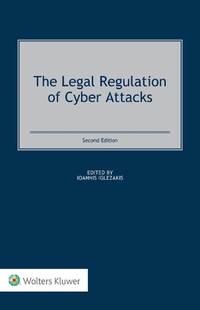
Legal Regulation of Cyber Attacks
Published on 19. March 2020
320 pages
978-94-035-1020-0 (ISBN)
Description

This updated edition of a well-known comprehensive analysis of the criminalization of cyberattacks adds important new guidance to the legal framework on cybercrime, reflecting new legislation, technological developments, and the changing nature of cybercrime itself. The focus is not only on criminal law aspects but also on issues of data protection, jurisdiction, electronic evidence, enforcement, and digital forensics. It provides a thorough analysis of the legal regulation of attacks against information systems in the European, international, and comparative law contexts. Among the new and continuing aspects of cybersecurity covered are the following: the conflict of cybercrime investigation and prosecution with fundamental rights to privacy and freedom of expression; the 2016 Directive on security of network and information systems (NIS Directive); the General Data Protection Regulation (GDPR); the role of national computer security incident response teams (CSIRTs); the European Union (EU) response to new technologies involving payment instruments, including virtual currencies and digital wallets; the EU Commission's legislative proposals to enhance cross-border gathering of electronic evidence; internet service providers' role in fighting cybercrime; measures combatting identity theft, spyware, and malware; states and legal persons as perpetrators of cybercrime; and the security and data breach notification as a compliance and transparency tool. Technical definitions, case laws, and analysis of both substantive law and procedural law contribute to a comprehensive understanding of cybercrime regulation and its current evolution in practice. Addressing a topic of growing importance in unprecedented detail, this new edition of a much-relied-upon resource will be welcomed by professionals and authorities dealing with cybercrime, including lawyers, judges, academics, security professionals, information technology experts, and law enforcement agencies.
More details
Other editions
Additional editions
Ioannis Iglezakis
The Legal Regulation of Cyber Attacks
Book
03/2020
Kluwer Law International
€144.34
Shipment within 15-20 days
Content
- Intro
- Half-Title Page
- Title Page
- Copyright Page
- Editor
- Contributors
- Summary of Contents
- Table of Contents
- Preface
- Introduction to the Second Edition
- Chapter 1 Attacks Against Information Systems: Technical Definitions
- §1.01 INFORMATION SYSTEMS AND SURROUNDING CONCEPTS
- §1.02 THE NOTIONS OF ATTACKS AND THREATS
- §1.03 SECURITY OF INFORMATION SYSTEMS
- §1.04 CYBERSECURITY
- §1.05 CYBERCRIME AND CYBERWAR
- Chapter 2 Criminalization of Attacks Against Information Systems
- §2.01 THE MILESTONES OF THE EUROPEAN LEGAL FRAMEWORK
- [A] The Long Road to the Harmonization of Cybercrime Law
- [1] Before the Budapest Convention
- [2] The Budapest Convention on Cybercrime (2001)
- [3] The Council Framework Decision of 2005
- [4] Other Unilateral, Bilateral and Multilateral Approaches
- [B] Directive 2013/40/EU
- [1] The Adoption of the Directive
- [2] Main Principles of the Directive 2013/40/EU
- [3] Cyberwar and the Directive
- [4] The Protection of Critical Infrastructure Against Cyber Attacks and Cyber Terrorism
- [5] Next Steps after the Directive
- §2.02 CRIMINAL OFFENSES
- [A] Illegal Access to Information Systems
- [1] The Offense and Its Application
- [2] The Issue of Illegal Access with or Without Use of Technological Measures
- [3] Illegal Access and Theory of Information Goods
- [B] Illegal System Interference
- [1] Overview of the Offense
- [2] DDoS Attacks
- [3] Other Fields of Application
- [C] Illegal Data Interference
- [1] Overview of the Offense
- [2] New Forms of Malware and Repression
- [3] The States as Perpetrators of the Offense
- [D] Illegal Interception
- [1] Overview of the Offense
- [2] The Distinction Between Private and Public Communication
- [3] The Principles Guiding Lawful Interceptions
- [4] The Snowden Revelations and Their Lessons
- [E] Relationship of Cyber-Attack Offenses with Other Offenses
- [1] Consecutive and Concurrent Sentences
- [2] The Concurrent Application of "Computer-Related" Offenses with Cyber Attacks Offenses
- [3] The Legal Evolution of Cyber Fraud with the Directive 2019/713/EU
- §2.03 PRIVATE LAW ASPECTS OF THE REGULATION OF CYBER ATTACKS
- [A] Civil Liability for Cyber Attacks
- [B] The Calculation of Damages
- [C] The Negligent Protection of an Information System
- §2.04 FORENSIC ISSUES
- [A] The Enforcement of Cybercrime Legislation and the Problem of Evidence
- [B] Digital Forensics and E-Evidence
- [1] Electronic Evidence
- [2] Principles
- [3] Problems and Shortcomings of Digital Evidences
- [C] Specific Forensics Categories
- [1] Network Forensics
- [2] Smartphone Forensics
- [3] Cloud Forensics
- [4] Internet of Things Forensics
- §2.05 PERSONAL DATA PROTECTION AND THE LEGAL STATUS OF THE IP ADDRESS
- [A] The Double Nature of the IP Address in EU Privacy Law
- [1] The IP Address and Personal Data Protection
- [2] The IP Address and the Secrecy of Communications
- [3] IP Address and Presumption of Liability in the CJEU's Case Law: An Alternative Approach?
- [B] The Processing of the IP Address as Evidence in Criminal Litigation
- [1] The IP Address in the Cybercrime Convention
- [2] Processing of IP Address in Cybercrime Cases under the Scope of EU Law
- §2.06 INVESTIGATION AND PROSECUTION OF CYBERCRIME AND JURISDICTION
- [A] The Issue
- [B] he Principles
- [1] Territoriality and Jurisdictional Conflicts
- [2] Jurisdictional Conflicts
- [C] Extraterritorial Jurisdiction
- [D] Transborder Access to Evidence under the Cybercrime Convention
- [E] Direct Contact to Service Provider
- [F] Transborder Access under the Directive 2013/40/EU
- [G] Jurisdictional Issues and Transborder Access under the Draft Regulation on European Production and Preservation Orders for E-Evidence in Criminal Matters
- Chapter 3 Prevention of Cyber Attacks
- §3.01 THE OBSTACLE: CRIMES LEGISLATION
- [A] Tools Used for Committing Offenses
- [1] Overview of the Offense of Hacking Tools Distribution
- [2] The Three Steps of Malicious Intention
- [3] The Black Market of Data
- [B] Incitement, Aiding and Abetting and Attempt
- §3.02 THE ROLE OF ISPS IN CYBERCRIME PREVENTION
- [A] ISPs as Gatekeepers of the Internet: The Debate about a More Active Role of ISPs in Cybercrime Prevention
- [B] The Big Challenge: Balancing ISP Subscribers' Rights with Law Enforcement Objectives
- [C] Cybercrime Prevention via Internet Filtering: Precedents and Controversies
- [D] The Role of ISPs in Cybercrime Prevention and Its Boundaries: An Interference with Fundamental Rights?
- [1] Illegal and Harmful Criminal Content in the EU and Freedom of Expression
- [2] The Internet Connection as a Component of the Right of Expression
- [a] The Recognition of Internet Access as a Fundamental Value in the Contemporary World
- [b] The Guarantee of Internet Access as a Component of the Right of Freedom of Expression
- [3] Site Blocking at an ISP Level in the CJEU's Case Law
- Chapter 4 Legal Consequences of Cybercrime
- §4.01 THE REGIME OF SECURITY AND DATA BREACH NOTIFICATION
- [A] Security and Data Breach Notification as a Compliance and Transparency Tool
- [B] The USA Breach Notification Model
- [C] The Current European Framework
- [1] The Electronic Communications Sector: The e-Privacy Directive
- [2] Notification under the Framework Directive
- [3] Notification under the Regulation 611/2013
- [D] The Future: A Comprehensive Notification Regime?
- [1] The General Data Protection Regulation (GDPR)
- [2] The NIS Directive
- §4.02 CYBERCRIME AS A TOOL FOR COMMITTING OTHER OFFENSES
- [A] Sociology of Hacking: The Enemy from Within
- [B] Cybercrime as a Parallel Economy
- Conclusion
- Appendices
- Appendix I Directive 2013/40/EU on attacks against information systems and replacing Council Framework Decision 2005/222/JHA
- APPENDIX II Convention on Cybercrime
- APPENDIX III Directive (EU) 2016/1148 of the European Parliament and of the Council of 6 July 2016 concerning measures for a high common level of security of network and information systems across the Union
- APPENDIX IV Directive (EU) 2019/713 of the European Parliament and of the Council of 17 April 2019 on combating fraud and counterfeiting of non-cash means of payment and replacing Council Framework Decision 2001/413/JHA
- Bibliography
- Index
