

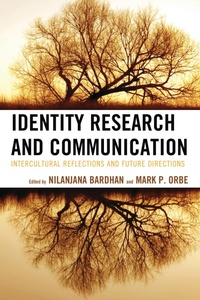
Identity Research and Communication
Intercultural Reflections and Future Directions
Lexington Books (Publisher)
1st Edition
Published on 5. April 2012
318 pages
979-8-216-31064-8 (ISBN)
Description

The concept of identity has steadily emerged in importance in the field of intercultural communication, especially over the last two decades. In a transnational world marked by complex connectivity as well as enduring differences and power inequities, it is imperative to understand and continuously theorize how we perceive the self in relation to the cultural other. Such understandings play a central role in how we negotiate relationships, build alliances, promote peace, and strive for social justice across cultural differences in various contexts.
Identity Research in Intercultural Communication, edited by Nilanjana Bardhan and Mark P. Orbe, is unique in scope because it brings together a vast range of positions on identity scholarship under one umbrella. It tracks the state of identity research in the field and includes cutting-edge theoretical essays (some supported by empirical data), and queries what kinds of theoretical, methodological, praxiological and pedagogical boundaries researchers should be pushing in the future. This collection's primary and qualitative focus is on more recent concepts related to identity that have emerged in scholarship such as power, privilege, intersectionality, critical selfhood, hybridity, diaspora, cosmopolitanism, queer theory, globalization and transnationalism, immigration, gendered and sexual politics, self-reflexivity, positionality, agency, ethics, dialogue and dialectics, and more. The essays are critical/interpretive, postmodern, postcolonial and performative in perspective, and they strike a balance between U.S. and transnational views on identity. This volume is an essential text for scholars, educators, students, and intercultural consultants and trainers.
Identity Research in Intercultural Communication, edited by Nilanjana Bardhan and Mark P. Orbe, is unique in scope because it brings together a vast range of positions on identity scholarship under one umbrella. It tracks the state of identity research in the field and includes cutting-edge theoretical essays (some supported by empirical data), and queries what kinds of theoretical, methodological, praxiological and pedagogical boundaries researchers should be pushing in the future. This collection's primary and qualitative focus is on more recent concepts related to identity that have emerged in scholarship such as power, privilege, intersectionality, critical selfhood, hybridity, diaspora, cosmopolitanism, queer theory, globalization and transnationalism, immigration, gendered and sexual politics, self-reflexivity, positionality, agency, ethics, dialogue and dialectics, and more. The essays are critical/interpretive, postmodern, postcolonial and performative in perspective, and they strike a balance between U.S. and transnational views on identity. This volume is an essential text for scholars, educators, students, and intercultural consultants and trainers.
More details
Edition
1. Auflage
Language
English
Place of publication
United States
Publishing group
Bloomsbury Publishing Plc
Target group
Professional and scholarly
ISBN-13
979-8-216-31064-8 (9798216310648)
Copyright in bibliographic data and cover images is held by Nielsen Book Services Limited or by the publishers or by their respective licensors: all rights reserved.
Schweitzer Classification
Other editions
Additional editions
Nilanjana Bardhan | Mark P. Orbe
Identity Research and Communication
Intercultural Reflections and Future Directions
Book
12/2013
Lexington Books
€65.60
Shipment within 10-20 days
Persons
Nilanjana Bardhan is associate professor in the Department of Speech Communication at Southern Illinois University, Carbondale.
Mark P. Orbeis professor of communication and diversity in the School of Communication at Western Michigan University.
Mark P. Orbeis professor of communication and diversity in the School of Communication at Western Michigan University.
Content
Introduction: Identity Research in Intercultural Communication
Part I. Identity Pedagogy, and Praxis
Chapter 1. Performative Pedagogy as a Pedagogy of Interruption: Difference and Hope
Chapter 2. Doing Intersectionality: Power, Privilege, and Identity in Political Activist Communities
Chapter 3. Understanding Identity through Dialogue: Paulo Freire and Intercultural Communication Pedagogy
Chapter 4. (Academic) Families of Choice: Queer Relationality, Mentoring, and Critical Communication Pedagogy
Part II.Identity and Home/Spaces
Chapter 5. Cultural Reentry: A Critical Review of Intercultural Communication Research
Chapter 6. Performing Home/Storying Selves: Home and/as Identity in Oral Histories of Refugees in India's Partition
Part III. Identity and the Global-Local Dialectic
Chapter 7. Landscaping the Rootless: Negotiating Cosmopolitan Identity in a Globalizing World
Chapter 8. Cultural Matter as Political Matter: A Preliminary Exploration from a Chinese Perspective
Chapter 9. Understanding Immigration and Communication Contextually and Interpersonally
Part IV.Identity and the Liminal
Chapter 10. Postcolonial Migrant Identities and the Case for Strategic Hybridity: Toward "Inter"cultural Bridgework
Chapter 11. Researching Biracial/Multiracial Identity Negotiation: Lessons from Diverse Contemporary U.S. Public Perceptions
Chapter 12. Rethinking Identities Within Globalization Through Chinese American Literature: Perspective: From Postcolonial to Intercultural
Chapter 13. (Re)Thinking Conceptualizations of Caribbean Immigrant Identity Performances: Implications for Intercultural Communication Research
Part V. Theorizing "Doing" Identity
Chapter 14. Navigating the Politics of Identity/Identities and Exploring the Promise of Critical Love
Chapter 15. (Un)Covering the Gay Interculturalist
Chapter 16. Praxis-Oriented Autoethnography: Performing Critical Selfhood
Part I. Identity Pedagogy, and Praxis
Chapter 1. Performative Pedagogy as a Pedagogy of Interruption: Difference and Hope
Chapter 2. Doing Intersectionality: Power, Privilege, and Identity in Political Activist Communities
Chapter 3. Understanding Identity through Dialogue: Paulo Freire and Intercultural Communication Pedagogy
Chapter 4. (Academic) Families of Choice: Queer Relationality, Mentoring, and Critical Communication Pedagogy
Part II.Identity and Home/Spaces
Chapter 5. Cultural Reentry: A Critical Review of Intercultural Communication Research
Chapter 6. Performing Home/Storying Selves: Home and/as Identity in Oral Histories of Refugees in India's Partition
Part III. Identity and the Global-Local Dialectic
Chapter 7. Landscaping the Rootless: Negotiating Cosmopolitan Identity in a Globalizing World
Chapter 8. Cultural Matter as Political Matter: A Preliminary Exploration from a Chinese Perspective
Chapter 9. Understanding Immigration and Communication Contextually and Interpersonally
Part IV.Identity and the Liminal
Chapter 10. Postcolonial Migrant Identities and the Case for Strategic Hybridity: Toward "Inter"cultural Bridgework
Chapter 11. Researching Biracial/Multiracial Identity Negotiation: Lessons from Diverse Contemporary U.S. Public Perceptions
Chapter 12. Rethinking Identities Within Globalization Through Chinese American Literature: Perspective: From Postcolonial to Intercultural
Chapter 13. (Re)Thinking Conceptualizations of Caribbean Immigrant Identity Performances: Implications for Intercultural Communication Research
Part V. Theorizing "Doing" Identity
Chapter 14. Navigating the Politics of Identity/Identities and Exploring the Promise of Critical Love
Chapter 15. (Un)Covering the Gay Interculturalist
Chapter 16. Praxis-Oriented Autoethnography: Performing Critical Selfhood
